THE ADVENTURE COLLECTIVE® · Independent discovery and booking for outdoor travel

Descend 400+ stone steps into the Niagara River Gorge on a guided loop that ends at the thundering Whirlpool Rapids. Expect rugged trails, river views, local history, and a demanding climb back to the rim.
Descend 400+ stone steps into the Niagara River Gorge on a guided loop that ends at the thundering Whirlpool Rapids. Expect rugged trails, river views, local history, and a demanding climb back to the rim.
A low stone building, ivy clinging to its mortar, marks the start of the day—Devil’s Hole Park’s restroom sits at the rim of a river that refuses to be calm. The guide’s voice cuts through the rush: safety brief, step counts, what to look for. You descend—first a broad, forgiving path, then 410 uneven stone steps that put you squarely inside the Niagara River Gorge. The air is cooler down low, the river louder; roots and slick rock demand attention, and every turn offers a new angle on the river that carved this place in ice and time.
Verified experiences and guided adventures in the surrounding area.
Operated by Explore Niagara NY · Niagara Falls, New York
A low stone building, ivy clinging to its mortar, marks the start of the day—Devil’s Hole Park’s restroom sits at the rim of a river that refuses to be calm. The guide’s voice cuts through the rush: safety brief, step counts, what to look for. You descend—first a broad, forgiving path, then 410 uneven stone steps that put you squarely inside the Niagara River Gorge. The air is cooler down low, the river louder; roots and slick rock demand attention, and every turn offers a new angle on the river that carved this place in ice and time.
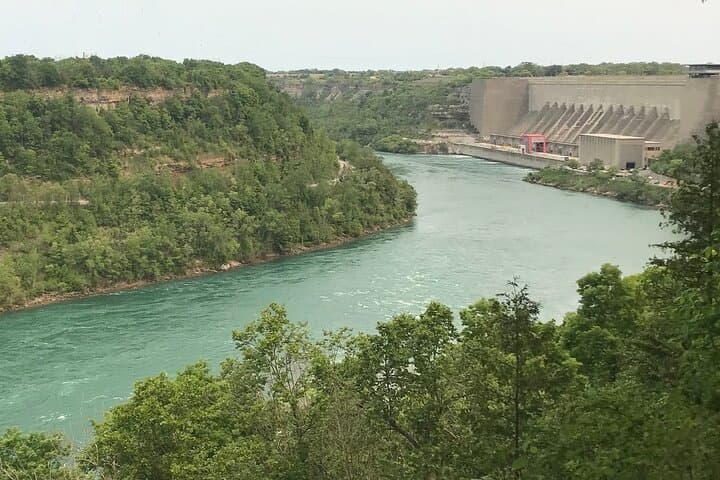
The gorge is both a geological record and an industrial story. Glacial meltwater gouged the channel tens of thousands of years ago; later the Niagara Gorge Railroad squeezed along these cliffs, hauling passengers and freight through dramatic curvature. The New York Power Authority’s dam and hydro infrastructure loom upstream, reminders that the river’s energy has long been harnessed and contested. Local lore—Devils Hole’s name stems from treacherous currents and early accounts of daredevil rescues—rides the trail with you as your licensed guide threads natural history and human engineering together.
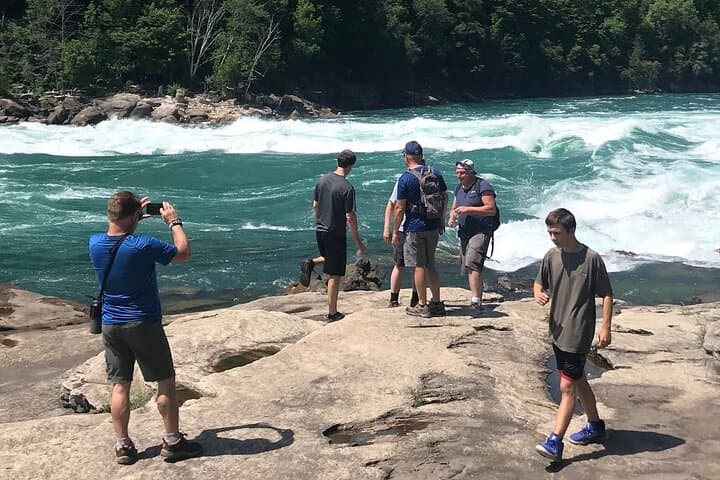
The hike covers roughly 3–4 miles round-trip with about 400 vertical stone steps descending and another 400+ to climb, depending on the exact exit. Expect mixed terrain: a flat, sometimes-muddy upper rim, narrowing singletrack, rooted sections, and talus fields closer to the Whirlpool. The trail’s payoff is immediate: the Whirlpool Rapids roaring in tight, churned aqua, and Butterfly Rock, where groups sit low to the stone and watch the current spin. Jet boats and the Whirlpool Aero Car cross overhead, adding a human pulse to the wild water.
Practicality matters here. Wear sturdy hiking shoes with good traction; the steps are ancient and irregular. Bring 1–2 liters of water, snacks for energy on the climb, and layers—the gorge traps coolness and spray. Plan for 3–4 hours total; guides move deliberately through the trickier sections and allow time for photos. Mobility-wise, this is challenging: not just for the stairs but for uneven ground and occasional rock scrambles. Dogs are allowed (limited, fee applies), but consider their ability on long steps.
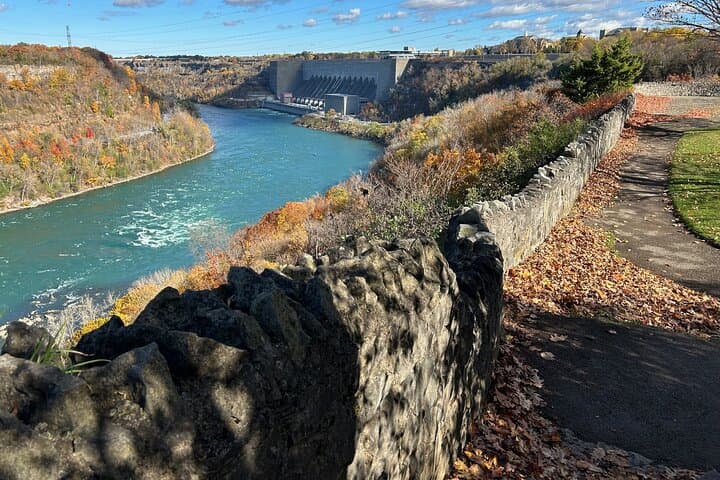
Timing the hike reduces crowding and maximizes light—early morning or late afternoon gives shimmer on the river without the midday throng. Leave no trace: the gorge’s delicate flora and nesting birds are easily disturbed. Your guide’s stories—about railways that once hugged the cliff and the engineers who tamed the river—make the loop more than a physical test; it’s a compact history lesson in stone and flow. When you climb back to the rim, breath heavy, the view at the overlook reads like a small, fierce world both carved and commanded by water.
challenging.
3–4 hours.
Good cardiovascular fitness and lower-body strength; comfortable with prolonged stair climbs and uneven terrain.
The return involves climbing 400+ uneven stone steps; it’s strenuous and requires steady pacing—guides schedule frequent stops.
Yes—up to two dogs per tour are allowed for a fee; they must be able to handle many stairs and uneven terrain.
Older adults and children in good physical condition can participate, but it’s not recommended for those with spinal, heart, or serious mobility issues.
Some sections are narrow with steep drop-offs; if you have severe vertigo, discuss concerns with the guide before booking.
A phone or compact camera with a strap is ideal—hands are often needed for balance; waterproof protection helps near spray.
Park in one of Devil’s Hole free lots off Lewiston Rd or the Niagara Scenic Parkway and meet at the stone restroom building at the park’s north end.
The Niagara Gorge was carved by glacial meltwater; the Niagara Gorge Railroad once ran along these cliffs and shaped early tourism and transport.
Stay on designated paths—gorge vegetation and nesting birds are sensitive; group size limits help minimize erosion and disturbance.
Explore Niagara NY operates guided outdoor trips and adventures with an emphasis on safety, stewardship, and memorable experiences.

A low stone building, ivy clinging to its mortar, marks the start of the day—Devil’s Hole Park’s restroom sits at the rim of a river that refuses to be calm. The guide’s voice cuts through the rush: safety brief, step counts, what to look for. You descend—first a broad, forgiving path, then 410 uneven stone steps that put you squarely inside the Niagara River Gorge. The air is cooler down low, the river louder; roots and slick rock demand attention, and every turn offers a new angle on the river that carved this place in ice and time.
A low stone building, ivy clinging to its mortar, marks the start of the day—Devil’s Hole Park’s restroom sits at the rim of a river that refuses to be calm. The guide’s voice cuts through the rush: safety brief, step counts, what to look for. You descend—first a broad, forgiving path, then 410 uneven stone steps that put you squarely inside the Niagara River Gorge. The air is cooler down low, the river louder; roots and slick rock demand attention, and every turn offers a new angle on the river that carved this place in ice and time.
The gorge is both a geological record and an industrial story. Glacial meltwater gouged the channel tens of thousands of years ago; later the Niagara Gorge Railroad squeezed along these cliffs, hauling passengers and freight through dramatic curvature. The New York Power Authority’s dam and hydro infrastructure loom upstream, reminders that the river’s energy has long been harnessed and contested. Local lore—Devils Hole’s name stems from treacherous currents and early accounts of daredevil rescues—rides the trail with you as your licensed guide threads natural history and human engineering together.
The hike covers roughly 3–4 miles round-trip with about 400 vertical stone steps descending and another 400+ to climb, depending on the exact exit. Expect mixed terrain: a flat, sometimes-muddy upper rim, narrowing singletrack, rooted sections, and talus fields closer to the Whirlpool. The trail’s payoff is immediate: the Whirlpool Rapids roaring in tight, churned aqua, and Butterfly Rock, where groups sit low to the stone and watch the current spin. Jet boats and the Whirlpool Aero Car cross overhead, adding a human pulse to the wild water.
Practicality matters here. Wear sturdy hiking shoes with good traction; the steps are ancient and irregular. Bring 1–2 liters of water, snacks for energy on the climb, and layers—the gorge traps coolness and spray. Plan for 3–4 hours total; guides move deliberately through the trickier sections and allow time for photos. Mobility-wise, this is challenging: not just for the stairs but for uneven ground and occasional rock scrambles. Dogs are allowed (limited, fee applies), but consider their ability on long steps.
Timing the hike reduces crowding and maximizes light—early morning or late afternoon gives shimmer on the river without the midday throng. Leave no trace: the gorge’s delicate flora and nesting birds are easily disturbed. Your guide’s stories—about railways that once hugged the cliff and the engineers who tamed the river—make the loop more than a physical test; it’s a compact history lesson in stone and flow. When you climb back to the rim, breath heavy, the view at the overlook reads like a small, fierce world both carved and commanded by water.