THE ADVENTURE COLLECTIVE® · Independent discovery and booking for outdoor travel

Spend a full day climbing the iconic Navajo sandstone around Moab with experienced guides. This full‑day program matches routes to skill level and covers single‑pitch crack and face climbing across dramatic desert scenery.
Spend a full day climbing the iconic Navajo sandstone around Moab with experienced guides. This full‑day program matches routes to skill level and covers single‑pitch crack and face climbing across dramatic desert scenery.
The morning light strips the cool from the canyon and paints the slickrock in flat, burnished gold. You clip in at a shaded bolted anchor while wind scours red dust from the ledge; below, the Colorado River threads the valley like a silver vein daring you to look away. Guides talk quietly—route beta, hand positions, foothold fonts—while the desert keeps time in small things: the call of a raven, the rasp of sand under boots, the faint echo of a rope.
Verified experiences and guided adventures in the surrounding area.
Operated by Sunlight Guiding · Moab, Utah
The morning light strips the cool from the canyon and paints the slickrock in flat, burnished gold. You clip in at a shaded bolted anchor while wind scours red dust from the ledge; below, the Colorado River threads the valley like a silver vein daring you to look away. Guides talk quietly—route beta, hand positions, foothold fonts—while the desert keeps time in small things: the call of a raven, the rasp of sand under boots, the faint echo of a rope.
This is Moab climbing: vertical travel on Navajo sandstone that records millions of years of wind and water. The cliffs here are not Himalayan granite; they are rounded faces, cracks, and tufas that ask for balance and smarts more than brute strength. European and Native American travelers passed through these mesas for centuries, and Ute and Paiute trails still mark the high ground. The current wave of climbers arrived in the late 20th century, drawn by the combination of quality rock, stable weather, and astonishing desert views.
Geology matters: the sandstone is porous and occasionally fragile—clean feet and careful protection placement are non-negotiable. Expect a mix of crack climbing, thin face moves, and short, bold overhangs on single-pitch routes. A typical guided day covers several routes ranging from roughly 30–100 feet, with approach walks of 5–25 minutes across packed sand and slickrock. Elevation around Moab sits near 4,000–4,800 feet, so afternoons can feel warm and thin; mornings are the technical window.
Local culture leans practical: guides are often climbers who live and work seasonally, and the town of Moab is a hub for mountain bikers, canyoneers, and river runners. Respect private land and established anchors; chalk down and step lightly on cryptobiotic soil.
Practical guidance: arrive hydrated with 1.5–3 liters of water, sun protection, and shoes you trust—rock shoes are provided, but bring approach shoes for the walk-in. The outfit supplies harnesses, helmets, ropes, and hardware; instructors will tailor routes to ability, so beginners can expect thorough instruction while experienced climbers can ask for more technical lines. The full-day program runs about eight hours including travel and instruction. Weather can change fast—high sun, gusts, and occasional thunderstorms—so pack a lightweight wind layer and plan to climb early when the rock is coolest.
Safety note: this is guided climbing for ages 13+, but moderate fitness is required. If you want to push into trad leads or multi-pitch territory, ask the operator in advance—there are plenty of options around Moab for progressive objectives. Leave the fragile desert crust intact, take only photos, and the desert will continue to dare the next generation of climbers.
challenging.
8 hours.
Moderate to fit—expect short hikes, scrambling and sustained upper-body effort; good cardiovascular health helps.
No—guides provide instruction for beginners and will select routes to match your skill level; climbers with experience can request more technical routes.
Participants must be 13 or older for this full‑day guided program.
Yes—harness, helmet, rock shoes, ropes, and hardware are included; bring personal items like sun protection and water.
The operator cancels for unsafe weather; all sales are final, so confirm conditions and plan accordingly.
Expect moderate hiking, scrambling, and intermittent climbing—participants should have reasonable fitness and no serious cardiovascular conditions.
Yes—the program is tailored to your interests; request specific objectives like trad or lead practice when booking.
Moab sits on land traveled for centuries by Ute and Paiute peoples; modern climbing there grew in the late 20th century alongside mountain biking and river guiding industries.
Stay on established trails, avoid chalking rock excessively, and avoid stepping on cryptobiotic soil to protect fragile desert ecosystems.
Sunlight Guiding operates guided outdoor trips and adventures with an emphasis on safety, stewardship, and memorable experiences.
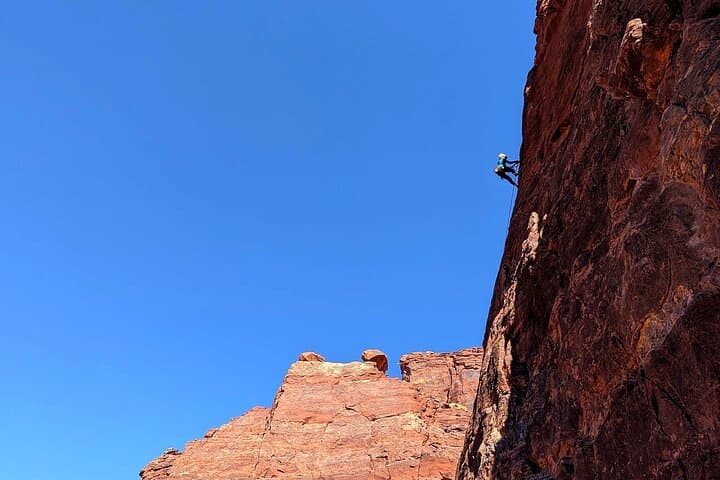


The morning light strips the cool from the canyon and paints the slickrock in flat, burnished gold. You clip in at a shaded bolted anchor while wind scours red dust from the ledge; below, the Colorado River threads the valley like a silver vein daring you to look away. Guides talk quietly—route beta, hand positions, foothold fonts—while the desert keeps time in small things: the call of a raven, the rasp of sand under boots, the faint echo of a rope.
The morning light strips the cool from the canyon and paints the slickrock in flat, burnished gold. You clip in at a shaded bolted anchor while wind scours red dust from the ledge; below, the Colorado River threads the valley like a silver vein daring you to look away. Guides talk quietly—route beta, hand positions, foothold fonts—while the desert keeps time in small things: the call of a raven, the rasp of sand under boots, the faint echo of a rope.
This is Moab climbing: vertical travel on Navajo sandstone that records millions of years of wind and water. The cliffs here are not Himalayan granite; they are rounded faces, cracks, and tufas that ask for balance and smarts more than brute strength. European and Native American travelers passed through these mesas for centuries, and Ute and Paiute trails still mark the high ground. The current wave of climbers arrived in the late 20th century, drawn by the combination of quality rock, stable weather, and astonishing desert views.
Geology matters: the sandstone is porous and occasionally fragile—clean feet and careful protection placement are non-negotiable. Expect a mix of crack climbing, thin face moves, and short, bold overhangs on single-pitch routes. A typical guided day covers several routes ranging from roughly 30–100 feet, with approach walks of 5–25 minutes across packed sand and slickrock. Elevation around Moab sits near 4,000–4,800 feet, so afternoons can feel warm and thin; mornings are the technical window.
Local culture leans practical: guides are often climbers who live and work seasonally, and the town of Moab is a hub for mountain bikers, canyoneers, and river runners. Respect private land and established anchors; chalk down and step lightly on cryptobiotic soil.
Practical guidance: arrive hydrated with 1.5–3 liters of water, sun protection, and shoes you trust—rock shoes are provided, but bring approach shoes for the walk-in. The outfit supplies harnesses, helmets, ropes, and hardware; instructors will tailor routes to ability, so beginners can expect thorough instruction while experienced climbers can ask for more technical lines. The full-day program runs about eight hours including travel and instruction. Weather can change fast—high sun, gusts, and occasional thunderstorms—so pack a lightweight wind layer and plan to climb early when the rock is coolest.
Safety note: this is guided climbing for ages 13+, but moderate fitness is required. If you want to push into trad leads or multi-pitch territory, ask the operator in advance—there are plenty of options around Moab for progressive objectives. Leave the fragile desert crust intact, take only photos, and the desert will continue to dare the next generation of climbers.