THE ADVENTURE COLLECTIVE® · Independent discovery and booking for outdoor travel

Ride a quad into the eastern deserts of Luxor for a two-hour loop of dunes, rocky ridges and a sunset climb—capped by an optional camel ride. Practical tips on terrain, timing and what to bring for your desert outing.
Ride a quad into the eastern deserts of Luxor for a two-hour loop of dunes, rocky ridges and a sunset climb—capped by an optional camel ride. Practical tips on terrain, timing and what to bring for your desert outing.
The afternoon sun slants low over ochre sand as you ease onto a quad and the desert breathes around you — dry, warm, and vast. In this two-hour ride east of Luxor the dunes and low rocky ridges open into raw panoramas; your guide cuts a line through dust, then slows as you climb a small desert hill to watch the sunset paint the valley below.
Verified experiences and guided adventures in the surrounding area.
Operated by Tui Egypt · Luxor, Luxor Governorate
The afternoon sun slants low over ochre sand as you ease onto a quad and the desert breathes around you — dry, warm, and vast. In this two-hour ride east of Luxor the dunes and low rocky ridges open into raw panoramas; your guide cuts a line through dust, then slows as you climb a small desert hill to watch the sunset paint the valley below.
Luxor sits on the remains of ancient Thebes, a landscape shaped by the Nile and marked by millennia of human movement. Geologically the terrain is a mix of wind-scoured sand, gravel plains and isolated limestone ridges; culturally you’ll notice Bedouin encampments and the distant silhouette of cultivated river oases that contrast sharply with the open desert.
Expect short sections of loose sand, compacted tracks, and rocky approaches to small summits — distances in a two-hour loop commonly range from 10–25 km depending on pacing. The elevation changes are modest but include climbing dunes or a 30–150 m rise to reach true viewpoints. Along the way you may add a short camel ride for a different pace and photo opportunities.
Practical guidance: bring sun protection, plenty of water, and closed-toe shoes; follow your guide’s throttle and braking instructions closely, and secure loose items before riding. Morning and late-afternoon departures are best for cooler temperatures and softer light. Transfers from Luxor hotels are usually included, making this an accessible desert taste for first-time riders.
easy.
2 hours.
Suitable for most adults with basic mobility; must be able to mount/dismount a quad and, optionally, a camel.
No—most tours welcome beginners; guides give a short safety briefing and basic handling instructions before departure.
Guidelines vary, but children typically must meet a minimum age or ride as passengers on a single quad; check with the operator when booking.
Operators normally provide helmets and sometimes goggles; confirm availability of child seats or additional protective gear in advance.
This tour lists transfers from/to hotels as included; confirm your pickup point and timing during booking.
Luxor occupies the site of ancient Thebes, a political and religious heart of New Kingdom Egypt with nearby temples, tombs and archaeological remains that echo thousands of years of human activity.
The desert ecosystem is fragile—stay on tracks, avoid collecting artifacts or plants, pack out all waste and respect local camps and heritage sites.
Tui Egypt operates guided outdoor trips and adventures with an emphasis on safety, stewardship, and memorable experiences.
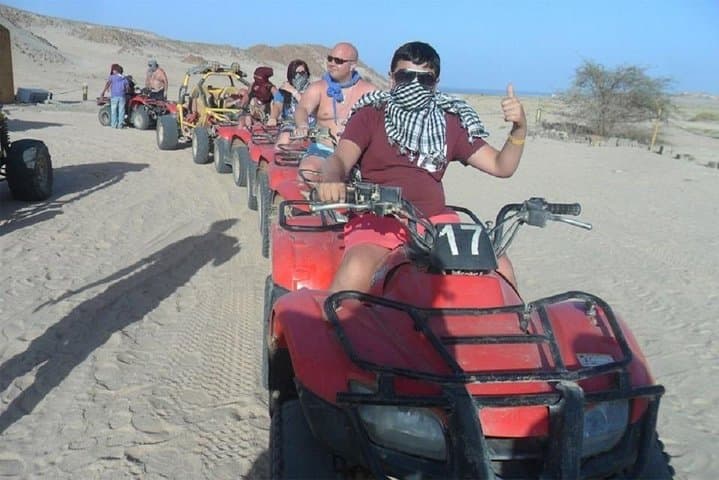

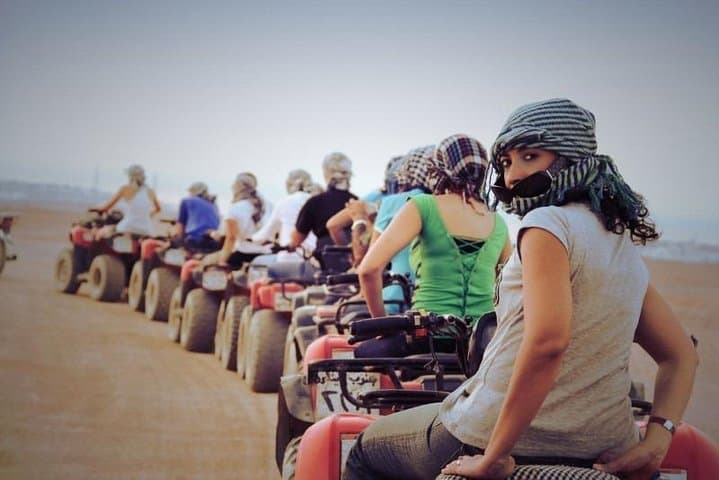
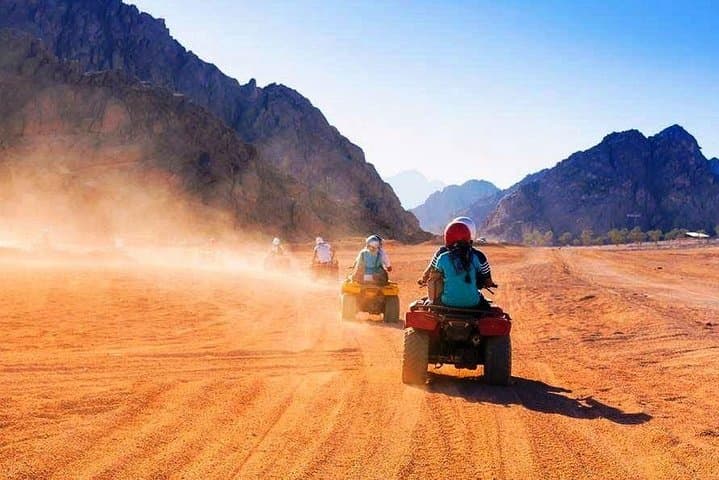
The afternoon sun slants low over ochre sand as you ease onto a quad and the desert breathes around you — dry, warm, and vast. In this two-hour ride east of Luxor the dunes and low rocky ridges open into raw panoramas; your guide cuts a line through dust, then slows as you climb a small desert hill to watch the sunset paint the valley below.
The afternoon sun slants low over ochre sand as you ease onto a quad and the desert breathes around you — dry, warm, and vast. In this two-hour ride east of Luxor the dunes and low rocky ridges open into raw panoramas; your guide cuts a line through dust, then slows as you climb a small desert hill to watch the sunset paint the valley below.
Luxor sits on the remains of ancient Thebes, a landscape shaped by the Nile and marked by millennia of human movement. Geologically the terrain is a mix of wind-scoured sand, gravel plains and isolated limestone ridges; culturally you’ll notice Bedouin encampments and the distant silhouette of cultivated river oases that contrast sharply with the open desert.
Expect short sections of loose sand, compacted tracks, and rocky approaches to small summits — distances in a two-hour loop commonly range from 10–25 km depending on pacing. The elevation changes are modest but include climbing dunes or a 30–150 m rise to reach true viewpoints. Along the way you may add a short camel ride for a different pace and photo opportunities.
Practical guidance: bring sun protection, plenty of water, and closed-toe shoes; follow your guide’s throttle and braking instructions closely, and secure loose items before riding. Morning and late-afternoon departures are best for cooler temperatures and softer light. Transfers from Luxor hotels are usually included, making this an accessible desert taste for first-time riders.