THE ADVENTURE COLLECTIVE® · Independent discovery and booking for outdoor travel

A full-day 4x4 journey from Muscat across the Wahiba Sands to the clear pools of Wadi Bani Khalid. Expect dune driving, short walks, a Bedouin cultural glimpse, and a lunch stop—perfect for first-time desert explorers.
A full-day 4x4 journey from Muscat across the Wahiba Sands to the clear pools of Wadi Bani Khalid. Expect dune driving, short walks, a Bedouin cultural glimpse, and a lunch stop—perfect for first-time desert explorers.
You step out of Muscat's early light into a 4x4 that hums toward an ocean of sand; the Wahiba dunes rise and fall ahead like an inland tide, their ridgelines catching the sun in bands of gold. The ride over the dunes feels like a short, thrilling roller coaster—wheels clutching, then drifting—before the vehicle pauses at a high crest and the desert opens, wind sketching new patterns across the slopes.
Verified experiences and guided adventures in the surrounding area.
Operated by Gray Line - Kurban Tours · Muscat, Muscat Governorate
You step out of Muscat's early light into a 4x4 that hums toward an ocean of sand; the Wahiba dunes rise and fall ahead like an inland tide, their ridgelines catching the sun in bands of gold. The ride over the dunes feels like a short, thrilling roller coaster—wheels clutching, then drifting—before the vehicle pauses at a high crest and the desert opens, wind sketching new patterns across the slopes.
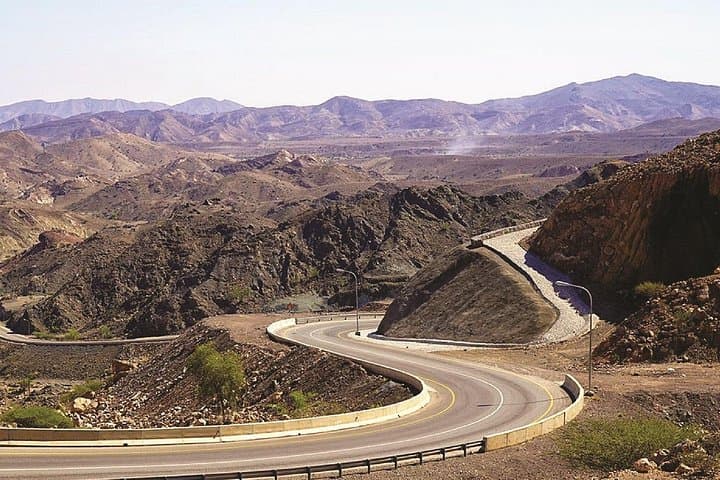
This route follows the eastern foothills of the Hajjar Mountains down to the Arabian Sea, crossing territory shaped by wind, gypsum, and time. Wahiba (Ramlat al-Wahiba) is a classic sand sea—roughly a couple hundred kilometers in stretch, dunes commonly standing 100–150 meters high—and it’s long been home to Bedouin families whose seasonal camps and hand-built shelters speak to a living desert culture. Nearby Wadi Bani Khalid offers a sharp contrast: clear pools and shaded alcoves carved into ophiolite rock, where freshwater collects and invites a cool dip.
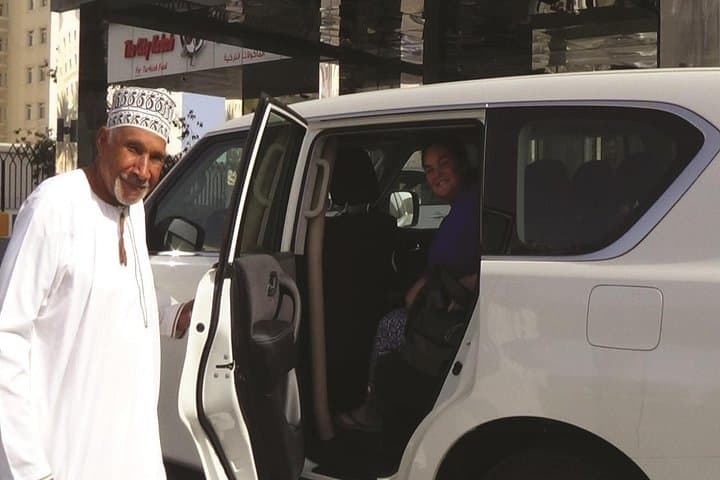
On a day tour from Muscat expect 4x4 transport, an English-speaking driver-guide, a small-group vehicle (max four), and a lunch stop at a local restaurant. Practicalities matter: bring 2–3 liters of water, sun protection, closed-toe shoes for dune traverses, and a light layer for cooler desert evenings. Plan this as a full 12-hour day with long drives between sights; start early to catch softer light and avoid peak afternoon heat. Respect Bedouin property, avoid driving off established tracks, and leave no trace—these sands shift slowly, but human impact is immediate.
easy.
12 hours.
Suitable for travelers with basic fitness—able to climb short dune slopes and handle getting in/out of a 4x4 for several hours.
This private full-day tour is about 12 hours including drives; expect a relaxed pace with scenic stops, short dune walks, and time at Wadi Bani Khalid.
Yes—infants must sit on an adult’s lap. The tour is family-friendly but involves long vehicle time and some bumpy driving over dunes.
Price includes a driver-guide in English, transport in a deluxe 4x4 (max 4 passengers), lunch with soft drinks, and stops at the dunes and Wadi Bani Khalid.
Early morning and late afternoon offer the best light and cooler temperatures; midday can be very hot, especially in summer.
The Wahiba area has long been inhabited by Bedouin tribes whose livelihoods adapted to shifting dunes; trade routes across the Hajjar foothills linked inland settlements to coastal towns for centuries.
The dunes are ecologically fragile—stick to established tracks, avoid littering, and support local guides who practice low-impact visits.
Gray Line - Kurban Tours operates guided outdoor trips and adventures with an emphasis on safety, stewardship, and memorable experiences.
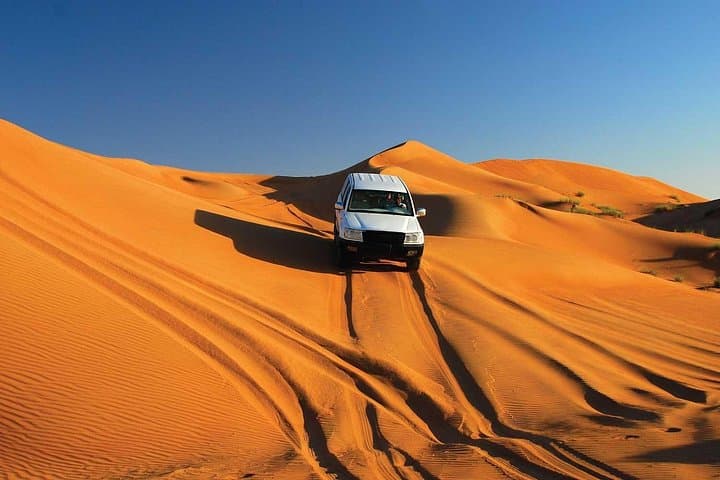
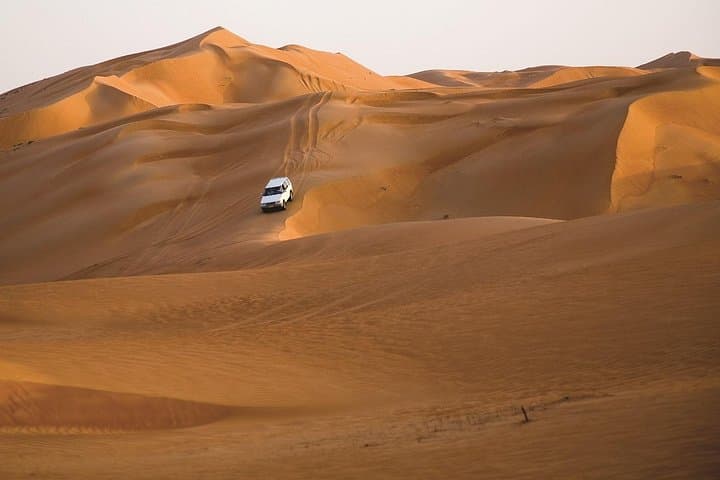
You step out of Muscat's early light into a 4x4 that hums toward an ocean of sand; the Wahiba dunes rise and fall ahead like an inland tide, their ridgelines catching the sun in bands of gold. The ride over the dunes feels like a short, thrilling roller coaster—wheels clutching, then drifting—before the vehicle pauses at a high crest and the desert opens, wind sketching new patterns across the slopes.
You step out of Muscat's early light into a 4x4 that hums toward an ocean of sand; the Wahiba dunes rise and fall ahead like an inland tide, their ridgelines catching the sun in bands of gold. The ride over the dunes feels like a short, thrilling roller coaster—wheels clutching, then drifting—before the vehicle pauses at a high crest and the desert opens, wind sketching new patterns across the slopes.
This route follows the eastern foothills of the Hajjar Mountains down to the Arabian Sea, crossing territory shaped by wind, gypsum, and time. Wahiba (Ramlat al-Wahiba) is a classic sand sea—roughly a couple hundred kilometers in stretch, dunes commonly standing 100–150 meters high—and it’s long been home to Bedouin families whose seasonal camps and hand-built shelters speak to a living desert culture. Nearby Wadi Bani Khalid offers a sharp contrast: clear pools and shaded alcoves carved into ophiolite rock, where freshwater collects and invites a cool dip.
On a day tour from Muscat expect 4x4 transport, an English-speaking driver-guide, a small-group vehicle (max four), and a lunch stop at a local restaurant. Practicalities matter: bring 2–3 liters of water, sun protection, closed-toe shoes for dune traverses, and a light layer for cooler desert evenings. Plan this as a full 12-hour day with long drives between sights; start early to catch softer light and avoid peak afternoon heat. Respect Bedouin property, avoid driving off established tracks, and leave no trace—these sands shift slowly, but human impact is immediate.