THE ADVENTURE COLLECTIVE® · Independent discovery and booking for outdoor travel

Explore the hidden life of Desaru Coast at low tide on a guided 90‑minute tidepool walk. Learn to spot sand bubbler crabs, moon snails, and mudskippers while getting practical tips on timing, footwear, and stewardship.
Explore the hidden life of Desaru Coast at low tide on a guided 90‑minute tidepool walk. Learn to spot sand bubbler crabs, moon snails, and mudskippers while getting practical tips on timing, footwear, and stewardship.
At low tide the shoreline peels back like a curtain and the Desaru Coast reveals small, salt-slick worlds: shallow pools rimmed with green algae, moonshells half-buried in sand, and thousands of sand bubbler crabs stamping intricate patterns as if signing the beach.
Verified experiences and guided adventures in the surrounding area.
Operated by JungleWalla Tours · Desaru, Johor
At low tide the shoreline peels back like a curtain and the Desaru Coast reveals small, salt-slick worlds: shallow pools rimmed with green algae, moonshells half-buried in sand, and thousands of sand bubbler crabs stamping intricate patterns as if signing the beach.
This short guided walk traces those intertidal shelves—geology here is recent marine sediment and broken coral, shaped by monsoon-driven currents and regular tidal exchange. The coast has long supported Malay fishing communities; today small fishing villages and seafood stalls still mark the rhythm between land and sea.
You’ll learn to read pools: where water gathers, where hermit crabs tuck away, and why moon snails leave ghostly spirals. Naturalists point out feeding zones and explain how seasonal tides and the northeast monsoon change which creatures appear. Birds—herons and terns—patrol the shallows, and mudskippers dart like punctuation marks in the mud.
Practical side: the walk is easy and family-friendly, about 60–90 minutes on mostly flat, uneven sand and rock. Timing is everything—aim for the falling tide window to access the richest pools. Wear sturdy water shoes with good grip, bring sun protection, and carry water; local guides will caution against collecting or handling animals to avoid stressing fragile communities. If rain or rough seas set in, guides cancel to protect both guests and wildlife. The experience is compact, sensory, and instructive: a close-up look at the coast’s small lives and the tidal mechanics that sustain them.
easy.
60–90 minutes.
Suitable for most fitness levels; requires short, flat walking on uneven, sometimes slippery surfaces.
The guided experience runs about 60 minutes on the shore with roughly 30 minutes of additional logistics—allow 90 minutes total including transfers.
Yes—this is family-friendly, but children should be supervised on slippery rocks and near deeper pools.
Guides typically bring interpretive gear and bottled water; participants should bring appropriate footwear and sun protection.
Tours are canceled in unsafe conditions; the operator will reschedule or refund according to their 24‑hour cancellation policy.
Desaru’s coastline has supported Malay fishing communities for generations; the area emerged as a recreational coast in recent decades as road access and resorts developed.
Intertidal zones are fragile: avoid collecting animals, step lightly on rock substrates, and follow guide instructions to minimize disturbance to feeding and breeding grounds.
JungleWalla Tours operates guided outdoor trips and adventures with an emphasis on safety, stewardship, and memorable experiences.


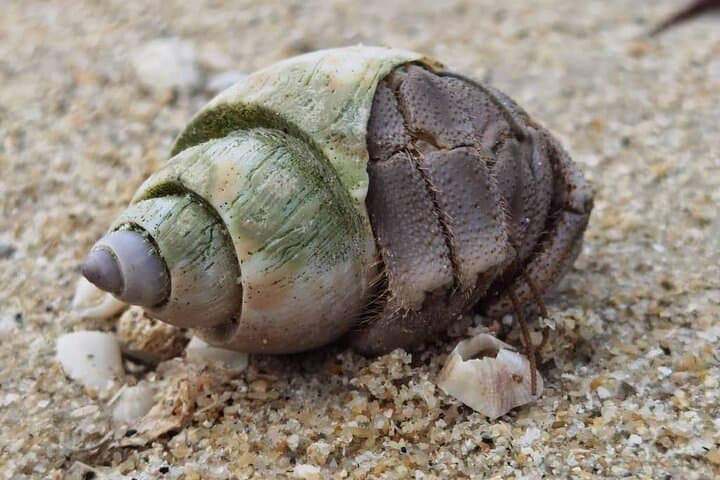

At low tide the shoreline peels back like a curtain and the Desaru Coast reveals small, salt-slick worlds: shallow pools rimmed with green algae, moonshells half-buried in sand, and thousands of sand bubbler crabs stamping intricate patterns as if signing the beach.
At low tide the shoreline peels back like a curtain and the Desaru Coast reveals small, salt-slick worlds: shallow pools rimmed with green algae, moonshells half-buried in sand, and thousands of sand bubbler crabs stamping intricate patterns as if signing the beach.
This short guided walk traces those intertidal shelves—geology here is recent marine sediment and broken coral, shaped by monsoon-driven currents and regular tidal exchange. The coast has long supported Malay fishing communities; today small fishing villages and seafood stalls still mark the rhythm between land and sea.
You’ll learn to read pools: where water gathers, where hermit crabs tuck away, and why moon snails leave ghostly spirals. Naturalists point out feeding zones and explain how seasonal tides and the northeast monsoon change which creatures appear. Birds—herons and terns—patrol the shallows, and mudskippers dart like punctuation marks in the mud.
Practical side: the walk is easy and family-friendly, about 60–90 minutes on mostly flat, uneven sand and rock. Timing is everything—aim for the falling tide window to access the richest pools. Wear sturdy water shoes with good grip, bring sun protection, and carry water; local guides will caution against collecting or handling animals to avoid stressing fragile communities. If rain or rough seas set in, guides cancel to protect both guests and wildlife. The experience is compact, sensory, and instructive: a close-up look at the coast’s small lives and the tidal mechanics that sustain them.