THE ADVENTURE COLLECTIVE® · Independent discovery and booking for outdoor travel

Explore the darker chapters of Derry/Londonderry on a private 90–105 minute walking tour of the Walled City. Licensed guides weave siege history, local folklore and modern cultural memory through streets, gates and quays.
Explore the darker chapters of Derry/Londonderry on a private 90–105 minute walking tour of the Walled City. Licensed guides weave siege history, local folklore and modern cultural memory through streets, gates and quays.
Evening light skims the sandstone of the Walled City and the river fog pulls close to the quays; a small group steps away from Waterloo Place and into lanes that have held arguments, celebrations and sieges for centuries.
Verified experiences and guided adventures in the surrounding area.
Operated by Derrie Danders Walking and Audio Tours · Derry/Londonderry, Northern Ireland
Evening light skims the sandstone of the Walled City and the river fog pulls close to the quays; a small group steps away from Waterloo Place and into lanes that have held arguments, celebrations and sieges for centuries.
The private "dander"—local parlance for a walk—moves deliberately along the 17th‑century walls, pausing at gates, narrow alleys and the Guildhall to tell stories of siege, sectarian memory and folklore. Derry’s walls were raised during the Plantation period and saw their most famous episode in 1689, when the Siege of Derry shaped political and cultural identity across Ulster.
Geology here is simple: red sandstone buildings and reclaimed quays on the River Foyle. Cultural notes surface between facts—street art from recent Troubles memorialization, the yearly Halloween festival that turns the city into a theatrical street stage, and the cadence of Gaelic and Ulster Scots in local speech.
Practical guidance is straightforward. The route is mostly paved and flat but includes uneven cobbles and short flights of steps, so wear supportive shoes. Private tours run about 90–105 minutes and can start at Visit Derry or, by request, the Peace Tree on Browning Drive. Guides are licensed and adapt stories to the group’s interests—history, ghost folklore or civic memory. Tours are suitable for a wide range of ages; they finish back near the tourist office, making public transport or a short walk to local pubs and cafes convenient.
Bring a weatherproof layer and a charged phone for photos; keep voices low at memorial sites and be prepared for the city’s unpredictable weather and the walls’ cool winds.
easy.
1.5–1.75 hours.
Suitable for most fitness levels; requires standing and walking on uneven surfaces for up to 100 minutes.
Tours normally start at the Visit Derry tourist office on Waterloo Place and finish back there; private tours can start at the Peace Tree on Browning Drive by request.
Yes—infants and small children can use strollers and an accessible route can be arranged for private groups if requested at booking.
A wheelchair‑accessible route is available for private tours with prior notice—contact the operator when booking so they can plan the route.
Guides are licensed and blend documented history with local folklore; they can tailor emphasis toward historical detail or spooky anecdotes per your group's preference.
Derry’s walls date to the early 1600s and the Siege of Derry (1689) is central to the city’s identity, reflected in monuments, street names and annual commemorations.
Touring respectfully helps protect fragile stonework and memorial sites; keep to paved paths and avoid touching carved masonry where signage requests it.
Derrie Danders Walking and Audio Tours operates guided outdoor trips and adventures with an emphasis on safety, stewardship, and memorable experiences.
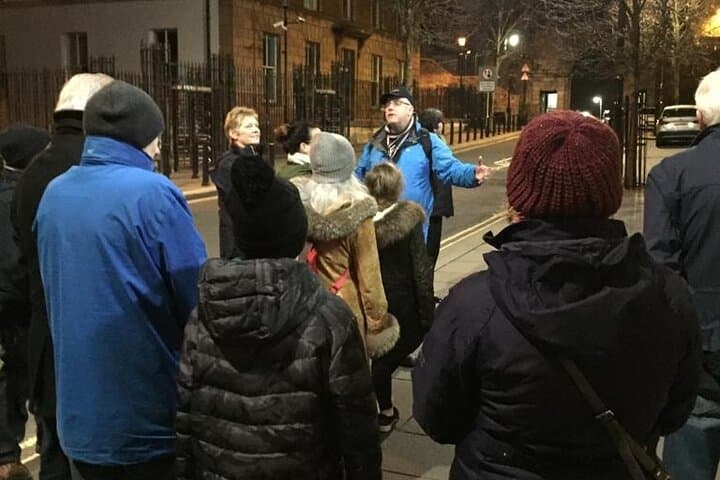
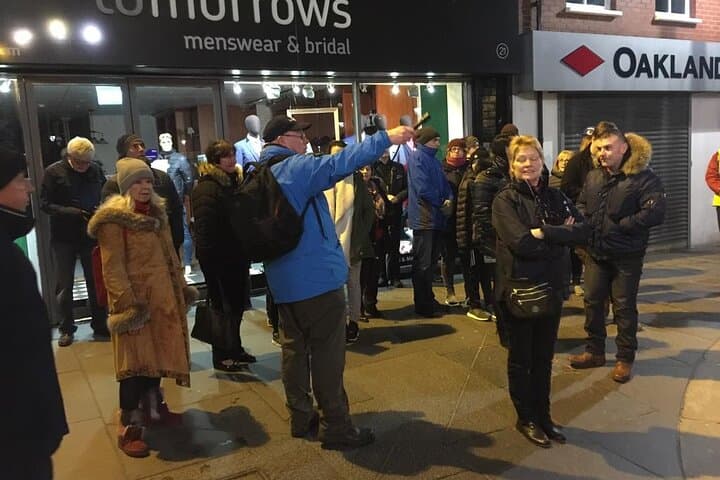
Evening light skims the sandstone of the Walled City and the river fog pulls close to the quays; a small group steps away from Waterloo Place and into lanes that have held arguments, celebrations and sieges for centuries.
Evening light skims the sandstone of the Walled City and the river fog pulls close to the quays; a small group steps away from Waterloo Place and into lanes that have held arguments, celebrations and sieges for centuries.
The private "dander"—local parlance for a walk—moves deliberately along the 17th‑century walls, pausing at gates, narrow alleys and the Guildhall to tell stories of siege, sectarian memory and folklore. Derry’s walls were raised during the Plantation period and saw their most famous episode in 1689, when the Siege of Derry shaped political and cultural identity across Ulster.
Geology here is simple: red sandstone buildings and reclaimed quays on the River Foyle. Cultural notes surface between facts—street art from recent Troubles memorialization, the yearly Halloween festival that turns the city into a theatrical street stage, and the cadence of Gaelic and Ulster Scots in local speech.
Practical guidance is straightforward. The route is mostly paved and flat but includes uneven cobbles and short flights of steps, so wear supportive shoes. Private tours run about 90–105 minutes and can start at Visit Derry or, by request, the Peace Tree on Browning Drive. Guides are licensed and adapt stories to the group’s interests—history, ghost folklore or civic memory. Tours are suitable for a wide range of ages; they finish back near the tourist office, making public transport or a short walk to local pubs and cafes convenient.
Bring a weatherproof layer and a charged phone for photos; keep voices low at memorial sites and be prepared for the city’s unpredictable weather and the walls’ cool winds.