THE ADVENTURE COLLECTIVE® · Independent discovery and booking for outdoor travel

Explore the richly carved Dendera Temple and the focused displays of the Luxor Museum in a single private day trip from Luxor. Comfortable transfers and flexible timing make this a straightforward cultural outing for history-minded travelers.
Explore the richly carved Dendera Temple and the focused displays of the Luxor Museum in a single private day trip from Luxor. Comfortable transfers and flexible timing make this a straightforward cultural outing for history-minded travelers.
You arrive before dawn in a low-slung air-conditioned vehicle, the Nile’s broad current just catching first light as the road eases north toward Dendera. Sand and scrub blur past; minarets and modern villages give way to the ancient stones of a temple that still keeps its colors in the shade.
Verified experiences and guided adventures in the surrounding area.
Operated by Eyes of Egypt · Luxor, Luxor Governorate
You arrive before dawn in a low-slung air-conditioned vehicle, the Nile’s broad current just catching first light as the road eases north toward Dendera. Sand and scrub blur past; minarets and modern villages give way to the ancient stones of a temple that still keeps its colors in the shade.
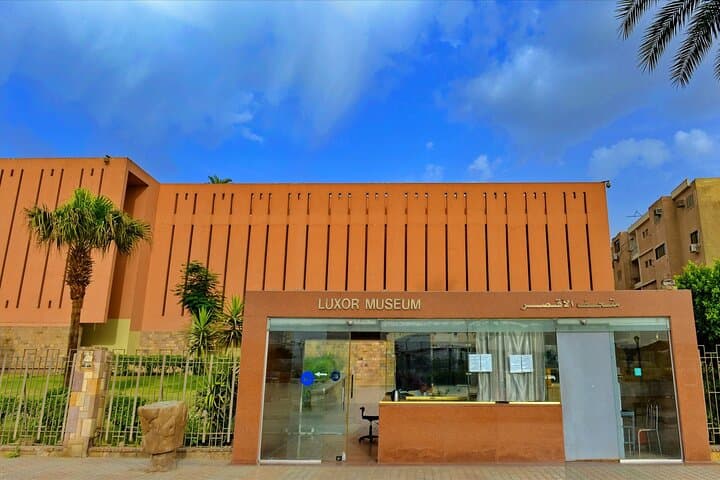
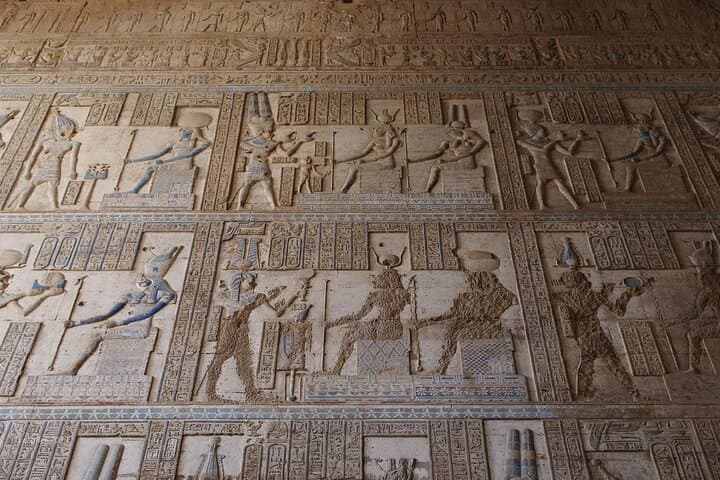
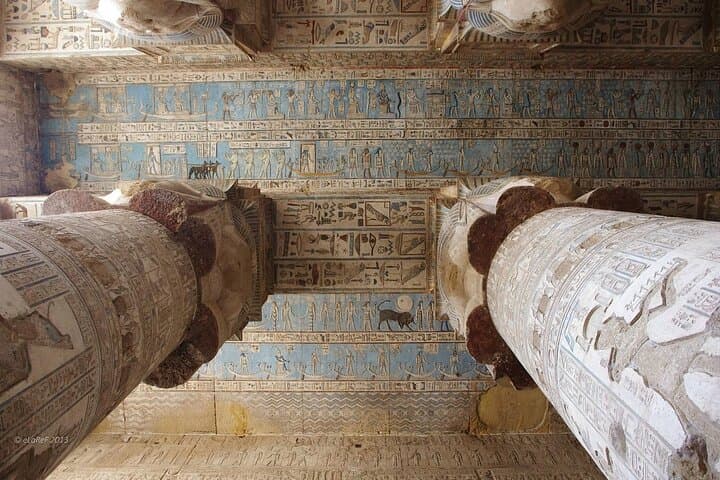
Dendera’s Temple of Hathor is a Ptolemaic jewel—massive Hathor-headed columns, intact reliefs and an astronomical ceiling that reads like a star map. The site sits on layers of Egyptian history that stretch back to the Old Kingdom; each carved scene records faith, ritual and a surprisingly precise eye on the heavens. Back in Luxor, the compact Luxor Museum gathers statues, jewelry and funerary objects from Thebes and nearby necropolises, giving a tight, contextual portrait of daily life and royal ceremony.
The day is practical: a one- to one-and-a-half-hour drive each way, private transport with a driver who waits while you visit (tickets and licensed guides not included unless arranged). Expect flat walking on paved and slightly uneven temple floors, open sun at Dendera and shaded galleries at the museum.
Plan for heat and sun — mornings and late afternoons are most comfortable. Bring small bills for entrance fees and local vendors, a reusable water bottle, sturdy shoes and a light scarf for dust and sun protection. If you want deeper historical context, reserve a licensed Egyptologist guide in advance. This trip pairs archaeological richness with straightforward logistics, delivering a full day of Pharaonic insight without strenuous hiking or tricky transfers.
easy.
6–7 hours.
Suitable for most fitness levels; requires light walking and standing during exhibits.
No, entrance tickets to Dendera Temple and Luxor Museum are not included; pay at the ticket booths on arrival in Egyptian pounds or by card where accepted.
A local driver is provided and will wait during visits; a licensed Egyptologist guide can be arranged on request for additional cost and must be booked in advance.
Expect about a 1–1.5 hour drive each way depending on traffic and road conditions; the route follows the Nile corridor with scattered villages and farmland.
The tour lists wheelchair-accessible transport and options, but temple ground surfaces can be uneven; contact the operator ahead to confirm accessibility details for specific needs.
Dendera’s current temple dates largely to the Ptolemaic period built over much older sacred ground; Luxor Museum organizes finds from nearby temples and tombs to trace Thebes’ religious and royal life.
Sites are fragile—avoid touching reliefs or climbing on ruins, and support conservation by following posted routes and hiring licensed guides who contribute to local cultural tourism.
Eyes of Egypt operates guided outdoor trips and adventures with an emphasis on safety, stewardship, and memorable experiences.

You arrive before dawn in a low-slung air-conditioned vehicle, the Nile’s broad current just catching first light as the road eases north toward Dendera. Sand and scrub blur past; minarets and modern villages give way to the ancient stones of a temple that still keeps its colors in the shade.
You arrive before dawn in a low-slung air-conditioned vehicle, the Nile’s broad current just catching first light as the road eases north toward Dendera. Sand and scrub blur past; minarets and modern villages give way to the ancient stones of a temple that still keeps its colors in the shade.
Dendera’s Temple of Hathor is a Ptolemaic jewel—massive Hathor-headed columns, intact reliefs and an astronomical ceiling that reads like a star map. The site sits on layers of Egyptian history that stretch back to the Old Kingdom; each carved scene records faith, ritual and a surprisingly precise eye on the heavens. Back in Luxor, the compact Luxor Museum gathers statues, jewelry and funerary objects from Thebes and nearby necropolises, giving a tight, contextual portrait of daily life and royal ceremony.
The day is practical: a one- to one-and-a-half-hour drive each way, private transport with a driver who waits while you visit (tickets and licensed guides not included unless arranged). Expect flat walking on paved and slightly uneven temple floors, open sun at Dendera and shaded galleries at the museum.
Plan for heat and sun — mornings and late afternoons are most comfortable. Bring small bills for entrance fees and local vendors, a reusable water bottle, sturdy shoes and a light scarf for dust and sun protection. If you want deeper historical context, reserve a licensed Egyptologist guide in advance. This trip pairs archaeological richness with straightforward logistics, delivering a full day of Pharaonic insight without strenuous hiking or tricky transfers.