THE ADVENTURE COLLECTIVE® · Independent discovery and booking for outdoor travel

Spend a private day exploring Dendera’s painted ceilings and astronomical reliefs, then return to Luxor to see the tools and rituals of ancient mummification. This 6–7 hour tour blends open-air temple wonder with museum context—perfect for history-minded travelers.
Spend a private day exploring Dendera’s painted ceilings and astronomical reliefs, then return to Luxor to see the tools and rituals of ancient mummification. This 6–7 hour tour blends open-air temple wonder with museum context—perfect for history-minded travelers.
You roll away from Luxor at first light, the Nile daring you to track its slow, green curve as palm-lined fields slip by. An hour and a half later the columns of Dendera rise out of the flat plain—six Hathoric capitals framing the doorway like oversized sentries. Inside, ceilings still wear painted constellations and zodiac panels that push the sky into carved stone.
Verified experiences and guided adventures in the surrounding area.
Operated by Eyes of Egypt · Dendera, Qena Governorate
You roll away from Luxor at first light, the Nile daring you to track its slow, green curve as palm-lined fields slip by. An hour and a half later the columns of Dendera rise out of the flat plain—six Hathoric capitals framing the doorway like oversized sentries. Inside, ceilings still wear painted constellations and zodiac panels that push the sky into carved stone.
Dendera’s main shrine dates largely to the Ptolemaic period but sits above a long history of worship of Hathor, goddess of music, joy and motherhood. The temple’s reliefs and astronomical scenes reveal how ancient Egyptians charted both calendar and myth. Back in Luxor, the Mummification Museum grounds offer a quieter, clinical counterpoint: tools, wrapped remains and coffins that explain the technical and ritual steps used to prepare bodies for the afterlife.
This private day tour combines the two in a measured loop—roughly 6–7 hours including drives—so you’ll trade long temple strolls for focused, interpretive stops. Practical realities matter: entrance fees and licensed guide services aren’t included, the driver waits outside, and interior surfaces can be uneven. Expect dry heat, strong sun and sections with low light where a small flashlight or camera with good low-light performance is useful.
Plan for sun protection, comfortable shoes for stone floors and steps, cash for tickets and tips, and the patience to move at the tempo of antiquity. The trip gives both visual spectacle and technical context—a blend of open-air monument study and museum archaeology that’s rich without being rushed.
easy.
6–7 hours.
Light fitness required—mostly walking on flat temple floors and museum exhibits; ability to climb short steps is helpful
No—entrance tickets for Dendera Temple and the Mummification Museum must be purchased on arrival; the driver will wait outside.
Expect approximately 1.5 hours each way depending on traffic and road conditions—plan the day accordingly.
The tour includes a professional English-speaking driver; a licensed archaeological guide is available on request for an additional fee and can greatly enhance interpretation.
Transportation is wheelchair accessible, but temple interiors have uneven floors and steps—assistance may be required for full access.
Dendera’s principal sanctuary honors Hathor and preserves Ptolemaic-era astronomical ceilings; Luxor’s Mummification Museum documents embalming tools and ritual practices central to ancient Egyptian beliefs about the afterlife.
Sites are subject to conservation rules—avoid touching painted reliefs, follow designated paths, and consider hiring licensed local guides to support responsible tourism.
Eyes of Egypt operates guided outdoor trips and adventures with an emphasis on safety, stewardship, and memorable experiences.
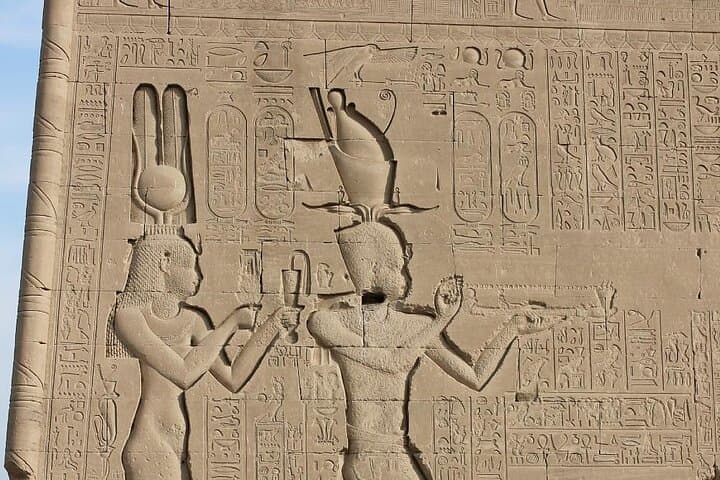
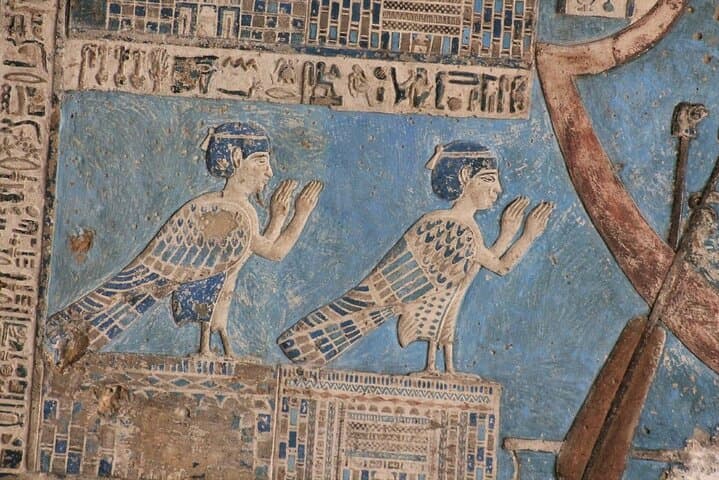
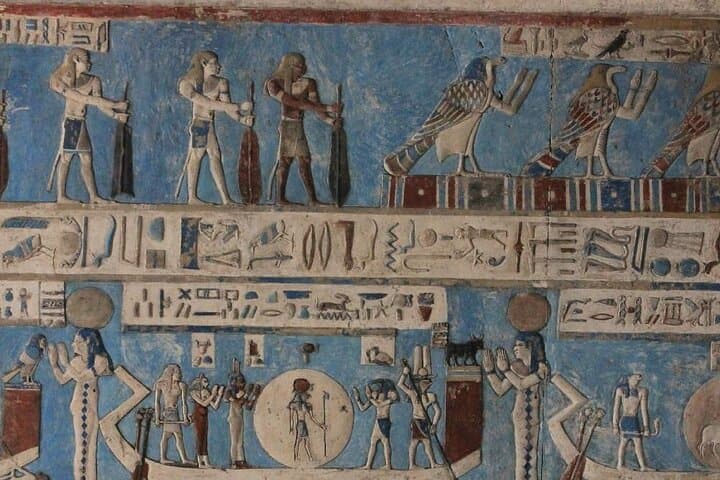
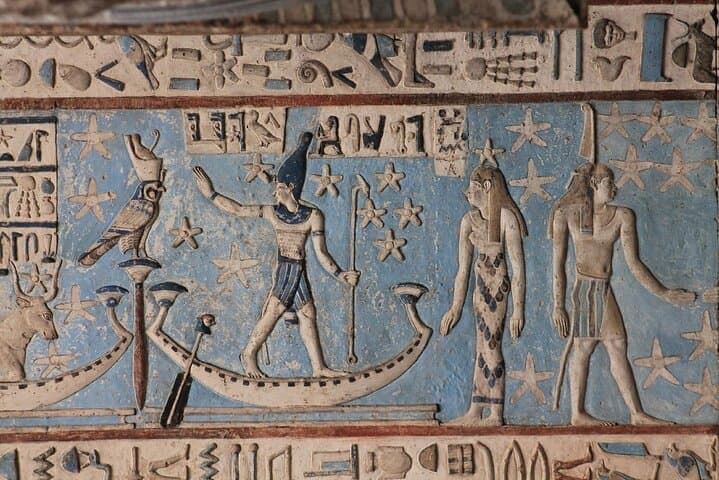
You roll away from Luxor at first light, the Nile daring you to track its slow, green curve as palm-lined fields slip by. An hour and a half later the columns of Dendera rise out of the flat plain—six Hathoric capitals framing the doorway like oversized sentries. Inside, ceilings still wear painted constellations and zodiac panels that push the sky into carved stone.
You roll away from Luxor at first light, the Nile daring you to track its slow, green curve as palm-lined fields slip by. An hour and a half later the columns of Dendera rise out of the flat plain—six Hathoric capitals framing the doorway like oversized sentries. Inside, ceilings still wear painted constellations and zodiac panels that push the sky into carved stone.
Dendera’s main shrine dates largely to the Ptolemaic period but sits above a long history of worship of Hathor, goddess of music, joy and motherhood. The temple’s reliefs and astronomical scenes reveal how ancient Egyptians charted both calendar and myth. Back in Luxor, the Mummification Museum grounds offer a quieter, clinical counterpoint: tools, wrapped remains and coffins that explain the technical and ritual steps used to prepare bodies for the afterlife.
This private day tour combines the two in a measured loop—roughly 6–7 hours including drives—so you’ll trade long temple strolls for focused, interpretive stops. Practical realities matter: entrance fees and licensed guide services aren’t included, the driver waits outside, and interior surfaces can be uneven. Expect dry heat, strong sun and sections with low light where a small flashlight or camera with good low-light performance is useful.
Plan for sun protection, comfortable shoes for stone floors and steps, cash for tickets and tips, and the patience to move at the tempo of antiquity. The trip gives both visual spectacle and technical context—a blend of open-air monument study and museum archaeology that’s rich without being rushed.