THE ADVENTURE COLLECTIVE® · Independent discovery and booking for outdoor travel

Explore two of Upper Egypt’s most evocative temple complexes on this guided 2-day journey from Luxor. Visit the ritual heart of Abydos and the astronomically detailed Dendera Temple with a private English-speaking guide and included entrances.
Explore two of Upper Egypt’s most evocative temple complexes on this guided 2-day journey from Luxor. Visit the ritual heart of Abydos and the astronomically detailed Dendera Temple with a private English-speaking guide and included entrances.
You arrive before dawn on the long straight road north of Luxor, the Nile a slow ribbon to your right and the desert pressing low and bright to the left. The driver eases along and the first stones of Abydos appear like a story resurfacing—cols and carved walls catching the early light as if the past were waking.
Verified experiences and guided adventures in the surrounding area.
Operated by Egypt Travel Planning · Dendera, Qena Governorate
You arrive before dawn on the long straight road north of Luxor, the Nile a slow ribbon to your right and the desert pressing low and bright to the left. The driver eases along and the first stones of Abydos appear like a story resurfacing—cols and carved walls catching the early light as if the past were waking.
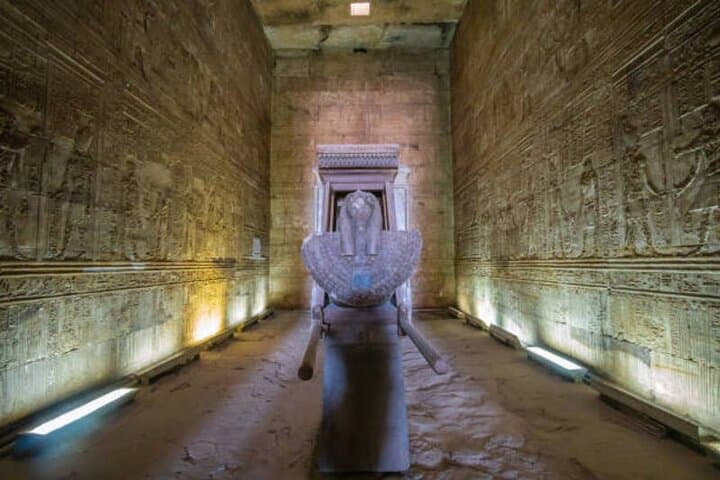
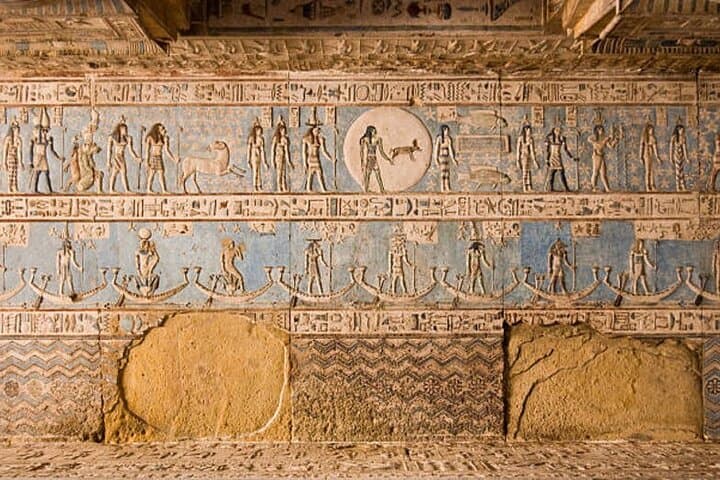
Abydos has been sacred since prehistory, a center of Osiris worship and the place where pharaohs sought ancestral legitimacy; its King List is a rare chronological clue for Egyptologists. Dendera, by contrast, is a Ptolemaic monument to Hathor—its carved reliefs and astronomical ceiling are remarkably intact, offering a late-Pharaonic palette and Greco-Egyptian architectural flourishes.
Geology here is simple: limestone bedrock cut by millennia of human hands, sandstone blocks smoothed by wind and the Nile’s seasonal moods. Local culture remains tied to the river—farmers, ferry operators and temple guards sustain a living landscape around the ruins.
Practical guidance: expect uneven stone steps, low-light interiors and tight chambers; comfortable, modest clothing helps with both respect and heat management. Plan early starts to avoid midday sun, carry 2–3 liters of water and wear closed-toe walking shoes with good grip. Photography is allowed in many outdoor areas but avoid flash inside delicate chambers. The tour returns you to Luxor with guided context at every site and included entrance fees and meals, so you can focus on reading the reliefs and listening to the guide narrate centuries in stone.
easy.
2 days (approx. 8–10 hours per day).
Suitable for most fitness levels; expect walking on uneven surfaces and short climbs of stone steps.
Yes—this tour includes entrance fees to the listed sites, two lunches and hotel breakfast as noted in the itinerary.
Private pickup from Luxor hotels, the airport or railway station is provided—pickup details are requested at booking.
Most temple complexes have uneven stone surfaces and steps; access is limited and assistance may be required—contact the operator to discuss needs.
October–April offers the most comfortable temperatures for touring; summer months are extremely hot and require careful planning.
Abydos was a premier cult center for Osiris and preserves the Abydos King List; Dendera is a Ptolemaic shrine to Hathor famed for its preserved reliefs and astronomy-themed ceiling.
These monuments are fragile—avoid touching painted reliefs, follow guide instructions, and support conservation by using licensed guides and respecting site rules.
Egypt Travel Planning operates guided outdoor trips and adventures with an emphasis on safety, stewardship, and memorable experiences.

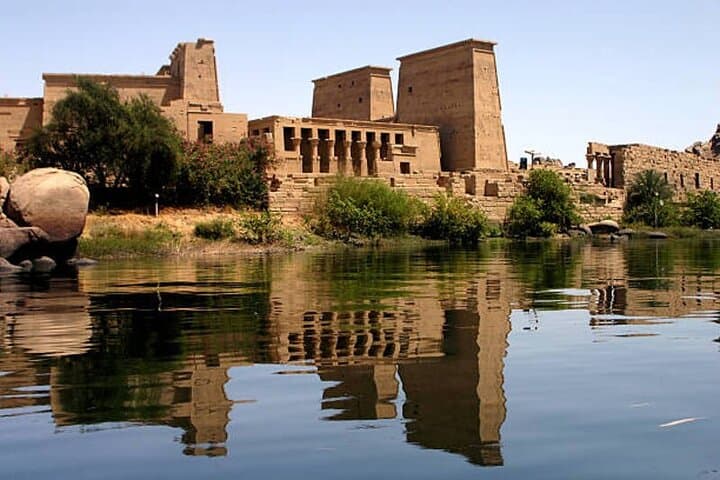
You arrive before dawn on the long straight road north of Luxor, the Nile a slow ribbon to your right and the desert pressing low and bright to the left. The driver eases along and the first stones of Abydos appear like a story resurfacing—cols and carved walls catching the early light as if the past were waking.
You arrive before dawn on the long straight road north of Luxor, the Nile a slow ribbon to your right and the desert pressing low and bright to the left. The driver eases along and the first stones of Abydos appear like a story resurfacing—cols and carved walls catching the early light as if the past were waking.
Abydos has been sacred since prehistory, a center of Osiris worship and the place where pharaohs sought ancestral legitimacy; its King List is a rare chronological clue for Egyptologists. Dendera, by contrast, is a Ptolemaic monument to Hathor—its carved reliefs and astronomical ceiling are remarkably intact, offering a late-Pharaonic palette and Greco-Egyptian architectural flourishes.
Geology here is simple: limestone bedrock cut by millennia of human hands, sandstone blocks smoothed by wind and the Nile’s seasonal moods. Local culture remains tied to the river—farmers, ferry operators and temple guards sustain a living landscape around the ruins.
Practical guidance: expect uneven stone steps, low-light interiors and tight chambers; comfortable, modest clothing helps with both respect and heat management. Plan early starts to avoid midday sun, carry 2–3 liters of water and wear closed-toe walking shoes with good grip. Photography is allowed in many outdoor areas but avoid flash inside delicate chambers. The tour returns you to Luxor with guided context at every site and included entrance fees and meals, so you can focus on reading the reliefs and listening to the guide narrate centuries in stone.