THE ADVENTURE COLLECTIVE® · Independent discovery and booking for outdoor travel

Spend a day from Luxor exploring Abydos’s Seti I temple and Dendara’s vividly painted Temple of Hathor. This private tour pairs well-preserved reliefs with expert commentary and straightforward logistics for an easy, full-day cultural outing.
Spend a day from Luxor exploring Abydos’s Seti I temple and Dendara’s vividly painted Temple of Hathor. This private tour pairs well-preserved reliefs with expert commentary and straightforward logistics for an easy, full-day cultural outing.
Morning light off the Nile thins to a hard gold as the private car pulls away from Luxor and the desert opens like a page.
Verified experiences and guided adventures in the surrounding area.
Operated by Roxana Travel · Abydos, Sohag Governorate
Morning light off the Nile thins to a hard gold as the private car pulls away from Luxor and the desert opens like a page.
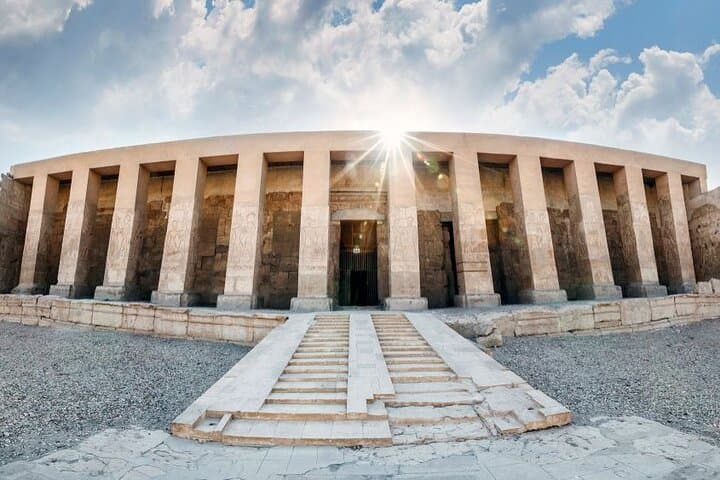
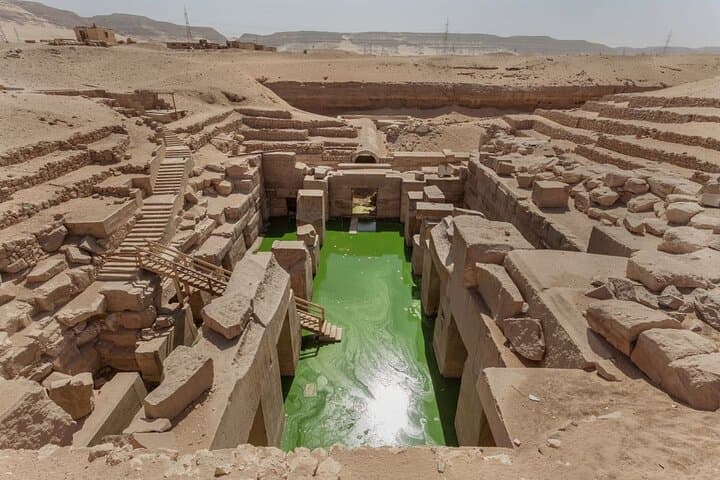
By mid-morning the guide leads the group through Abydos, a place where stone keeps records of kings and rituals. The cool shadows of Seti I's hypostyle halls and the carved procession of kings feel deliberate — history arranged in measured bands — while nearby reliefs of Osiris keep the antiquity intimate rather than distant. Geological layers of limestone and sandstone underfoot tell of the same ancient sediment that built Egypt's monuments and channels the Faiyum winds that scoured the plaster centuries ago.
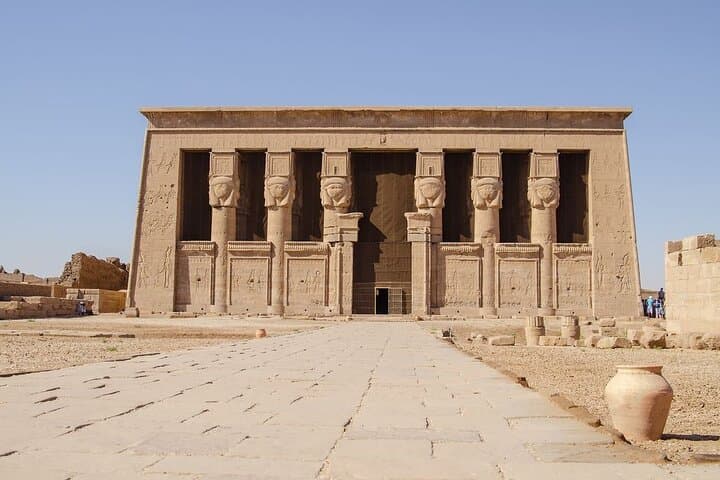
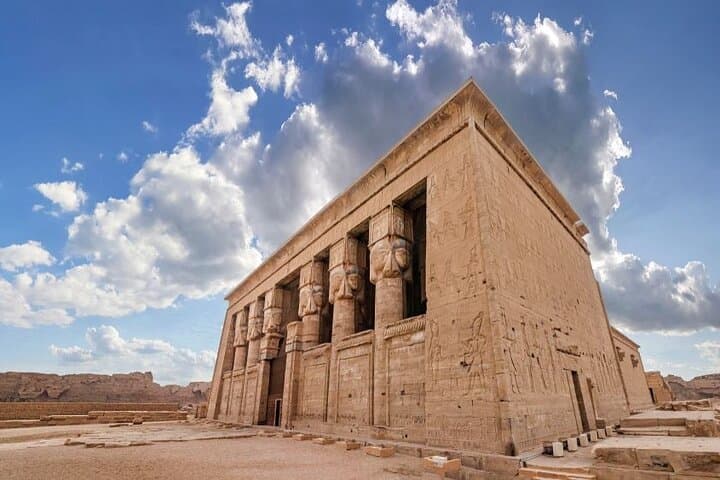
Later, at Dendara, color survives where many sites have faded: ochres and blues still cling to Hathor's image, and the rounded columns at her temple create a quieter, domestic scale compared with larger cult complexes. The guide explains iconography, the temple’s Ptolemaic additions, and local practices tied to fertility and music — small cultural windows into daily religious life.
Practical side: expect mostly flat walking with stairs inside temple complexes; bring shade, water, and modest clothing — shoulders and knees covered at many sites. Photography is allowed in most areas but follow the guide for restricted zones. The round-trip is roughly eight hours with about 3–4 hours of on-site exploration split between Abydos and Dendara; some stretches are exposed, so plan sun protection and light layers.
This tour balances immersive archaeology with accessible logistics: a full-day route for travelers who want both major sights and context without a strenuous hike.
easy.
8 hours.
Suitable for most travelers with basic mobility; involves several short walks and some stairs.
This tour description lists admission as not included; confirm with the operator whether ticket fees are handled separately or payable onsite.
Pickup typically begins around 7:00 AM from hotels or Nile cruises in Luxor; exact pickup points are collected at booking.
Many areas have level approaches and the operator notes wheelchair-accessible options, but some temple interiors include steps—check specifics with the guide before booking.
Photography is generally allowed, though flash or tripod rules may vary; follow the guide’s direction and respect restricted zones.
Abydos became an important cult center for Osiris and was expanded by Seti I and Ramses II; Dendara’s Temple of Hathor contains Ptolemaic and Roman phases reflecting layered religious practice.
Both sites face erosion from wind and visitor pressure; follow marked paths, avoid touching painted surfaces, and use water sparingly to support local preservation efforts.
Roxana Travel operates guided outdoor trips and adventures with an emphasis on safety, stewardship, and memorable experiences.
Morning light off the Nile thins to a hard gold as the private car pulls away from Luxor and the desert opens like a page.
Morning light off the Nile thins to a hard gold as the private car pulls away from Luxor and the desert opens like a page.
By mid-morning the guide leads the group through Abydos, a place where stone keeps records of kings and rituals. The cool shadows of Seti I's hypostyle halls and the carved procession of kings feel deliberate — history arranged in measured bands — while nearby reliefs of Osiris keep the antiquity intimate rather than distant. Geological layers of limestone and sandstone underfoot tell of the same ancient sediment that built Egypt's monuments and channels the Faiyum winds that scoured the plaster centuries ago.
Later, at Dendara, color survives where many sites have faded: ochres and blues still cling to Hathor's image, and the rounded columns at her temple create a quieter, domestic scale compared with larger cult complexes. The guide explains iconography, the temple’s Ptolemaic additions, and local practices tied to fertility and music — small cultural windows into daily religious life.
Practical side: expect mostly flat walking with stairs inside temple complexes; bring shade, water, and modest clothing — shoulders and knees covered at many sites. Photography is allowed in most areas but follow the guide for restricted zones. The round-trip is roughly eight hours with about 3–4 hours of on-site exploration split between Abydos and Dendara; some stretches are exposed, so plan sun protection and light layers.
This tour balances immersive archaeology with accessible logistics: a full-day route for travelers who want both major sights and context without a strenuous hike.