THE ADVENTURE COLLECTIVE® · Independent discovery and booking for outdoor travel

Walk three hours through Denali’s boreal forests with a certified naturalist who decodes plants, peat bogs, and glacial landforms. Ideal for curious travelers wanting a close, safe look at the park’s ecology.
Walk three hours through Denali’s boreal forests with a certified naturalist who decodes plants, peat bogs, and glacial landforms. Ideal for curious travelers wanting a close, safe look at the park’s ecology.
You step off the park road into a cool hush of black spruce and birch; peat underfoot gives a soft, spongey signature to every step while distant ridgelines hold clouds like a secret.
Verified experiences and guided adventures in the surrounding area.
Operated by Northern Epics · Healy, Alaska
You step off the park road into a cool hush of black spruce and birch; peat underfoot gives a soft, spongey signature to every step while distant ridgelines hold clouds like a secret.
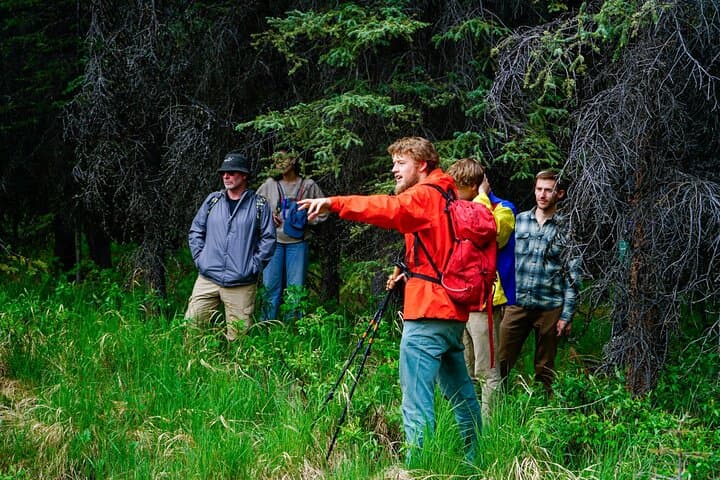
On this three-hour nature walk inside Denali National Park you'll move at an easy, observant pace through boreal forest and low wet tundra where cloudberries hide and moss cushions the trail. An expert naturalist leads the group, pointing out plant ID, the signs of permafrost and glacial history, and the subtle behaviors of resident birds and small mammals. The guide carries bear protection and Wilderness First Responder training — comfort for those thinking about Alaska’s wilder side.
Geology here is recent in deep time: glacial scouring left moraines and kettles that feed the black spruce bogs you pass. Athabascan peoples have lived in these valleys for millennia; you'll hear brief cultural notes about subsistence and place names that anchor the landscape to human history.
Practically: expect roughly 3–4 miles (5–6 km) of walking on uneven, sometimes wet ground with minimal elevation gain. Layers are essential — weather can flip between sun and sleet in an hour. Bring water, a daypack, and sturdy waterproof boots; binoculars help for bird and distant-mountain viewing. Morning tours often yield clearer skies and more active wildlife.
This walk is both an introduction and a close encounter — not a summit push, but an intimate ecology lesson that leaves you with a sharper sense of how Denali’s forests, wetlands, and ice-shaped landforms work together.
easy.
3 hours.
Suitable for most fitness levels; participants should be able to walk continuously at an easy pace for three hours over uneven ground.
It’s an easy-paced, interpretive 3-hour walk with minimal elevation gain; participants should be able to walk for three hours over uneven terrain.
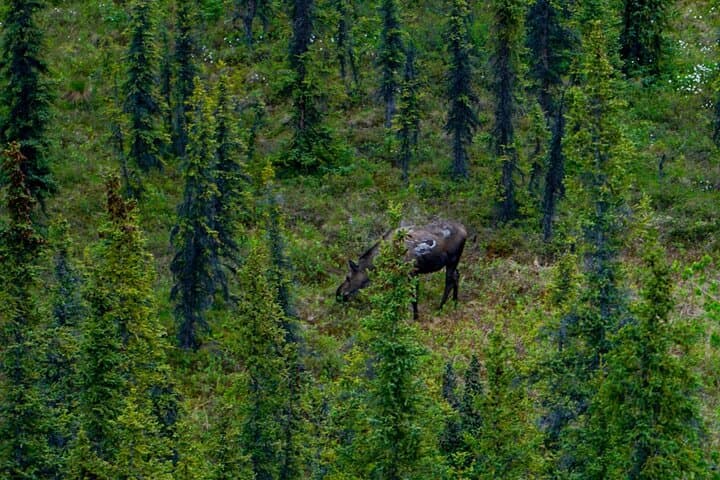
Wildlife sightings are possible but not guaranteed; the guide is trained in wildlife protocols and carries bear protection for safety.
Yes — the tour is described as suitable for all fitness levels, though infants must sit on laps and participants should be able to walk for the duration.
Bring water, layered clothing, waterproof boots, sunscreen, and a small daypack; trekking poles may be useful if you prefer extra stability.
Athabaskan peoples have long used these valleys; later, early 20th-century exploration and railroad construction opened the area to scientific study and tourism.
Park staff emphasize Leave No Trace and minimizing disturbance to fragile tundra; small-group walks and a guide’s biosecurity practices help protect plant and soil communities.
Northern Epics operates guided outdoor trips and adventures with an emphasis on safety, stewardship, and memorable experiences.
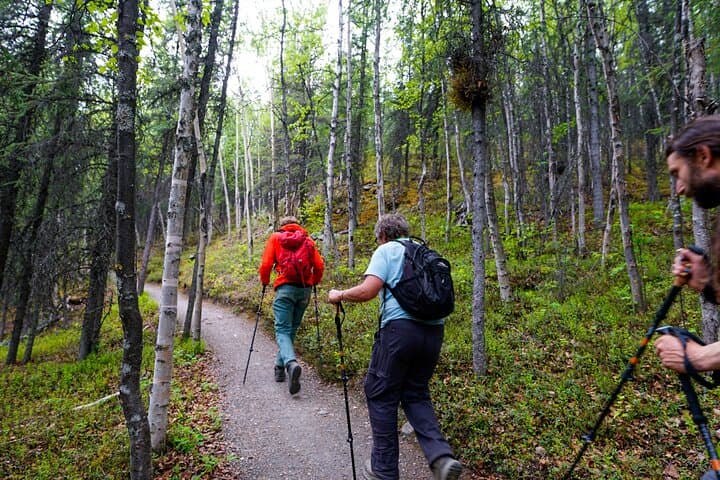
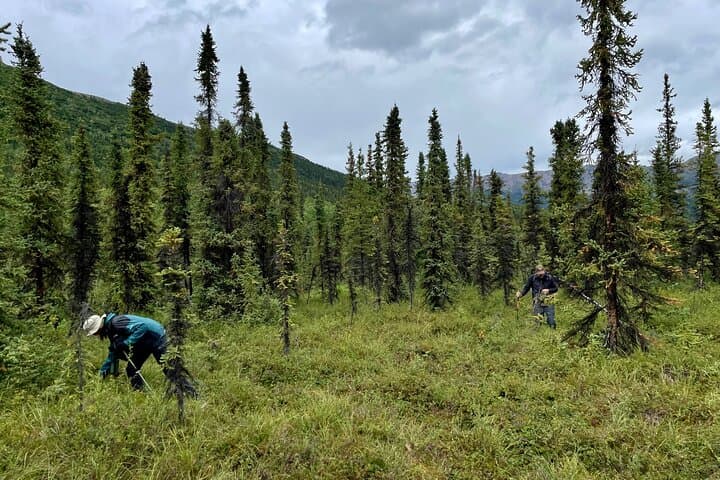
You step off the park road into a cool hush of black spruce and birch; peat underfoot gives a soft, spongey signature to every step while distant ridgelines hold clouds like a secret.
You step off the park road into a cool hush of black spruce and birch; peat underfoot gives a soft, spongey signature to every step while distant ridgelines hold clouds like a secret.
On this three-hour nature walk inside Denali National Park you'll move at an easy, observant pace through boreal forest and low wet tundra where cloudberries hide and moss cushions the trail. An expert naturalist leads the group, pointing out plant ID, the signs of permafrost and glacial history, and the subtle behaviors of resident birds and small mammals. The guide carries bear protection and Wilderness First Responder training — comfort for those thinking about Alaska’s wilder side.
Geology here is recent in deep time: glacial scouring left moraines and kettles that feed the black spruce bogs you pass. Athabascan peoples have lived in these valleys for millennia; you'll hear brief cultural notes about subsistence and place names that anchor the landscape to human history.
Practically: expect roughly 3–4 miles (5–6 km) of walking on uneven, sometimes wet ground with minimal elevation gain. Layers are essential — weather can flip between sun and sleet in an hour. Bring water, a daypack, and sturdy waterproof boots; binoculars help for bird and distant-mountain viewing. Morning tours often yield clearer skies and more active wildlife.
This walk is both an introduction and a close encounter — not a summit push, but an intimate ecology lesson that leaves you with a sharper sense of how Denali’s forests, wetlands, and ice-shaped landforms work together.