THE ADVENTURE COLLECTIVE® · Independent discovery and booking for outdoor travel

Leave the boardwalks and follow a naturalist off-trail into Denali’s boreal forest. Over four hours you’ll forage, track wildlife like snowshoe hare, and learn Athabaskan and frontier stories tied to this glacial landscape.
Leave the boardwalks and follow a naturalist off-trail into Denali’s boreal forest. Over four hours you’ll forage, track wildlife like snowshoe hare, and learn Athabaskan and frontier stories tied to this glacial landscape.
The air tastes cold and sharp as you step off the faint boot-lanes and into a world where spruce and birch argue for space. Moss gives underfoot like a soft memory, and a guide bends to lift a handful of wild blueberries — tart, immediate, local — before you follow a snowshoe hare as it ghosts between the trunks.
Verified experiences and guided adventures in the surrounding area.
Operated by Northern Epics · Denali Park, Alaska
The air tastes cold and sharp as you step off the faint boot-lanes and into a world where spruce and birch argue for space. Moss gives underfoot like a soft memory, and a guide bends to lift a handful of wild blueberries — tart, immediate, local — before you follow a snowshoe hare as it ghosts between the trunks.
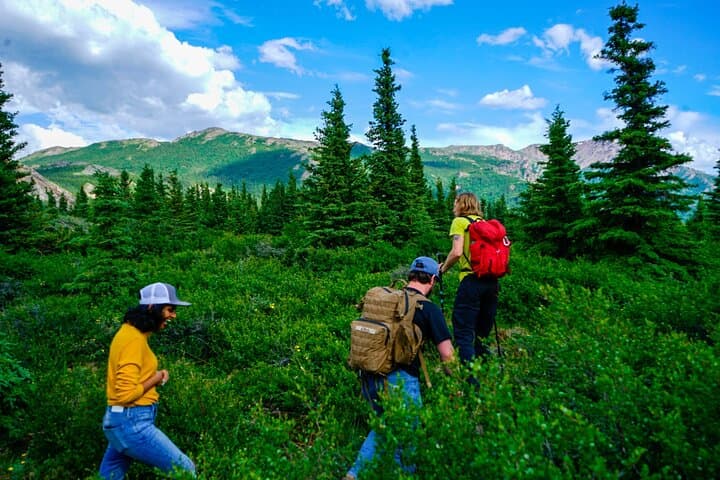
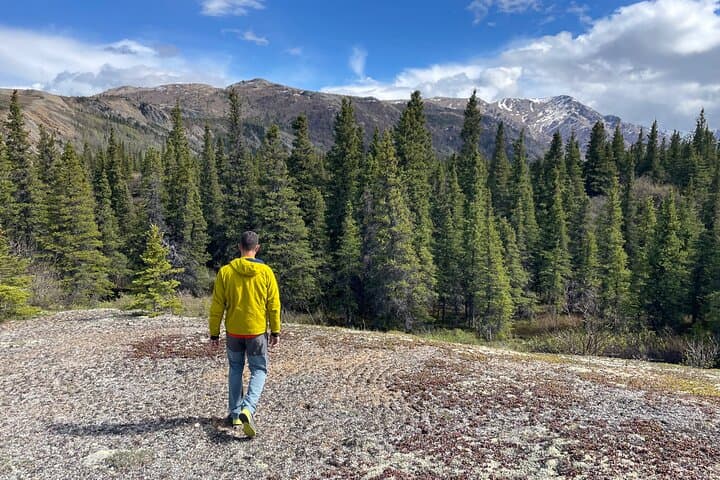
This four‑hour off‑trail walk threads boreal forest and fringe tundra just outside Denali National Park. The geology here is written by ice: glacial moraines, tussocky tundra, and well-drained knolls that reveal the Alaska Range on clear days. Cultural stories come as readily as ecological ones — Athabaskan use of plants, the era of trappers, and the pragmatic survival skills that shaped life in this latitude.
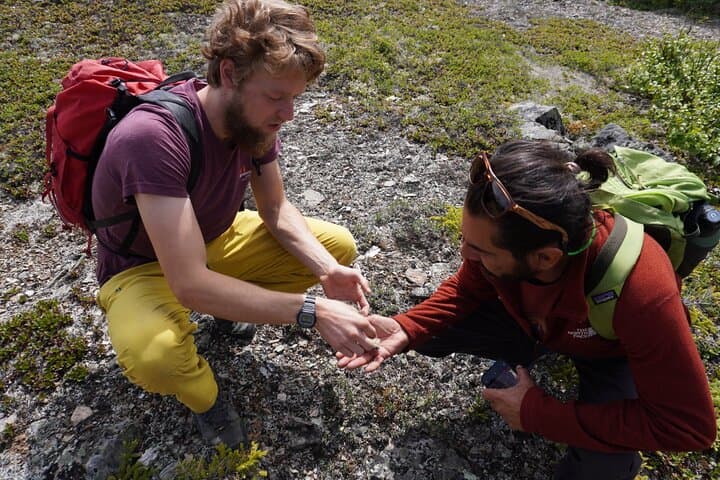
Expect a pragmatic, sensory-focused outing rather than a manicured trail. Guides emphasize identification (plants, tracks, birds) and low‑impact travel; groups stay small and flexible, often changing course to follow wildlife or seasonal blooms. Physically this is moderate — uneven roots, soft moss, occasional wet patches — and you’ll be on your feet for much of the time.
Plan for variable weather: layered clothing, waterproof boots, and a refillable water bottle are essentials. Morning light brings clearer views and quieter animals; late summer adds berries and mosquitoes. This is a learning walk as much as a hike — come ready to taste, touch, and ask questions, and leave knowing more about the land and how to protect it.
moderate.
3.5–4 hours.
Moderate fitness — able to hike off-trail over uneven, sometimes boggy ground for several hours.
This is off-trail but paced for a general audience; beginners with reasonable mobility can participate if they are comfortable on uneven ground.
Wildlife sightings occur but aren’t guaranteed; guides prioritize safety and will alter route if there’s a risk of close encounters.
Families may join but participants should be able to walk several miles off-trail; check operator age policies and consider children’s tolerance for variable terrain.
Tours can be canceled for safety and refunded if within cancellation policy; guides will reschedule or advise based on conditions.
The area holds deep Athabaskan plant-use knowledge and later drew trappers and subsistence hunters who adapted to the harsh climate.
Operators practice Leave No Trace and donate a portion of proceeds to regional conservation; off-trail travel is managed to avoid sensitive vegetation and wildlife disturbance.
Northern Epics operates guided outdoor trips and adventures with an emphasis on safety, stewardship, and memorable experiences.
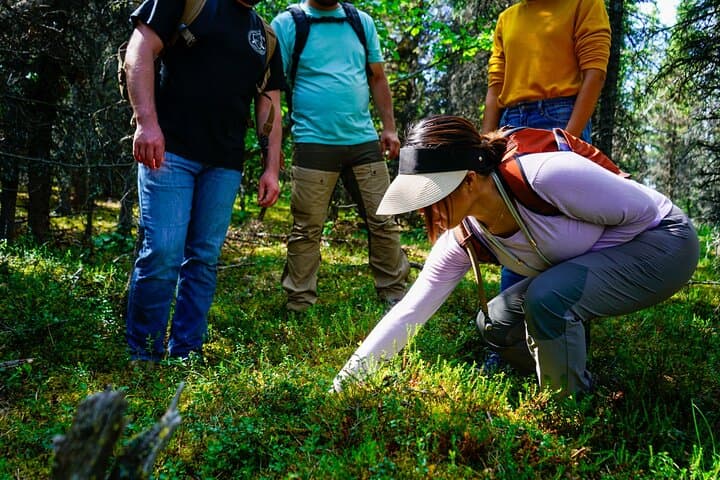
The air tastes cold and sharp as you step off the faint boot-lanes and into a world where spruce and birch argue for space. Moss gives underfoot like a soft memory, and a guide bends to lift a handful of wild blueberries — tart, immediate, local — before you follow a snowshoe hare as it ghosts between the trunks.
The air tastes cold and sharp as you step off the faint boot-lanes and into a world where spruce and birch argue for space. Moss gives underfoot like a soft memory, and a guide bends to lift a handful of wild blueberries — tart, immediate, local — before you follow a snowshoe hare as it ghosts between the trunks.
This four‑hour off‑trail walk threads boreal forest and fringe tundra just outside Denali National Park. The geology here is written by ice: glacial moraines, tussocky tundra, and well-drained knolls that reveal the Alaska Range on clear days. Cultural stories come as readily as ecological ones — Athabaskan use of plants, the era of trappers, and the pragmatic survival skills that shaped life in this latitude.
Expect a pragmatic, sensory-focused outing rather than a manicured trail. Guides emphasize identification (plants, tracks, birds) and low‑impact travel; groups stay small and flexible, often changing course to follow wildlife or seasonal blooms. Physically this is moderate — uneven roots, soft moss, occasional wet patches — and you’ll be on your feet for much of the time.
Plan for variable weather: layered clothing, waterproof boots, and a refillable water bottle are essentials. Morning light brings clearer views and quieter animals; late summer adds berries and mosquitoes. This is a learning walk as much as a hike — come ready to taste, touch, and ask questions, and leave knowing more about the land and how to protect it.