THE ADVENTURE COLLECTIVE® · Independent discovery and booking for outdoor travel

A private 2-day circuit from Athens visiting Delphi’s mountainside oracle and Meteora’s cliff-top monasteries, with boutique 4-star lodging included. Expect dramatic geology, centuries-old art, and practical logistics handled by a private driver.
A private 2-day circuit from Athens visiting Delphi’s mountainside oracle and Meteora’s cliff-top monasteries, with boutique 4-star lodging included. Expect dramatic geology, centuries-old art, and practical logistics handled by a private driver.
The road out of Athens narrows, then opens onto mountains—olive groves give way to pines and a wind that seems to urge you onward. By midmorning you’re at Delphi, perched on a terraced slope above a ravine, where the ruins of the Temple of Apollo look across the valley like an ancient stage. The marble steps are cool underfoot; the air tastes of sun-warmed stone and distant sea.
Verified experiences and guided adventures in the surrounding area.
Operated by CRISPY LOCAL MONOPROSOΡΙ Ι.Κ.Ε. · Delphi, Central Greece
The road out of Athens narrows, then opens onto mountains—olive groves give way to pines and a wind that seems to urge you onward. By midmorning you’re at Delphi, perched on a terraced slope above a ravine, where the ruins of the Temple of Apollo look across the valley like an ancient stage. The marble steps are cool underfoot; the air tastes of sun-warmed stone and distant sea.
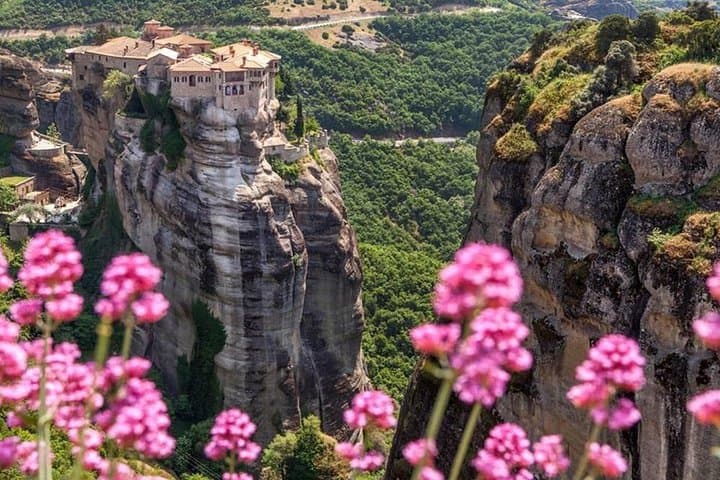
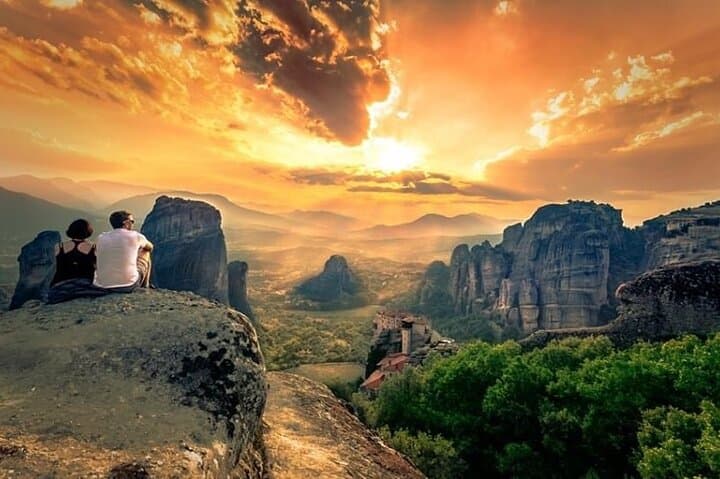
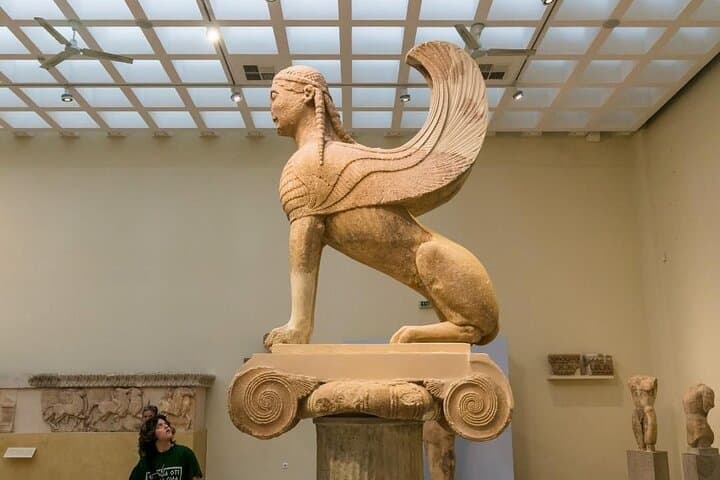
Delphi’s oracle shaped Greek thought for centuries; nearby the Archaeological Museum keeps the Charioteer and fragmented sphinxes that anchor myth to material culture. Geologically, the Meteora region is a different drama: sandstone pillars risen from millennia of river and wind erosion, their sheer faces interrupted by tiny monasteries clinging to ledges. Hermits first sought these heights in the 11th century, carving stairs and cells to meet the sky.
Between sites, Arachova and Kastraki offer village life—stone alleys, local wine, and handmade textiles. Expect drives of roughly 2.5 hours from Athens to Delphi and another 3–4 hours to Meteora; roads are scenic but twisting.
Practical edge: wear sturdy shoes for uneven archaeological terraces and monastery steps, carry a daypack with water and layers, and be prepared for simple dress codes at active monasteries (shoulders and knees covered). Early starts avoid crowds and heat; your private driver handles logistics and local context, leaving you free to focus on the ruins, the view, and the quiet of places that have kept their histories intact.
easy.
2 days.
Suitable for most fitness levels; involves multiple short walks and stair climbs at sites.
The tour description notes visits to sites but does not explicitly include archaeological site or monastery entrance fees—confirm with the operator before booking.
Yes; the itinerary is listed as suitable for all fitness levels, but expect stairs and uneven footing at sites—plan slower pacing if needed.
Yes; monasteries require modest clothing: shoulders and knees covered; bring a shawl or long pants if needed.
Accommodation is in a 4-star or boutique hotel in Delphi or nearby Arachova with breakfast and Wi‑Fi included.
Delphi was considered the navel of the ancient Greek world, home to the Pythia oracle; Meteora grew from hermitic communities in the 11th century into fortified monastic complex perched on eroded sandstone pillars.
Both UNESCO sites manage visitor access to balance tourism and preservation—follow marked paths, avoid climbing unauthorized routes, and minimize plastic waste.
CRISPY LOCAL MONOPROSOΡΙ Ι.Κ.Ε. operates guided outdoor trips and adventures with an emphasis on safety, stewardship, and memorable experiences.

The road out of Athens narrows, then opens onto mountains—olive groves give way to pines and a wind that seems to urge you onward. By midmorning you’re at Delphi, perched on a terraced slope above a ravine, where the ruins of the Temple of Apollo look across the valley like an ancient stage. The marble steps are cool underfoot; the air tastes of sun-warmed stone and distant sea.
The road out of Athens narrows, then opens onto mountains—olive groves give way to pines and a wind that seems to urge you onward. By midmorning you’re at Delphi, perched on a terraced slope above a ravine, where the ruins of the Temple of Apollo look across the valley like an ancient stage. The marble steps are cool underfoot; the air tastes of sun-warmed stone and distant sea.
Delphi’s oracle shaped Greek thought for centuries; nearby the Archaeological Museum keeps the Charioteer and fragmented sphinxes that anchor myth to material culture. Geologically, the Meteora region is a different drama: sandstone pillars risen from millennia of river and wind erosion, their sheer faces interrupted by tiny monasteries clinging to ledges. Hermits first sought these heights in the 11th century, carving stairs and cells to meet the sky.
Between sites, Arachova and Kastraki offer village life—stone alleys, local wine, and handmade textiles. Expect drives of roughly 2.5 hours from Athens to Delphi and another 3–4 hours to Meteora; roads are scenic but twisting.
Practical edge: wear sturdy shoes for uneven archaeological terraces and monastery steps, carry a daypack with water and layers, and be prepared for simple dress codes at active monasteries (shoulders and knees covered). Early starts avoid crowds and heat; your private driver handles logistics and local context, leaving you free to focus on the ruins, the view, and the quiet of places that have kept their histories intact.