THE ADVENTURE COLLECTIVE® · Independent discovery and booking for outdoor travel

A private 2-day journey from Athens that pairs the oracle-steeped ruins of Delphi with the cliff-top monasteries of Meteora. Expect short hikes, steep steps and dramatic sunset views—ideal for travelers who want concentrated history and landscape in two days.
A private 2-day journey from Athens that pairs the oracle-steeped ruins of Delphi with the cliff-top monasteries of Meteora. Expect short hikes, steep steps and dramatic sunset views—ideal for travelers who want concentrated history and landscape in two days.
You arrive on a narrow mountain road as late light smooths the limestone pillars of Meteora; wind threads its way through cliffside monasteries and the rocks seem to answer with a low hum. The first day opens in Delphi, where olive-scented terraces lead to the Temple of Apollo and the museum that holds the bronze Charioteer—sites that once drew pilgrims to consult the Pythia.
Verified experiences and guided adventures in the surrounding area.
Operated by Private Tours Greece · Kalambaka, Thessaly
You arrive on a narrow mountain road as late light smooths the limestone pillars of Meteora; wind threads its way through cliffside monasteries and the rocks seem to answer with a low hum. The first day opens in Delphi, where olive-scented terraces lead to the Temple of Apollo and the museum that holds the bronze Charioteer—sites that once drew pilgrims to consult the Pythia.
Geology here is blunt and dramatic: Pindus tectonics raised ancient seabed into colossal sandstone and conglomerate pillars, then millennia of erosion sharpened them into the towers you see today. Culture and history sit tight against that geology—Delphi’s oracle shaped pan-Hellenic politics, and Meteora’s monks retreated to the summits in the 14th century to escape invasion, building stairways and hesychastic cells carved from stone.
Expect dusty archaeological slopes, cobbled village streets in Arachova and Kalambaka, short but steep monastery steps, and panoramic viewpoints that reward short walks. Sunset on the rocks is a practical must—light changes fast and temperatures drop after dark.
Plan for early starts, modest dress for active monasteries (shoulders and knees covered), and comfortable shoes for uneven paths. Hydrate: water bottles are provided, but refill options are limited between towns. Photography is excellent throughout; keep tripods discreet inside sacred spaces. This private, two-day route balances slow cultural immersion with brisk, accessible walking—ideal for people who want concentrated Greek history, geology and hospitality without a heavy backpack or technical gear.
easy.
2 days (approx. 48 hours).
Suitable for travelers of average fitness; must be able to climb uneven stone steps and walk short steep sections.
Most monastery entrance fees are not included; your guide can advise fees and accepted payment methods at each site.
Yes—this is a private, low-impact tour, but expect stairs and uneven ground; mobility limitations should be reported in advance for pickup planning.
Bring some cash for small purchases, monastery fees, and tavernas; card acceptance is available in larger towns but limited in remote spots.
Yes—there are planned stops with free time in Arachova and at viewpoints; the private format allows minor itinerary adjustments per passenger requests.
Delphi served as the ancient Greek world’s religious center where the Pythia delivered oracles; Meteora’s monasteries date from Byzantine and post-Byzantine eras when monks sought refuge atop inaccessible pillars.
Meteora is a UNESCO World Heritage Site with visitor limits and conservation rules—stay on marked paths, avoid touching frescoes and support local businesses to reduce pressure on fragile sites.
Private Tours Greece operates guided outdoor trips and adventures with an emphasis on safety, stewardship, and memorable experiences.
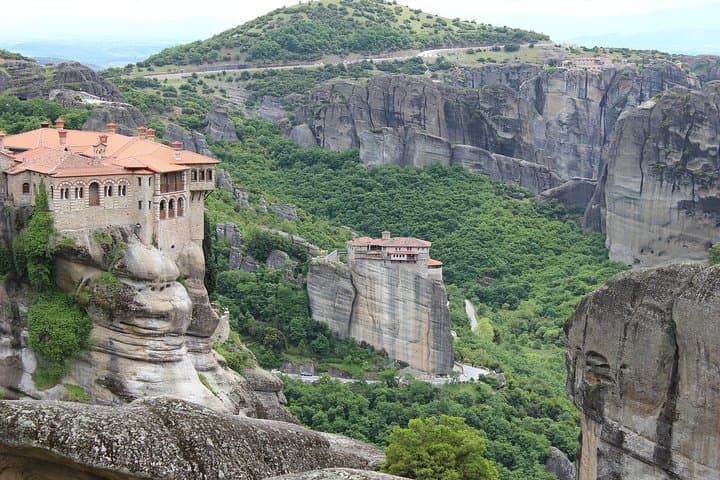


You arrive on a narrow mountain road as late light smooths the limestone pillars of Meteora; wind threads its way through cliffside monasteries and the rocks seem to answer with a low hum. The first day opens in Delphi, where olive-scented terraces lead to the Temple of Apollo and the museum that holds the bronze Charioteer—sites that once drew pilgrims to consult the Pythia.
You arrive on a narrow mountain road as late light smooths the limestone pillars of Meteora; wind threads its way through cliffside monasteries and the rocks seem to answer with a low hum. The first day opens in Delphi, where olive-scented terraces lead to the Temple of Apollo and the museum that holds the bronze Charioteer—sites that once drew pilgrims to consult the Pythia.
Geology here is blunt and dramatic: Pindus tectonics raised ancient seabed into colossal sandstone and conglomerate pillars, then millennia of erosion sharpened them into the towers you see today. Culture and history sit tight against that geology—Delphi’s oracle shaped pan-Hellenic politics, and Meteora’s monks retreated to the summits in the 14th century to escape invasion, building stairways and hesychastic cells carved from stone.
Expect dusty archaeological slopes, cobbled village streets in Arachova and Kalambaka, short but steep monastery steps, and panoramic viewpoints that reward short walks. Sunset on the rocks is a practical must—light changes fast and temperatures drop after dark.
Plan for early starts, modest dress for active monasteries (shoulders and knees covered), and comfortable shoes for uneven paths. Hydrate: water bottles are provided, but refill options are limited between towns. Photography is excellent throughout; keep tripods discreet inside sacred spaces. This private, two-day route balances slow cultural immersion with brisk, accessible walking—ideal for people who want concentrated Greek history, geology and hospitality without a heavy backpack or technical gear.