THE ADVENTURE COLLECTIVE® · Independent discovery and booking for outdoor travel

Walk the Sacred Way with a downloadable audio guide that narrates Delphi’s myths, monuments, and museum pieces at your own pace. Learn practical tips for timing, gear, and accessibility before you go.
Walk the Sacred Way with a downloadable audio guide that narrates Delphi’s myths, monuments, and museum pieces at your own pace. Learn practical tips for timing, gear, and accessibility before you go.
You arrive at the top of a stony ridge and the air tastes of pine and old stone. The mountain seems to hold its breath as you step onto the Sacred Way—carved flagstones underfoot, votive bases watching from the margins—and the voice in your ear begins to tell a story older than nations.
Verified experiences and guided adventures in the surrounding area.
Operated by Clio Muse Tours · Delphi, Phocis
You arrive at the top of a stony ridge and the air tastes of pine and old stone. The mountain seems to hold its breath as you step onto the Sacred Way—carved flagstones underfoot, votive bases watching from the margins—and the voice in your ear begins to tell a story older than nations.
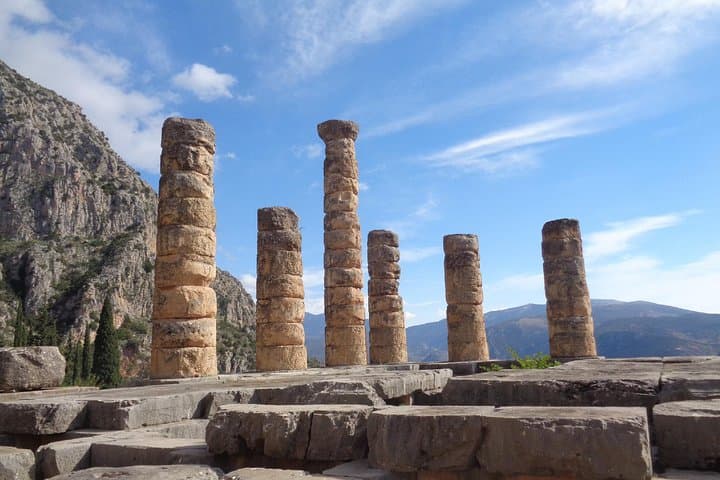
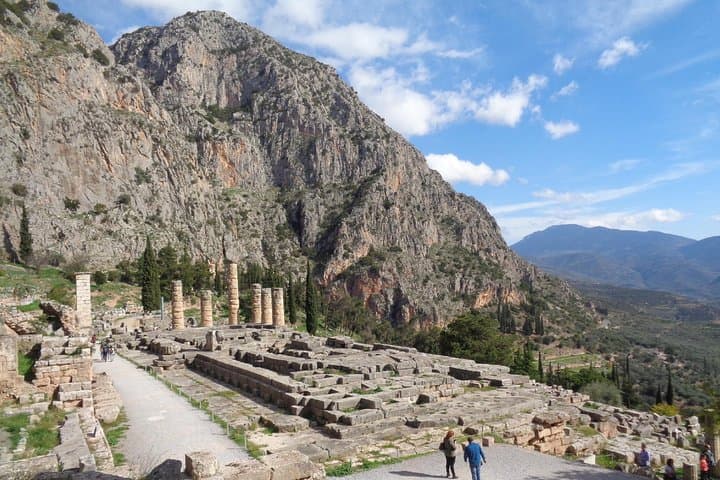
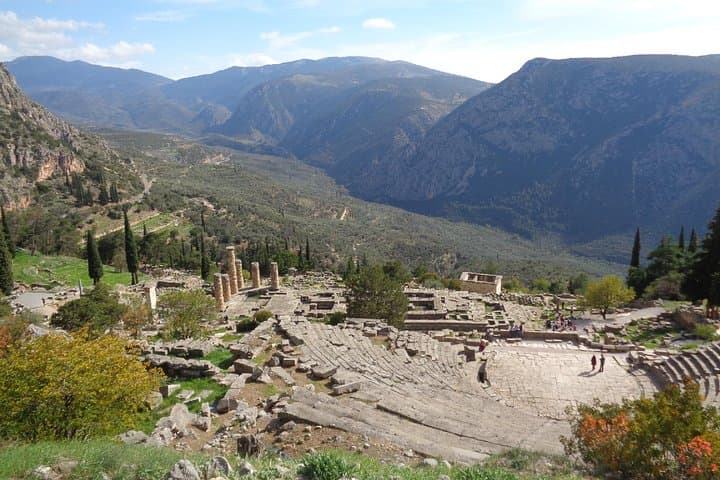
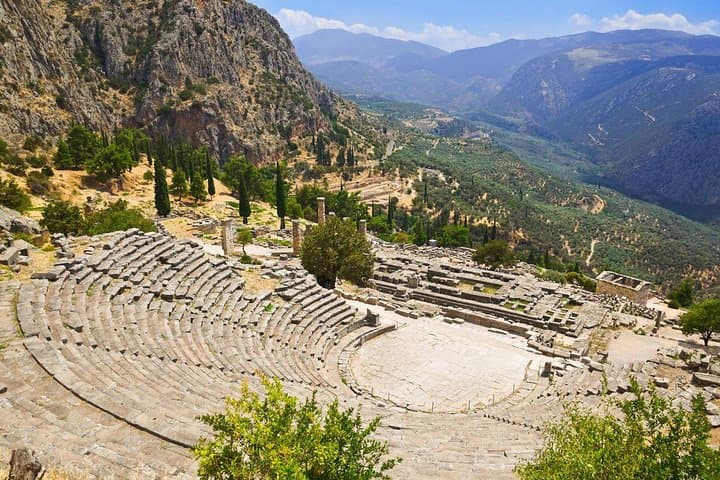
Delphi sat at the heart of the ancient Greek world as the home of Apollo’s oracle; pilgrims came for counsel, city-states for prestige. Geologically, the sanctuary clings to the western slope of Mount Parnassus where limestone ledges create natural terraces and views that push toward the Gulf of Corinth. Cultural fragments—treasuries, inscribed dedications, the Temple of Apollo—still arrange themselves like a ledger of influence.
The Castalian Spring murmurs below the entrance, once a ritual wash for supplicants; the Museum nearby gathers finds from across the site, including the Charioteer, a quiet masterpiece that rewards close attention.
Practical guidance: this is a self-guided audio experience—no entrance ticket included—delivered to your smartphone. Download before you arrive, bring earphones and a fully charged phone, and allow about 1–1.5 hours to move deliberately between ruins and displays. Paths are uneven and ascend moderately; wear sturdy shoes and bring water. Spring and fall offer cooler light and thinner crowds; summer is hot and exposed. The Museum is wheelchair accessible, though the open site has stepped sections; strollers are best left at the gate.
Move with respect: keep to marked paths, don't touch fragile surfaces, and let the mountain and stones tell their story on their own terms.
moderate.
1–1.5 hours.
Light to moderate fitness for walking uphill on uneven terrain; plan for short climbs and steps.
No. This product provides the downloadable audio tour only; you must purchase site and museum tickets separately at the entrance or online.
An Android 5.0+ or modern iOS smartphone is required; some older phones and Windows devices are not supported—check compatibility before booking.
The Museum is wheelchair accessible; the open-air archaeological site has stepped and uneven sections—advance coordination with the Ephorate can help arrange access.
Plan about 1–1.5 hours to follow the main audio route through the Sacred Way, Temple of Apollo and the Museum; allow extra time for photos or a longer exploration of ruins.
Delphi was regarded as the omphalos—the navel—of the ancient Greek world; the Pythia’s pronouncements shaped politics and colonization for centuries.
The sanctuary is fragile: stay on marked routes, avoid touching sculptures, and follow museum rules to minimize wear—drones and unsanctioned photography of artifacts are discouraged.
Clio Muse Tours operates guided outdoor trips and adventures with an emphasis on safety, stewardship, and memorable experiences.
You arrive at the top of a stony ridge and the air tastes of pine and old stone. The mountain seems to hold its breath as you step onto the Sacred Way—carved flagstones underfoot, votive bases watching from the margins—and the voice in your ear begins to tell a story older than nations.
You arrive at the top of a stony ridge and the air tastes of pine and old stone. The mountain seems to hold its breath as you step onto the Sacred Way—carved flagstones underfoot, votive bases watching from the margins—and the voice in your ear begins to tell a story older than nations.
Delphi sat at the heart of the ancient Greek world as the home of Apollo’s oracle; pilgrims came for counsel, city-states for prestige. Geologically, the sanctuary clings to the western slope of Mount Parnassus where limestone ledges create natural terraces and views that push toward the Gulf of Corinth. Cultural fragments—treasuries, inscribed dedications, the Temple of Apollo—still arrange themselves like a ledger of influence.
The Castalian Spring murmurs below the entrance, once a ritual wash for supplicants; the Museum nearby gathers finds from across the site, including the Charioteer, a quiet masterpiece that rewards close attention.
Practical guidance: this is a self-guided audio experience—no entrance ticket included—delivered to your smartphone. Download before you arrive, bring earphones and a fully charged phone, and allow about 1–1.5 hours to move deliberately between ruins and displays. Paths are uneven and ascend moderately; wear sturdy shoes and bring water. Spring and fall offer cooler light and thinner crowds; summer is hot and exposed. The Museum is wheelchair accessible, though the open site has stepped sections; strollers are best left at the gate.
Move with respect: keep to marked paths, don't touch fragile surfaces, and let the mountain and stones tell their story on their own terms.