THE ADVENTURE COLLECTIVE® · Independent discovery and booking for outdoor travel

Spend a private day from Athens exploring Delphi’s Temple of Apollo, the Archaeological Museum and the mountain town of Arachova. This full-day trip pairs myth and mountain scenery with practical access and flexible pacing.
Spend a private day from Athens exploring Delphi’s Temple of Apollo, the Archaeological Museum and the mountain town of Arachova. This full-day trip pairs myth and mountain scenery with practical access and flexible pacing.
You leave Athens before dawn and the highway loosens into olive rows and low hills. The road climbs; Mount Parnassus rises like a quiet guardian and the car windows frame a blue-scraped sky and terraces that cling to rock. Arriving at Delphi, the air feels thinner and the stones hold the heat of centuries — footsteps here join a long human traffic of pilgrims and poets.
Verified experiences and guided adventures in the surrounding area.
Operated by Lux Athens Transfers · Delphi, Phocis
You leave Athens before dawn and the highway loosens into olive rows and low hills. The road climbs; Mount Parnassus rises like a quiet guardian and the car windows frame a blue-scraped sky and terraces that cling to rock. Arriving at Delphi, the air feels thinner and the stones hold the heat of centuries — footsteps here join a long human traffic of pilgrims and poets.
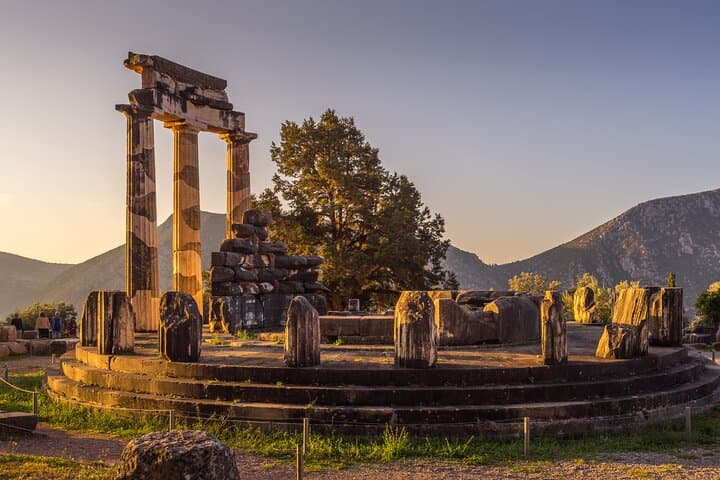
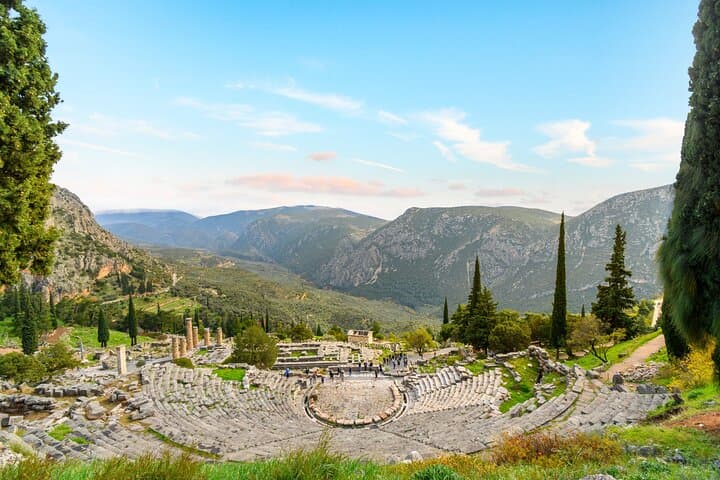
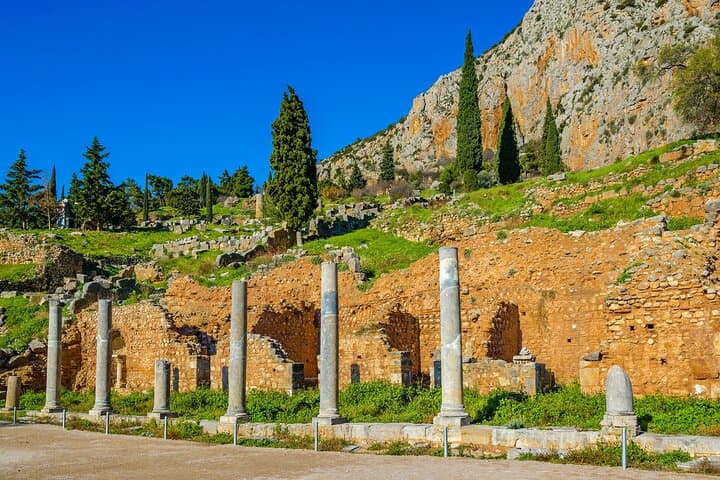
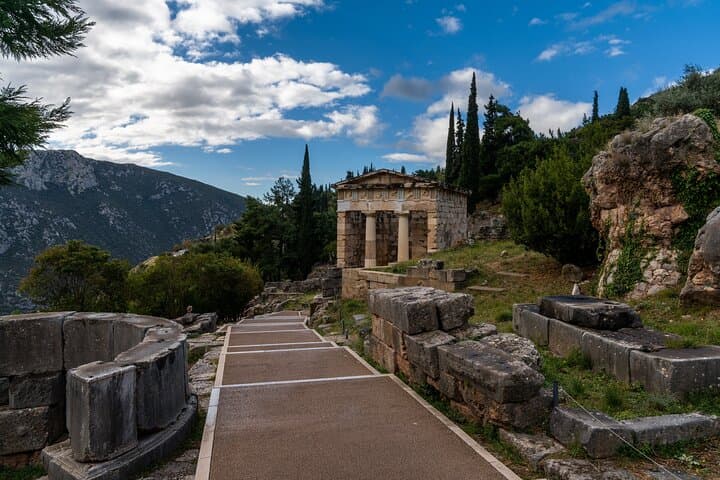
Delphi sits on the southern slope of Parnassus, where limestone and schist fold toward the Gulf of Corinth. Ancient Greeks believed the site was the world's omphalos, and the Temple of Apollo was the engine of that belief. Ruined columns, carved treasuries and the theater step down the slope, offering long views across the valley. The Delphi Archaeological Museum houses the Charioteer and other finds that give shape to the myths.
Nearby Arachova adds a cultural counterpoint: steep cobbled lanes, local textiles, and mountain tavernas serving hearty lamb and saffron-flavored dishes. Geology, myth and contemporary mountain life sit side by side — the mountain seems to nudge you to look outward.
Practical guidance: the private-day format means roughly 2.5–3 hours each way from Athens and 9–10 hours total. Expect 1–2 km of walking across the archaeological terraces with about 100–150 m of elevation change on uneven stone and packed earth. The museum is closed Mondays; start early for cooler temperatures and fewer visitors. Wear sturdy shoes, bring sun protection and water, and plan for several photo stops — the site rewards patient observation.
easy.
9–10 hours.
Suitable for most fitness levels; expect several hours on your feet and short climbs on uneven terrain.
Expect about 2.5–3 hours each way depending on traffic; total tour time is roughly 9–10 hours including travel and site visits.
Admission to the archaeological museum is not included in the transfer; the itinerary typically allows time to visit the museum during the day.
The vehicle and town areas can accommodate strollers, but the archaeological site has uneven steps and paths that make stroller access impractical on the terraces.
This is a private tour, so timing and emphasis (more time at the museum, Arachova, or viewpoints) can usually be adjusted to fit your group’s interests.
Delphi was the pan-Hellenic sanctuary of Apollo and home of the famous oracle; offerings and treasuries reflected city-states’ rivalries and piety from the 8th century BCE onward.
Visitor pressure and erosion threaten exposed archaeological surfaces; stick to marked paths and avoid climbing on ruins to help protect the site.
Lux Athens Transfers operates guided outdoor trips and adventures with an emphasis on safety, stewardship, and memorable experiences.
You leave Athens before dawn and the highway loosens into olive rows and low hills. The road climbs; Mount Parnassus rises like a quiet guardian and the car windows frame a blue-scraped sky and terraces that cling to rock. Arriving at Delphi, the air feels thinner and the stones hold the heat of centuries — footsteps here join a long human traffic of pilgrims and poets.
You leave Athens before dawn and the highway loosens into olive rows and low hills. The road climbs; Mount Parnassus rises like a quiet guardian and the car windows frame a blue-scraped sky and terraces that cling to rock. Arriving at Delphi, the air feels thinner and the stones hold the heat of centuries — footsteps here join a long human traffic of pilgrims and poets.
Delphi sits on the southern slope of Parnassus, where limestone and schist fold toward the Gulf of Corinth. Ancient Greeks believed the site was the world's omphalos, and the Temple of Apollo was the engine of that belief. Ruined columns, carved treasuries and the theater step down the slope, offering long views across the valley. The Delphi Archaeological Museum houses the Charioteer and other finds that give shape to the myths.
Nearby Arachova adds a cultural counterpoint: steep cobbled lanes, local textiles, and mountain tavernas serving hearty lamb and saffron-flavored dishes. Geology, myth and contemporary mountain life sit side by side — the mountain seems to nudge you to look outward.
Practical guidance: the private-day format means roughly 2.5–3 hours each way from Athens and 9–10 hours total. Expect 1–2 km of walking across the archaeological terraces with about 100–150 m of elevation change on uneven stone and packed earth. The museum is closed Mondays; start early for cooler temperatures and fewer visitors. Wear sturdy shoes, bring sun protection and water, and plan for several photo stops — the site rewards patient observation.