THE ADVENTURE COLLECTIVE® · Independent discovery and booking for outdoor travel

Two days across central Greece connect the oracular terraces of Delphi, the sky-piercing monasteries of Meteora, and the heroic pass of Thermopylae. This private tour pairs scenic drives with focused walking—ideal for travelers who want history and geology on an active timetable.
Two days across central Greece connect the oracular terraces of Delphi, the sky-piercing monasteries of Meteora, and the heroic pass of Thermopylae. This private tour pairs scenic drives with focused walking—ideal for travelers who want history and geology on an active timetable.
You step out of the air-conditioned minibus and the Parnassos slopes open like a folded map—crisp mountain air, the sharp outline of ruins above a valley. Days on this 2-day private route move between stone histories: Delphi's oracle terraces at sunrise, the narrow lanes of Arachova, then the vertiginous spires of Meteora crowned with Byzantine monasteries, finishing at the salt-scented memory of Thermopylae's Hot Gates.
Verified experiences and guided adventures in the surrounding area.
Operated by Athens Tours Greece · Kalambaka, Thessaly
You step out of the air-conditioned minibus and the Parnassos slopes open like a folded map—crisp mountain air, the sharp outline of ruins above a valley. Days on this 2-day private route move between stone histories: Delphi's oracle terraces at sunrise, the narrow lanes of Arachova, then the vertiginous spires of Meteora crowned with Byzantine monasteries, finishing at the salt-scented memory of Thermopylae's Hot Gates.
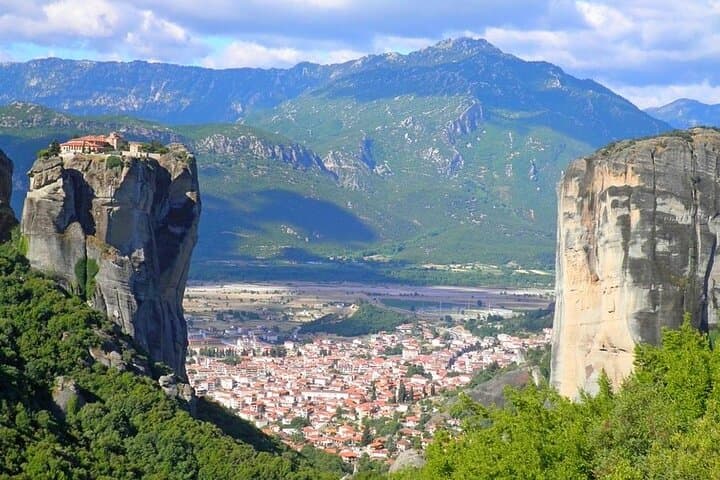
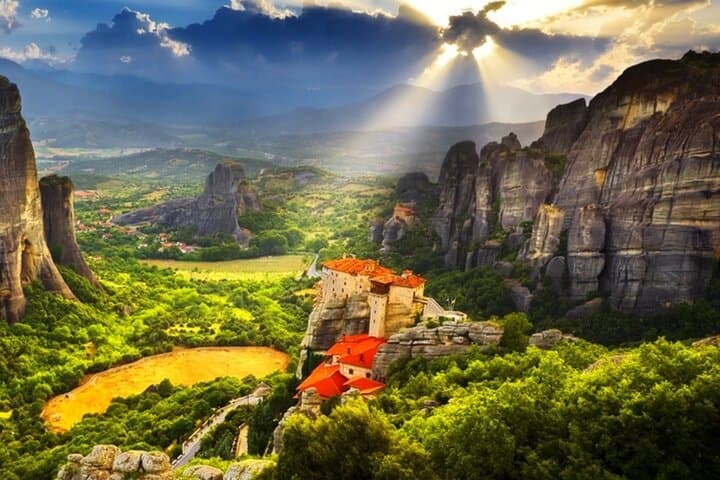
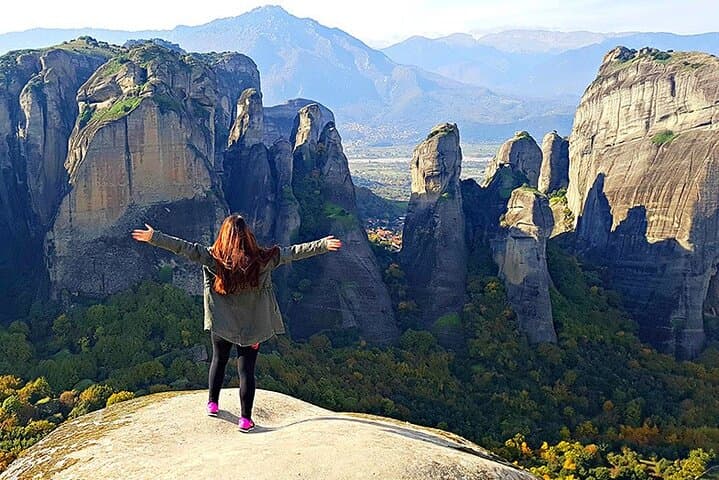
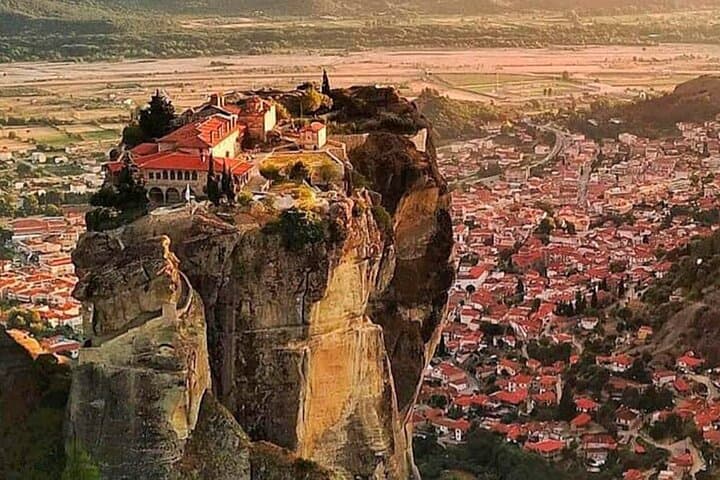
Delphi sits on the southern flank of Mount Parnassos, once considered the navel of Ancient Greece; its Temple of Apollo and the circular tholos at Athena Pronaia show classical architecture and cult practice layered over millennia. Meteora’s columns are a geological wonder—Mesozoic sandstone and conglomerate eroded into towers that monks scaled and hollowed into refuges from invasions. Thermopylae records a military turning point: a narrow coastal pass now inland, framed by a modern memorial to Leonidas and his men.
Culture here is tactile: tavernas pour tsipouro, monasteries require modest dress, and local guides narrate Byzantine frescoes and seismic rebuilds that kept these sites alive.
Practical guidance: expect moderate walking with many uneven steps—especially at Meteora (some monasteries require climbing carved stairways). Monastery entry is generally low-fee and enforces clothing rules; bring a shawl or long shorts. Summers are hot and sunny; spring and fall offer cooler hiking conditions. Plan lodging in Kalambaka for Meteora nights or return to Athens if you prefer fewer stops. Pre-book monastery tickets if available and confirm pickup times from Athens or Piraeus to avoid traffic delays.
moderate.
2 days.
Good aerobic fitness for sustained walking and climbing staircases; able to walk several hours and handle short steep sections.
Drivers provide historical context but are not licensed to guide inside museums or sites; you can request a licensed guide for an extra fee to enter with you.
Most monasteries sit on cliffs with steps and limited access—wheelchair access is generally not available; check specific monastery access in advance.
Expect 2–4 monasteries comfortably; visiting all six in one day rushes the experience and requires high fitness and minimal stops.
Entrance fees (typically around €3 per monastery) are usually not included and are paid on site; children under 12 often enter free.
Delphi was the pan-Hellenic religious center for centuries with festivals and the Pythia oracle; Meteora became a monastic stronghold from the 14th century as monks sought refuge on its pillars.
Meteora is a UNESCO World Heritage site and part of Natura 2000; visitors should stick to marked paths and avoid touching frescoes or climbing prohibited rocks to preserve fragile heritage and habitats.
Athens Tours Greece operates guided outdoor trips and adventures with an emphasis on safety, stewardship, and memorable experiences.
You step out of the air-conditioned minibus and the Parnassos slopes open like a folded map—crisp mountain air, the sharp outline of ruins above a valley. Days on this 2-day private route move between stone histories: Delphi's oracle terraces at sunrise, the narrow lanes of Arachova, then the vertiginous spires of Meteora crowned with Byzantine monasteries, finishing at the salt-scented memory of Thermopylae's Hot Gates.
You step out of the air-conditioned minibus and the Parnassos slopes open like a folded map—crisp mountain air, the sharp outline of ruins above a valley. Days on this 2-day private route move between stone histories: Delphi's oracle terraces at sunrise, the narrow lanes of Arachova, then the vertiginous spires of Meteora crowned with Byzantine monasteries, finishing at the salt-scented memory of Thermopylae's Hot Gates.
Delphi sits on the southern flank of Mount Parnassos, once considered the navel of Ancient Greece; its Temple of Apollo and the circular tholos at Athena Pronaia show classical architecture and cult practice layered over millennia. Meteora’s columns are a geological wonder—Mesozoic sandstone and conglomerate eroded into towers that monks scaled and hollowed into refuges from invasions. Thermopylae records a military turning point: a narrow coastal pass now inland, framed by a modern memorial to Leonidas and his men.
Culture here is tactile: tavernas pour tsipouro, monasteries require modest dress, and local guides narrate Byzantine frescoes and seismic rebuilds that kept these sites alive.
Practical guidance: expect moderate walking with many uneven steps—especially at Meteora (some monasteries require climbing carved stairways). Monastery entry is generally low-fee and enforces clothing rules; bring a shawl or long shorts. Summers are hot and sunny; spring and fall offer cooler hiking conditions. Plan lodging in Kalambaka for Meteora nights or return to Athens if you prefer fewer stops. Pre-book monastery tickets if available and confirm pickup times from Athens or Piraeus to avoid traffic delays.