THE ADVENTURE COLLECTIVE® · Independent discovery and booking for outdoor travel

A full‑day private transfer from Athens that moves from olive‑lined lowlands to the dramatic terraces of Delphi. Visit the Temple of Apollo, the ancient theater and the Byzantine monastery of Osios Loukas with local commentary and private transport.
A full‑day private transfer from Athens that moves from olive‑lined lowlands to the dramatic terraces of Delphi. Visit the Temple of Apollo, the ancient theater and the Byzantine monastery of Osios Loukas with local commentary and private transport.
You step out of the air‑conditioned van where the road narrows and the world tilts toward a valley of stone and sky. Olive groves give way to the rugged slopes of Mt. Parnassos; the wind seems to press you forward toward the ruins perched above the ravine. In a single sweep you can see why the ancient Greeks called Delphi the omphalos — the navel of the earth.
Verified experiences and guided adventures in the surrounding area.
Operated by Greece Travel Experts · Delphi, Phocis
You step out of the air‑conditioned van where the road narrows and the world tilts toward a valley of stone and sky. Olive groves give way to the rugged slopes of Mt. Parnassos; the wind seems to press you forward toward the ruins perched above the ravine. In a single sweep you can see why the ancient Greeks called Delphi the omphalos — the navel of the earth.
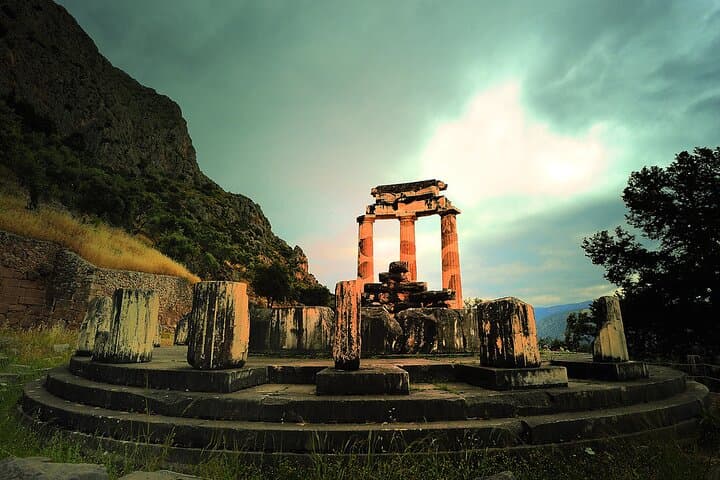
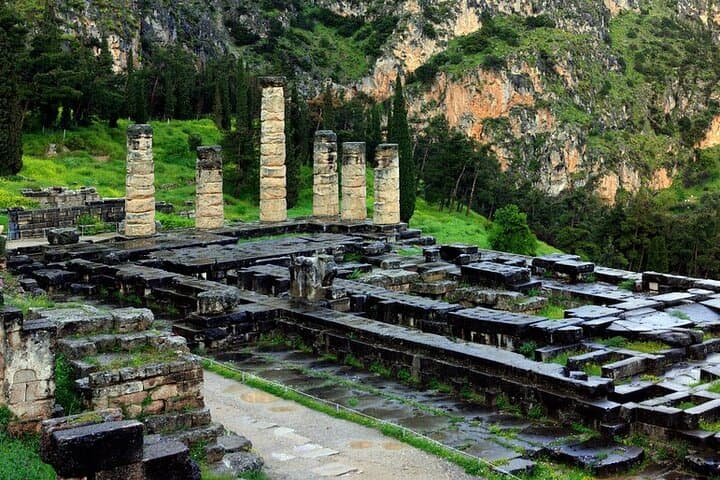
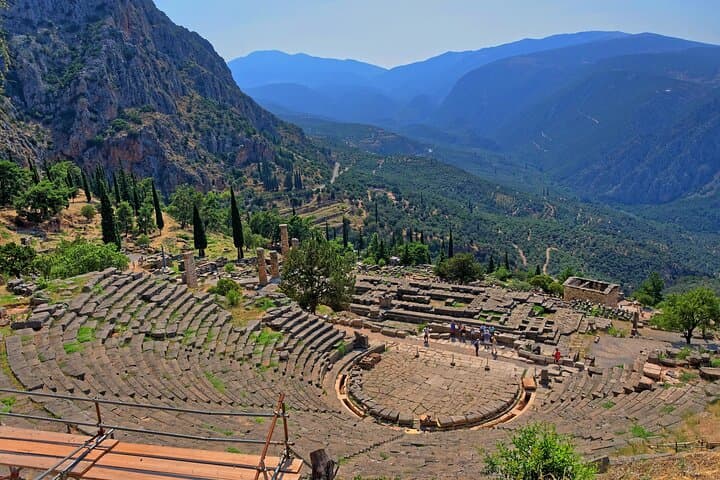
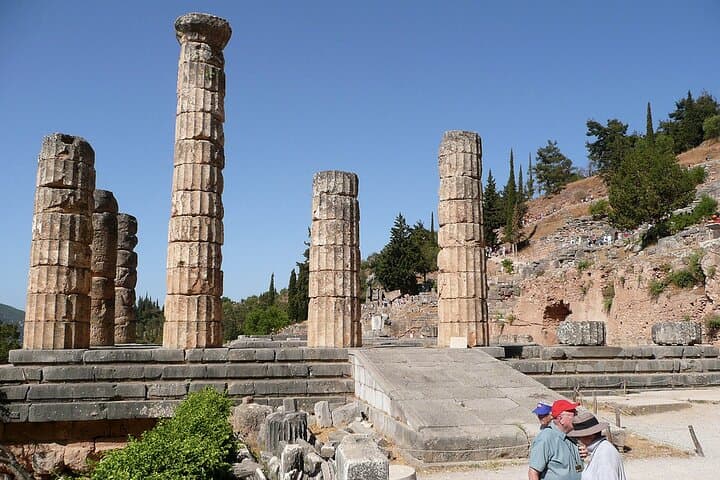
This private day tour threads through Boeotia and past Thebes, stopping in Levadia and the hilltown of Arachova before arriving at Delphi’s archaeological park. The site sits on a steep, terraced slope carved by human hands and shaped by Parnassos’s limestone geology; the Temple of Apollo and the stone theater cling to those terraces and offer sweeping views of the gulf beyond. Nearby, the 11th‑century Monastery of Osios Loukas, a UNESCO site, showcases middle‑Byzantine architecture and a different chapter in Greece’s cultural story.
Expect a mix of paved roads, village alleys, and uneven archaeological paths. Guides usually cover history, mythology and geology — from oracle lore to the seismic forces that raised the slopes. Practicalities matter: it’s a long day (8–10 hours), with several short walks and stairbound excavations.
Bring sturdy footwear, sun protection and a light daypack; bottled water is often supplied onboard but carry extras for the site. Timing your visit earlier in the day reduces crowds and late‑afternoon glare for photos. For travelers wanting a focused cultural hit outside Athens, this route pairs dramatic landscape with dense historical payoff.
easy.
8–10 hours.
Suitable for travelers in normal health; expect several short uphill walks and stairs at archaeological sites.
Yes—the tour provides private round‑trip transportation from arranged pickup points in Athens in an air‑conditioned vehicle with onboard amenities.
Admission is generally not included; check your booking details and bring cash or card to purchase archaeological site and museum tickets if required.
Infants and small children can join; stroller accessibility is limited once you reach the excavations due to stairs and uneven paths—child seats are available in the vehicle.
Yes—the itinerary typically includes a lunch stop in Arachova or Levadia where you can sample local dishes and souvlaki; bring snacks if you prefer a faster schedule.
Delphi was the religious center of ancient Greece, home to the Oracle of Apollo; the archaeological site and museum preserve artifacts spanning classical, Hellenistic and Byzantine eras.
The archaeological park follows strict preservation rules—stay on paths, avoid climbing on ruins, and support local conservation by using designated waste bins and local services.
Greece Travel Experts operates guided outdoor trips and adventures with an emphasis on safety, stewardship, and memorable experiences.
You step out of the air‑conditioned van where the road narrows and the world tilts toward a valley of stone and sky. Olive groves give way to the rugged slopes of Mt. Parnassos; the wind seems to press you forward toward the ruins perched above the ravine. In a single sweep you can see why the ancient Greeks called Delphi the omphalos — the navel of the earth.
You step out of the air‑conditioned van where the road narrows and the world tilts toward a valley of stone and sky. Olive groves give way to the rugged slopes of Mt. Parnassos; the wind seems to press you forward toward the ruins perched above the ravine. In a single sweep you can see why the ancient Greeks called Delphi the omphalos — the navel of the earth.
This private day tour threads through Boeotia and past Thebes, stopping in Levadia and the hilltown of Arachova before arriving at Delphi’s archaeological park. The site sits on a steep, terraced slope carved by human hands and shaped by Parnassos’s limestone geology; the Temple of Apollo and the stone theater cling to those terraces and offer sweeping views of the gulf beyond. Nearby, the 11th‑century Monastery of Osios Loukas, a UNESCO site, showcases middle‑Byzantine architecture and a different chapter in Greece’s cultural story.
Expect a mix of paved roads, village alleys, and uneven archaeological paths. Guides usually cover history, mythology and geology — from oracle lore to the seismic forces that raised the slopes. Practicalities matter: it’s a long day (8–10 hours), with several short walks and stairbound excavations.
Bring sturdy footwear, sun protection and a light daypack; bottled water is often supplied onboard but carry extras for the site. Timing your visit earlier in the day reduces crowds and late‑afternoon glare for photos. For travelers wanting a focused cultural hit outside Athens, this route pairs dramatic landscape with dense historical payoff.