THE ADVENTURE COLLECTIVE® · Independent discovery and booking for outdoor travel

Drive from Athens to the slopes of Mount Parnassos for a private day exploring Delphi’s Sanctuary of Apollo, museum and the mountain village of Arachova. This full-day private tour pairs archaeological insight with dramatic mountain scenery—ideal for history lovers and first-time visitors.
Drive from Athens to the slopes of Mount Parnassos for a private day exploring Delphi’s Sanctuary of Apollo, museum and the mountain village of Arachova. This full-day private tour pairs archaeological insight with dramatic mountain scenery—ideal for history lovers and first-time visitors.
You leave Athens behind as the road climbs into the pines of Mount Parnassos, the city noise thinning until only wind and the occasional goat-bell remain. The private Mercedes hums along a ribbon of tarmac and, before the ruins appear, the whitewashed houses of Arachova slide into view—a brief, authentic counterpoint to the archaeological theatre awaiting higher on the slope.
Verified experiences and guided adventures in the surrounding area.
Operated by Tours of Athens · Delphi, Phocis
You leave Athens behind as the road climbs into the pines of Mount Parnassos, the city noise thinning until only wind and the occasional goat-bell remain. The private Mercedes hums along a ribbon of tarmac and, before the ruins appear, the whitewashed houses of Arachova slide into view—a brief, authentic counterpoint to the archaeological theatre awaiting higher on the slope.
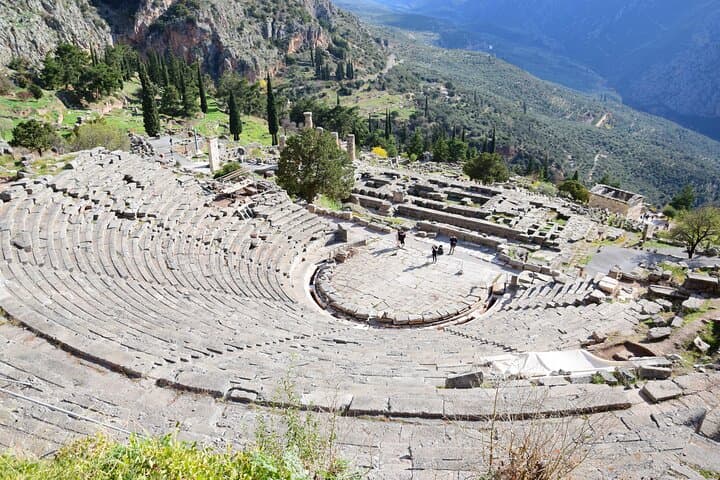
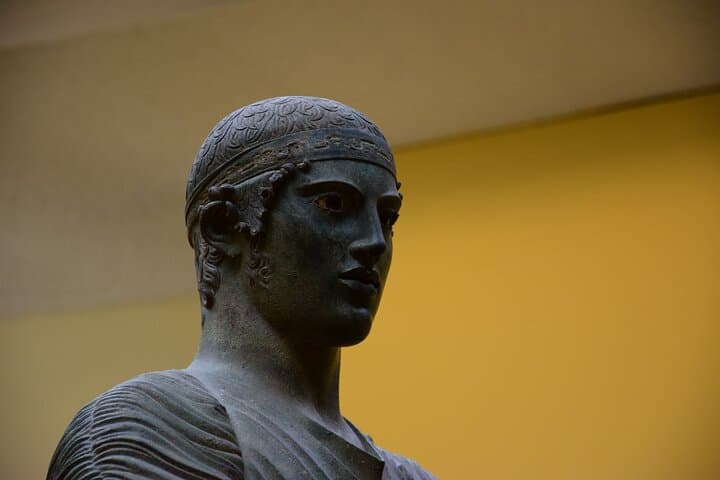
Delphi sits about 600–700 meters above sea level on terraces carved into the mountain, a place the ancient Greeks once called the omphalos, or navel, of the world. Here the Sanctuary of Apollo, the Castalian Spring, the Doric temple foundations, the steep theatre and the long stadium create an archaeological sequence laid over faulted limestone and scree. The site’s stones, reused across centuries, tell of Pythian festivals, bronze votive offerings and a priestly culture that shaped Mediterranean politics for a millennium.
Practicalities are straightforward: expect a 2.5–3 hour drive each way from Athens (roughly 180 km), a private vehicle with a driver-guide who provides commentary, and about 2–3 hours to explore the museum and terraces. Paths are stone and stepped—comfortable shoes and a moderate fitness level make the visit easier. Timing a visit in the morning or late afternoon reduces heat and crowds; winter can bring snow on Parnassos and sharper light for photos.
Finish with lunch in Arachova for regional cheese and lamb, then settle into the rhythm of the return drive—stillness and landscape lingering as the city reappears on the horizon.
easy.
8–10 hours.
Light to moderate—able to walk on uneven surfaces and climb stone steps for up to a few hundred meters of ascent.
No, admission fees are not included in the tour price; tickets are purchased on site (or online where available).
The standard stop at Delphi is about 2–3 hours—enough to visit the museum, walk the Sanctuary of Apollo and reach the theatre and stadium terraces.
Transport is wheelchair accessible, but the archaeological site has uneven stones and steps that may limit access; contact the operator for specific arrangements.
Lunch is not included; the itinerary stops in Arachova or a nearby taverna where you can choose a local meal before returning to Athens.
Delphi was the religious center of ancient Greece, home to the Pythian Oracle and a pan-Hellenic festival that drew visitors, offerings and political delegations across centuries.
The site is managed to protect delicate ruins and archaeological layers—stay on marked paths, avoid touching carved stones, and support local conservation efforts by following signage and guidance.
Tours of Athens operates guided outdoor trips and adventures with an emphasis on safety, stewardship, and memorable experiences.


You leave Athens behind as the road climbs into the pines of Mount Parnassos, the city noise thinning until only wind and the occasional goat-bell remain. The private Mercedes hums along a ribbon of tarmac and, before the ruins appear, the whitewashed houses of Arachova slide into view—a brief, authentic counterpoint to the archaeological theatre awaiting higher on the slope.
You leave Athens behind as the road climbs into the pines of Mount Parnassos, the city noise thinning until only wind and the occasional goat-bell remain. The private Mercedes hums along a ribbon of tarmac and, before the ruins appear, the whitewashed houses of Arachova slide into view—a brief, authentic counterpoint to the archaeological theatre awaiting higher on the slope.
Delphi sits about 600–700 meters above sea level on terraces carved into the mountain, a place the ancient Greeks once called the omphalos, or navel, of the world. Here the Sanctuary of Apollo, the Castalian Spring, the Doric temple foundations, the steep theatre and the long stadium create an archaeological sequence laid over faulted limestone and scree. The site’s stones, reused across centuries, tell of Pythian festivals, bronze votive offerings and a priestly culture that shaped Mediterranean politics for a millennium.
Practicalities are straightforward: expect a 2.5–3 hour drive each way from Athens (roughly 180 km), a private vehicle with a driver-guide who provides commentary, and about 2–3 hours to explore the museum and terraces. Paths are stone and stepped—comfortable shoes and a moderate fitness level make the visit easier. Timing a visit in the morning or late afternoon reduces heat and crowds; winter can bring snow on Parnassos and sharper light for photos.
Finish with lunch in Arachova for regional cheese and lamb, then settle into the rhythm of the return drive—stillness and landscape lingering as the city reappears on the horizon.