THE ADVENTURE COLLECTIVE® · Independent discovery and booking for outdoor travel

Walk the Hot Gates where Leonidas held back an army, then climb Delphi’s terraced sanctuary to stand where the Pythia delivered prophecies. This full-day drive combines compact battlefield landscapes with high-mountain ruins and a museum of classical masterpieces.
Walk the Hot Gates where Leonidas held back an army, then climb Delphi’s terraced sanctuary to stand where the Pythia delivered prophecies. This full-day drive combines compact battlefield landscapes with high-mountain ruins and a museum of classical masterpieces.
You arrive before the heat builds: a ribbon of highway cuts through olive groves, then tightens toward the Hot Gates at Thermopylae. Wind carries the metallic tang of sulphur from springs that once marked a mythic threshold; the bronze Leonidas statue stands against a sky that feels too wide for the narrow pass beneath it.
Verified experiences and guided adventures in the surrounding area.
Operated by Colours of Greece · Delphi, Phocis
You arrive before the heat builds: a ribbon of highway cuts through olive groves, then tightens toward the Hot Gates at Thermopylae. Wind carries the metallic tang of sulphur from springs that once marked a mythic threshold; the bronze Leonidas statue stands against a sky that feels too wide for the narrow pass beneath it.
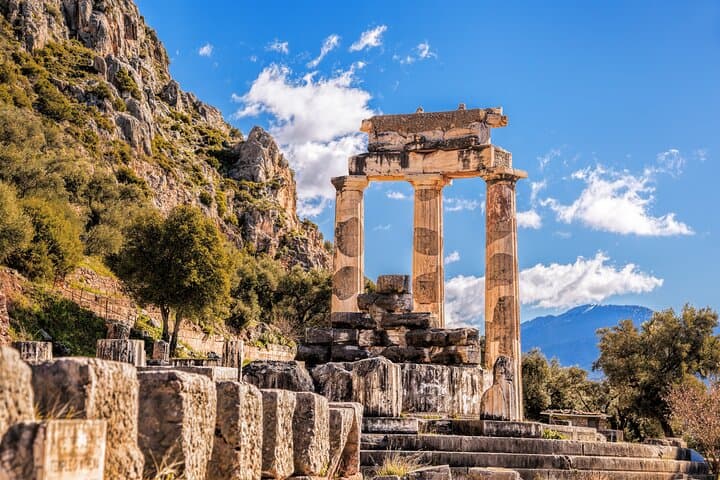
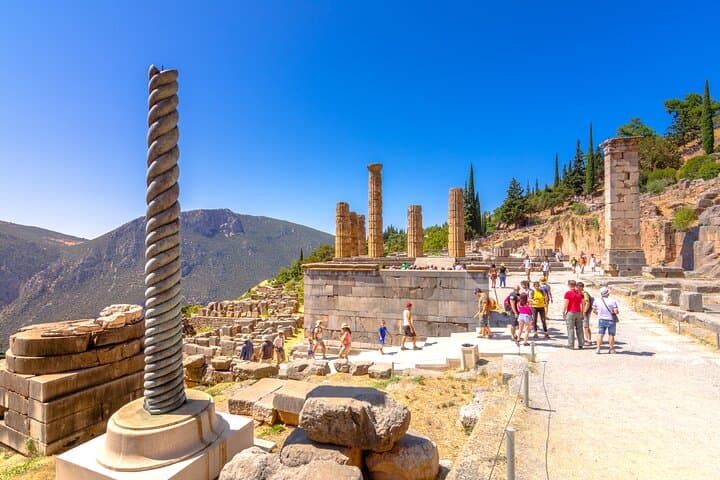
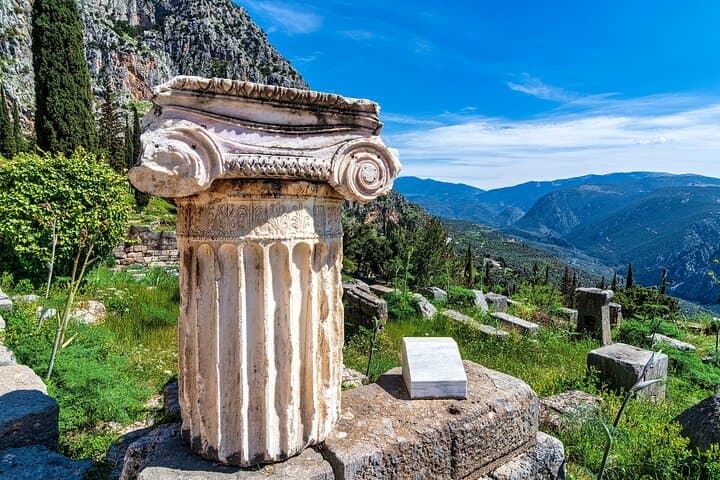
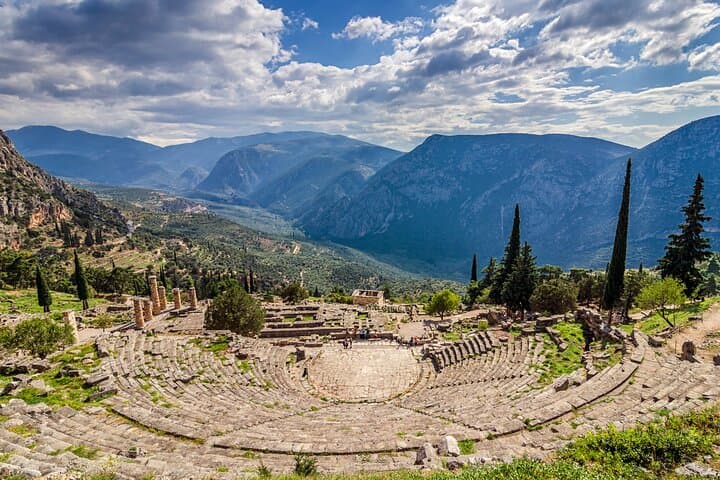
Thermopylae’s limestone ridges and sulfurous pools speak to both geology and legend—a compact battlefield where terrain funneled armies and defined strategy in 480 BC. Later, the road climbs toward Mount Parnassus and Delphi, where terraces carved into steep slopes host the Temple of Apollo, the Tholos and a stadium that looks out over a bowl of sea, olive groves and distant coastline. Delphi’s marble fragments and museum pieces—most famously the Charioteer—reflect a pan-Hellenic center of ritual, politics and art: pilgrims came for prophecy, city-states for prestige.
Local color is immediate: Arachova’s stone streets and mountain tavernas sell local cheese and woven textiles; vendors near the museum offer plain facts with friendly persistence. Expect uneven stone steps, short uphill walks between ruins and long moments of stillness where the wind seems to answer the oracle.
Practical guidance: this is a full 9–10 hour outing including driving (Athens→Thermopylae ~2 hrs; Thermopylae→Delphi ~1.5–2 hrs). Wear sturdy shoes for 1–3 km of site walking, bring sun protection and at least 1 liter of water, and plan museum time—allow 45–60 minutes. Private tours usually include hotel pickup and air-conditioned transport; aim for spring or fall for milder temperatures and clearer light for photos.
moderate.
9–10 hours.
Light to moderate fitness for short uphill walks, steps and standing; able to walk 1–3 km over uneven terrain.
This tour listing indicates archaeological site admission is not included; check your booking details and plan to buy tickets at the site or in advance.
Expect 1–3 km of walking across terraces, steps and short uphill sections at Delphi and short walks at the Thermopylae memorials—comfortable shoes recommended.
The itinerary includes time at the Delphi Archaeological Museum (about 60 minutes suggested) but museum admission may be separate—confirm with the operator.
Yes—private tours typically include hotel pickup and drop-off; confirm your exact pickup point and any special needs when booking.
Thermopylae is famous for the 480 BC stand of King Leonidas and Spartan allies; Delphi functioned as a pan-Hellenic sanctuary and the seat of the Pythia, whose pronouncements shaped Greek politics and colonization.
Archaeological sites are protected—stay on marked paths, avoid touching fragile stonework, and follow local signage to limit wear on ancient structures.
Colours of Greece operates guided outdoor trips and adventures with an emphasis on safety, stewardship, and memorable experiences.
You arrive before the heat builds: a ribbon of highway cuts through olive groves, then tightens toward the Hot Gates at Thermopylae. Wind carries the metallic tang of sulphur from springs that once marked a mythic threshold; the bronze Leonidas statue stands against a sky that feels too wide for the narrow pass beneath it.
You arrive before the heat builds: a ribbon of highway cuts through olive groves, then tightens toward the Hot Gates at Thermopylae. Wind carries the metallic tang of sulphur from springs that once marked a mythic threshold; the bronze Leonidas statue stands against a sky that feels too wide for the narrow pass beneath it.
Thermopylae’s limestone ridges and sulfurous pools speak to both geology and legend—a compact battlefield where terrain funneled armies and defined strategy in 480 BC. Later, the road climbs toward Mount Parnassus and Delphi, where terraces carved into steep slopes host the Temple of Apollo, the Tholos and a stadium that looks out over a bowl of sea, olive groves and distant coastline. Delphi’s marble fragments and museum pieces—most famously the Charioteer—reflect a pan-Hellenic center of ritual, politics and art: pilgrims came for prophecy, city-states for prestige.
Local color is immediate: Arachova’s stone streets and mountain tavernas sell local cheese and woven textiles; vendors near the museum offer plain facts with friendly persistence. Expect uneven stone steps, short uphill walks between ruins and long moments of stillness where the wind seems to answer the oracle.
Practical guidance: this is a full 9–10 hour outing including driving (Athens→Thermopylae ~2 hrs; Thermopylae→Delphi ~1.5–2 hrs). Wear sturdy shoes for 1–3 km of site walking, bring sun protection and at least 1 liter of water, and plan museum time—allow 45–60 minutes. Private tours usually include hotel pickup and air-conditioned transport; aim for spring or fall for milder temperatures and clearer light for photos.