THE ADVENTURE COLLECTIVE® · Independent discovery and booking for outdoor travel

Spend two days leaving Athens to stand beneath Meteora’s towering sandstone pillars and walk the ancient terraces of Delphi. This practical guide outlines what to expect, how to dress for monastery visits, and tips to make the most of the light and terrain.
Spend two days leaving Athens to stand beneath Meteora’s towering sandstone pillars and walk the ancient terraces of Delphi. This practical guide outlines what to expect, how to dress for monastery visits, and tips to make the most of the light and terrain.
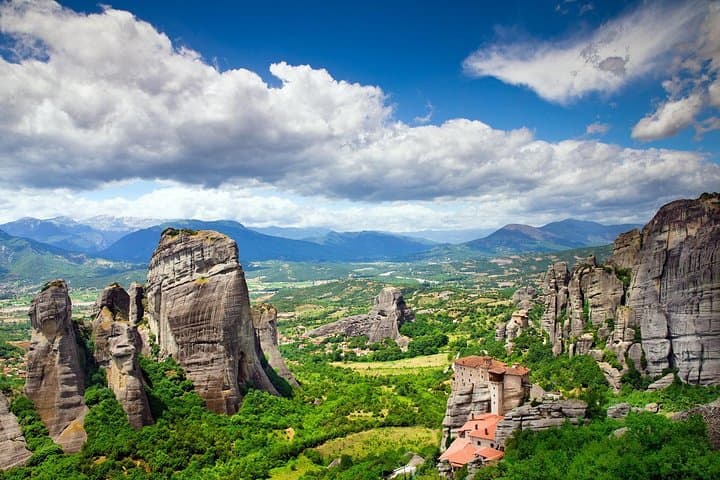
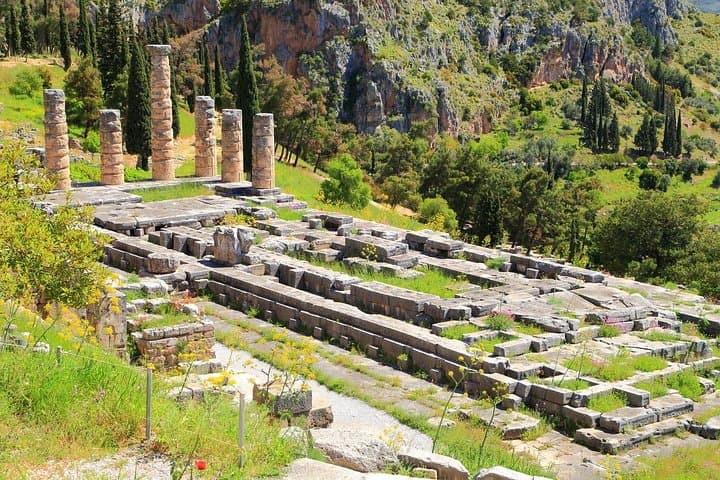
You step off a comfortable coach into a wind that seems to push you toward the stones themselves: grey sandstone pillars rising from the Thessalian plain, Meteora’s monasteries perched like thoughts at the edge of the sky. The next day, the mountain air around Delphi carries a quieter energy — terraces of ruins stacked into the hillside where the Temple of Apollo once spoke through its oracle.
Verified experiences and guided adventures in the surrounding area.
Operated by Keytours - Greece · Kalambaka, Thessaly
You step off a comfortable coach into a wind that seems to push you toward the stones themselves: grey sandstone pillars rising from the Thessalian plain, Meteora’s monasteries perched like thoughts at the edge of the sky. The next day, the mountain air around Delphi carries a quieter energy — terraces of ruins stacked into the hillside where the Temple of Apollo once spoke through its oracle.
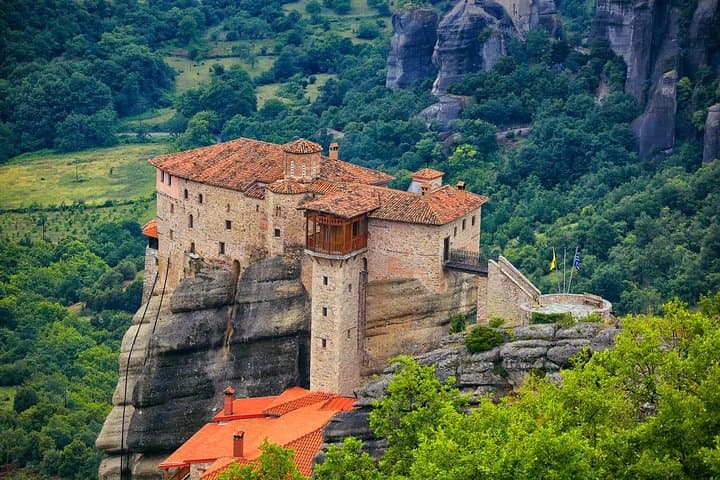
These two sites map Greece’s layered past. Delphi, once regarded as the world’s navel, blends classical stonework and theater terraces with views down to the Corinthian Gulf. Meteora’s pillars are a product of Miocene sediments and ancient rivers hardened into sandstone, later sculpted by millennia of wind and rain; Byzantine monks climbed ropes and ladders to create defensible retreats, later adding stairways and bridges.
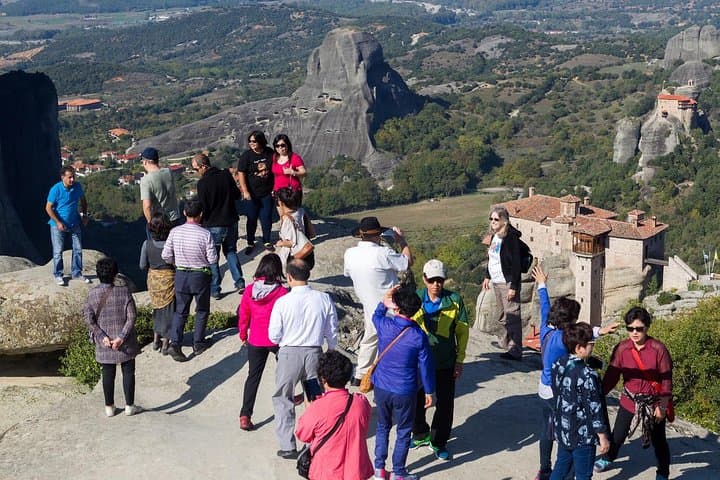
Culture here is tactile: devout rituals still shape monastery etiquette; small towns like Kalambaka preserve crafts and icon-painting traditions. Photographers find angles where light runs like a ribbon between rocks; hikers can trade the bus for short cliff-side walks to panoramic overlooks.
Practical guide: this tour runs over two days with overnight in Kalambaka, travel by air‑conditioned coach, and licensed guide. Dress conservatively for monastery entry (long sleeves for women; no shorts for men). Bring a sturdy pair of walking shoes, water, sunscreen, and a lightweight layer—the plain’s wind can cut late afternoon. Expect moderate walking on uneven archaeological terraces and short climbs at Meteora. Plan for early starts to beat crowds and golden light on the rocks.
easy.
2 days (approx. 48 hours total; guided sightseeing).
Suitable for most fitness levels; requires short walks and stair climbs on uneven ground
Yes. Women should wear long sleeves and skirts or trousers; men should not wear shorts. Some monasteries provide wraps but bringing your own is faster.
Round-trip coach transport and select hotel pickup/drop-off in central Athens are included; exact pickup times are confirmed by phone 24 hours before departure.
Admission to the Delphi archaeological site and museum is included; monastery entry policies vary and may require a small donation at the door.
The tour is labeled suitable for all fitness levels, but many sites have steps and uneven paths; accessibility at some monastery sites is limited.
Delphi was the religious center of ancient Greece, home to the Oracle of Apollo; Meteora’s monasteries arose in the Byzantine era as ascetic refuges atop naturally formed sandstone pillars.
Both sites are UNESCO-listed and managed to limit erosion and visitor impact; stick to marked paths and avoid touching archaeological surfaces to help preserve them.
Keytours - Greece operates guided outdoor trips and adventures with an emphasis on safety, stewardship, and memorable experiences.
You step off a comfortable coach into a wind that seems to push you toward the stones themselves: grey sandstone pillars rising from the Thessalian plain, Meteora’s monasteries perched like thoughts at the edge of the sky. The next day, the mountain air around Delphi carries a quieter energy — terraces of ruins stacked into the hillside where the Temple of Apollo once spoke through its oracle.
You step off a comfortable coach into a wind that seems to push you toward the stones themselves: grey sandstone pillars rising from the Thessalian plain, Meteora’s monasteries perched like thoughts at the edge of the sky. The next day, the mountain air around Delphi carries a quieter energy — terraces of ruins stacked into the hillside where the Temple of Apollo once spoke through its oracle.
These two sites map Greece’s layered past. Delphi, once regarded as the world’s navel, blends classical stonework and theater terraces with views down to the Corinthian Gulf. Meteora’s pillars are a product of Miocene sediments and ancient rivers hardened into sandstone, later sculpted by millennia of wind and rain; Byzantine monks climbed ropes and ladders to create defensible retreats, later adding stairways and bridges.
Culture here is tactile: devout rituals still shape monastery etiquette; small towns like Kalambaka preserve crafts and icon-painting traditions. Photographers find angles where light runs like a ribbon between rocks; hikers can trade the bus for short cliff-side walks to panoramic overlooks.
Practical guide: this tour runs over two days with overnight in Kalambaka, travel by air‑conditioned coach, and licensed guide. Dress conservatively for monastery entry (long sleeves for women; no shorts for men). Bring a sturdy pair of walking shoes, water, sunscreen, and a lightweight layer—the plain’s wind can cut late afternoon. Expect moderate walking on uneven archaeological terraces and short climbs at Meteora. Plan for early starts to beat crowds and golden light on the rocks.