THE ADVENTURE COLLECTIVE® · Independent discovery and booking for outdoor travel

A compact two-day route from Athens that pairs Delphi’s classical ruins with the sky-high monasteries of Metéora. Expect archaeological walks, steep stone steps and panoramic plains—ideal for travelers wanting culture and dramatic geology on a short schedule.
A compact two-day route from Athens that pairs Delphi’s classical ruins with the sky-high monasteries of Metéora. Expect archaeological walks, steep stone steps and panoramic plains—ideal for travelers wanting culture and dramatic geology on a short schedule.
You leave Athens before dawn and the city’s concrete gives way to olive groves and open plain. By late morning the ruins of Delphi rise out of a slope above the valley — marble steps, a theater, and the rectangular base of the Temple of Apollo where pilgrims once sought answers. The air tastes of dust and rosemary; the ancient stones seem to hold conversation.
Verified experiences and guided adventures in the surrounding area.
Operated by Keytours - Greece · Kalambaka, Thessaly
You leave Athens before dawn and the city’s concrete gives way to olive groves and open plain. By late morning the ruins of Delphi rise out of a slope above the valley — marble steps, a theater, and the rectangular base of the Temple of Apollo where pilgrims once sought answers. The air tastes of dust and rosemary; the ancient stones seem to hold conversation.
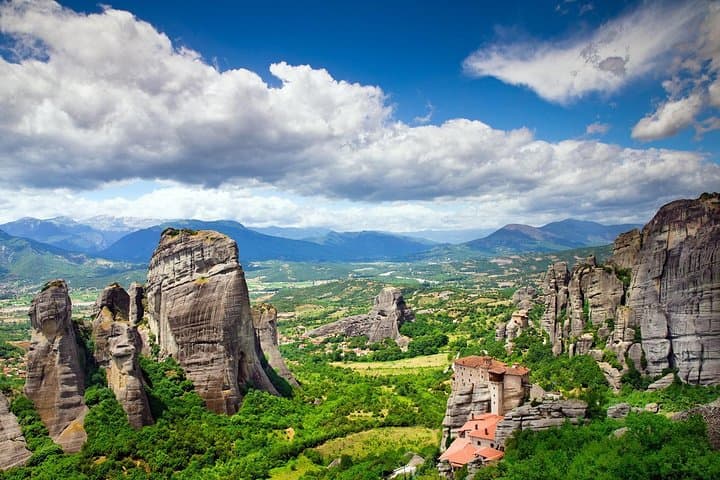
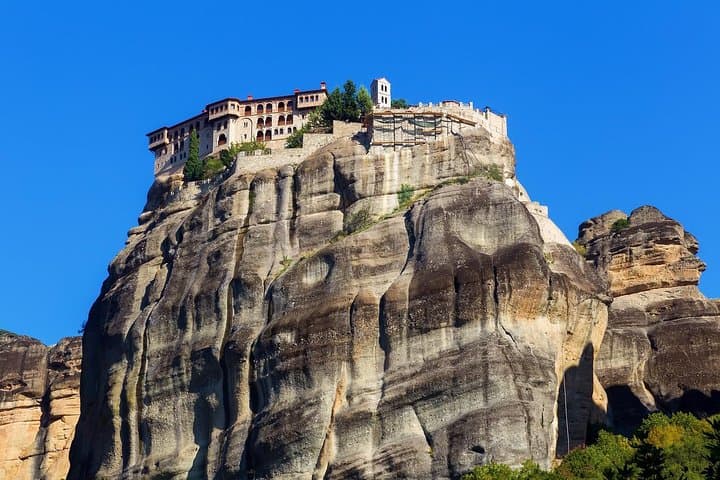
On day two the road cuts across the Thessalian plain and the landscape changes: grey sandstone pillars push up from the earth like weathered columns. Metéora’s monasteries sit on those pillars, Byzantine roofs and bell towers balanced on narrow summits. Geologically, these towers are Miocene sandstones carved by rivers and wind; historically, they became refuges for hermit monks from the 11th century onward and later flourishing monastic communities.
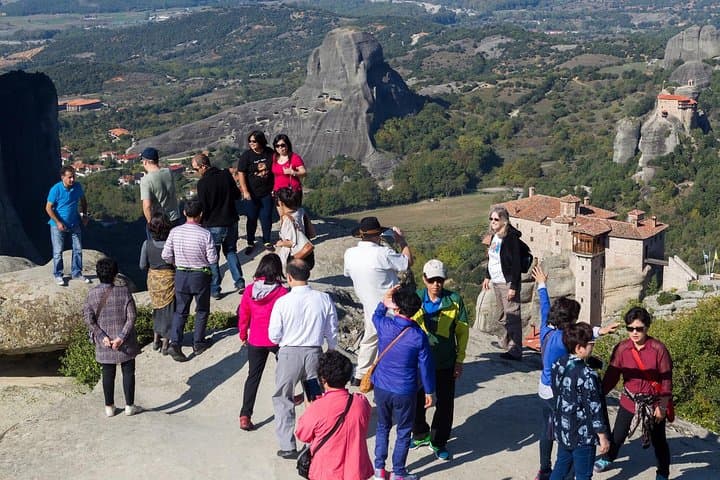
Locally you’ll pass small towns like Arachova and Kalambaka; tavernas serve lamb, pies and local wine. Expect guided walks at Delphi’s archaeological site and visits to two Metéora monasteries — modest hikes and many stone steps. Cultural rules are firm: modest clothing is required to enter monastic buildings.
Practical guidance: bring sturdy walking shoes, sun protection and a small daypack for water and layers; pockets of shade are limited and monastery approaches are steep. Aim for early starts to avoid mid-day crowds and bring cash for small entrance donations and local crafts. The itinerary balances history, geology and quiet moments of view — a compact, two-day introduction to some of Greece’s most arresting landscapes.
easy.
2 days (≈48 hours).
Suitable for most travelers who can manage short hikes and stair climbs; moderate mobility recommended for monastery approaches.
The operator offers free pick-up from many central Athens hotels; confirm pickup point and time by calling the number provided at least 24 hours before departure.
Entrance fees are generally included as listed, but modest donations or small additional fees may apply at some monasteries—carry a little cash.
The tour is described as physically easy, but monastery visits involve many steep stone steps and uneven ground; it may be challenging for those with limited mobility.
Women should wear long sleeves and skirts covering the knee; men should avoid shorts. Carry a scarf or lightweight covering for compliance.
Delphi was the religious heart of classical Greece where the oracle of Apollo spoke; Metéora’s monasteries were founded by ascetics seeking isolation on sandstone pinnacles from the 11th century onward.
Metéora is a UNESCO World Heritage Site—visitors should stay on marked paths, respect monastery rules and limit noise to protect fragile archaeological and religious sites.
Keytours - Greece operates guided outdoor trips and adventures with an emphasis on safety, stewardship, and memorable experiences.
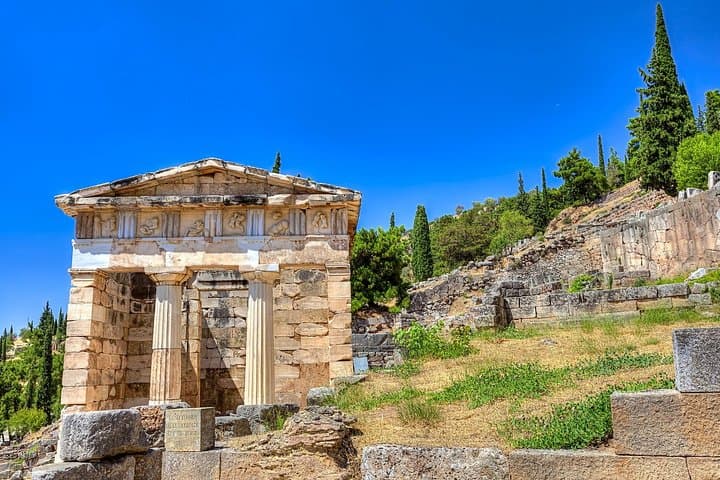
You leave Athens before dawn and the city’s concrete gives way to olive groves and open plain. By late morning the ruins of Delphi rise out of a slope above the valley — marble steps, a theater, and the rectangular base of the Temple of Apollo where pilgrims once sought answers. The air tastes of dust and rosemary; the ancient stones seem to hold conversation.
You leave Athens before dawn and the city’s concrete gives way to olive groves and open plain. By late morning the ruins of Delphi rise out of a slope above the valley — marble steps, a theater, and the rectangular base of the Temple of Apollo where pilgrims once sought answers. The air tastes of dust and rosemary; the ancient stones seem to hold conversation.
On day two the road cuts across the Thessalian plain and the landscape changes: grey sandstone pillars push up from the earth like weathered columns. Metéora’s monasteries sit on those pillars, Byzantine roofs and bell towers balanced on narrow summits. Geologically, these towers are Miocene sandstones carved by rivers and wind; historically, they became refuges for hermit monks from the 11th century onward and later flourishing monastic communities.
Locally you’ll pass small towns like Arachova and Kalambaka; tavernas serve lamb, pies and local wine. Expect guided walks at Delphi’s archaeological site and visits to two Metéora monasteries — modest hikes and many stone steps. Cultural rules are firm: modest clothing is required to enter monastic buildings.
Practical guidance: bring sturdy walking shoes, sun protection and a small daypack for water and layers; pockets of shade are limited and monastery approaches are steep. Aim for early starts to avoid mid-day crowds and bring cash for small entrance donations and local crafts. The itinerary balances history, geology and quiet moments of view — a compact, two-day introduction to some of Greece’s most arresting landscapes.