THE ADVENTURE COLLECTIVE® · Independent discovery and booking for outdoor travel

A focused two-day private tour that pairs Delphi’s ancient oracle with Meteora’s sky-high monasteries. Expect cultural depth, dramatic geology, and short but steep site walks—ideal for travelers who want compact, guided immersion in central Greece.
A focused two-day private tour that pairs Delphi’s ancient oracle with Meteora’s sky-high monasteries. Expect cultural depth, dramatic geology, and short but steep site walks—ideal for travelers who want compact, guided immersion in central Greece.
You step out of the air-conditioned van on a wind-swept ridge and the world compresses into stone: the ruins of Delphi staring down a valley, later a cluster of sandstone pillars rising like towers against the sky at Meteora.
Verified experiences and guided adventures in the surrounding area.
Operated by Athens Royal Trip · Kalambaka, Thessaly
You step out of the air-conditioned van on a wind-swept ridge and the world compresses into stone: the ruins of Delphi staring down a valley, later a cluster of sandstone pillars rising like towers against the sky at Meteora.
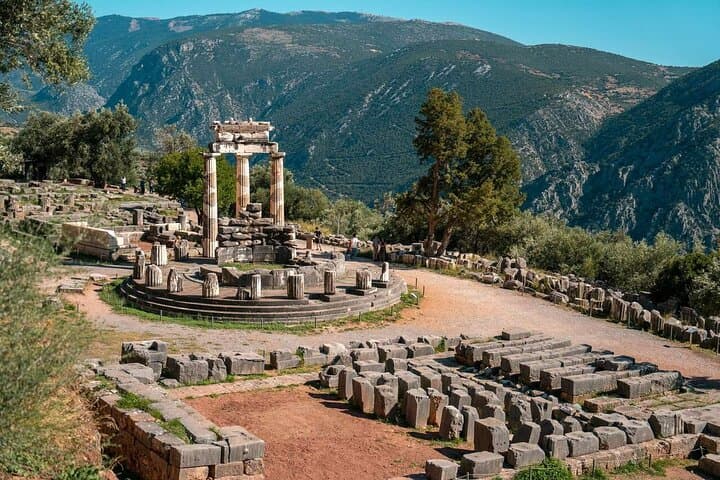
The route traces two of Greece’s defining landscapes and histories. Delphi was once the religious center of the Greek world—pilgrims came to consult the Pythia at the Temple of Apollo, and the site still reveals a theater, stadium and a compact but compelling archaeological museum. Geologically, the nearby slopes of Mount Parnassus are folded limestone that fed the sanctuary’s dramatic setting.
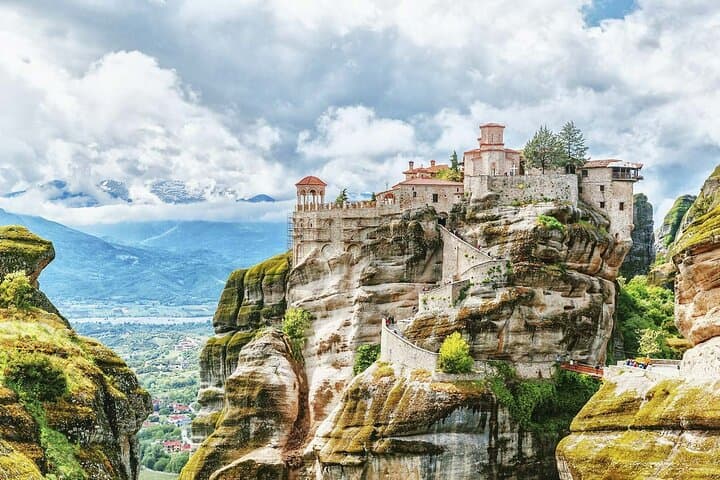
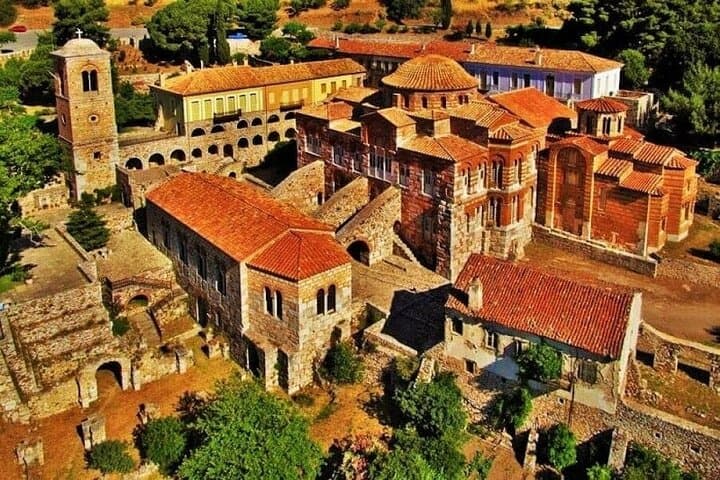
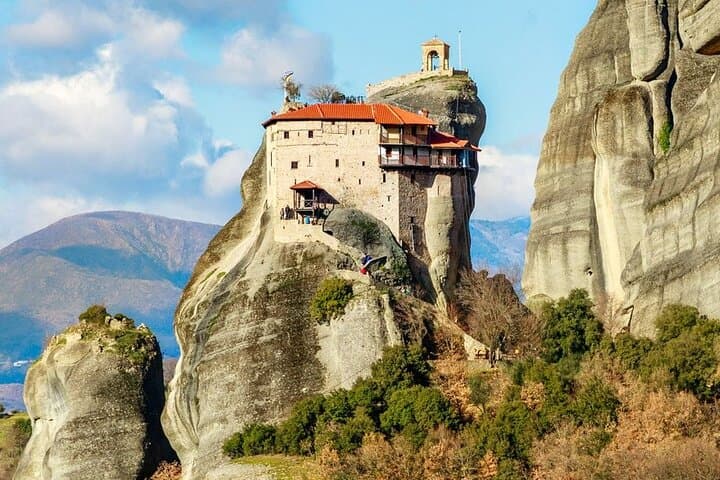
Meteora’s rocks tell a different story: riverine deposits consolidated into conglomerate pillars and slowly eroded into the steep columns that medieval monks chose for isolation. The monasteries, built from the 14th century onward, are cultural artifacts and active spiritual sites—expect austere chapels, frescoed interiors and narrow access points.
Practical guidance: this private two-day tour covers long driving stretches with short, structured walks at sites—be prepared for stairs and uneven ancient stone. Morning light gives the best photos at Delphi; early departures at Meteora avoid busier midday windows. Hydrate and layer—wind and sun alternate quickly on the ridgelines. If you have mobility limits, notify the operator in advance: some monastery approaches involve steps and narrow paths. Bring a refillable bottle, decent walking shoes, and a respectful attitude—these are living heritage sites.
Taken together, the tour balances archaeology, geology and monastery architecture into a compact, accessible two-day experience.
moderate.
2 days (approx. 48 hours).
Suitable for travelers with moderate fitness; involves standing, climbing short flights of ancient stone steps, and brief uneven walks.
Expect several hours of driving across two days—Athens to Delphi is roughly 2–2.5 hours, and Delphi to Meteora around 3–3.5 hours depending on traffic.
The tour visits monasteries but entrance fees are typically not included; confirm with the operator and carry small cash for ticket purchase at each monastery.
Children can join but stairs and narrow approaches make some parts challenging; travelers with mobility limitations should discuss accessibility with the operator prior to booking.
Private tours often allow some flexibility—contact the provider in advance to request timing changes, extra stops or reduced walking options.
Delphi was the site of the Pythia’s oracle from the 8th century BCE; Meteora’s monasteries grew on eroded sandstone pillars as monastic communities sought isolation from the 14th century onward.
Both sites are protected—Delphi as an archaeological park and Meteora as a UNESCO World Heritage Site—so stay on marked paths, avoid touching frescoes, and follow local visitor rules to limit erosion and wear.
Athens Royal Trip operates guided outdoor trips and adventures with an emphasis on safety, stewardship, and memorable experiences.
You step out of the air-conditioned van on a wind-swept ridge and the world compresses into stone: the ruins of Delphi staring down a valley, later a cluster of sandstone pillars rising like towers against the sky at Meteora.
You step out of the air-conditioned van on a wind-swept ridge and the world compresses into stone: the ruins of Delphi staring down a valley, later a cluster of sandstone pillars rising like towers against the sky at Meteora.
The route traces two of Greece’s defining landscapes and histories. Delphi was once the religious center of the Greek world—pilgrims came to consult the Pythia at the Temple of Apollo, and the site still reveals a theater, stadium and a compact but compelling archaeological museum. Geologically, the nearby slopes of Mount Parnassus are folded limestone that fed the sanctuary’s dramatic setting.
Meteora’s rocks tell a different story: riverine deposits consolidated into conglomerate pillars and slowly eroded into the steep columns that medieval monks chose for isolation. The monasteries, built from the 14th century onward, are cultural artifacts and active spiritual sites—expect austere chapels, frescoed interiors and narrow access points.
Practical guidance: this private two-day tour covers long driving stretches with short, structured walks at sites—be prepared for stairs and uneven ancient stone. Morning light gives the best photos at Delphi; early departures at Meteora avoid busier midday windows. Hydrate and layer—wind and sun alternate quickly on the ridgelines. If you have mobility limits, notify the operator in advance: some monastery approaches involve steps and narrow paths. Bring a refillable bottle, decent walking shoes, and a respectful attitude—these are living heritage sites.
Taken together, the tour balances archaeology, geology and monastery architecture into a compact, accessible two-day experience.