THE ADVENTURE COLLECTIVE® · Independent discovery and booking for outdoor travel

Spend a private day between an 11th‑century Byzantine monastery and the ancient oracle at Delphi. This guided tour pairs up-close history—mosaics, crypt frescoes and the Sacred Way—with sweeping mountain and gulf views.
Spend a private day between an 11th‑century Byzantine monastery and the ancient oracle at Delphi. This guided tour pairs up-close history—mosaics, crypt frescoes and the Sacred Way—with sweeping mountain and gulf views.
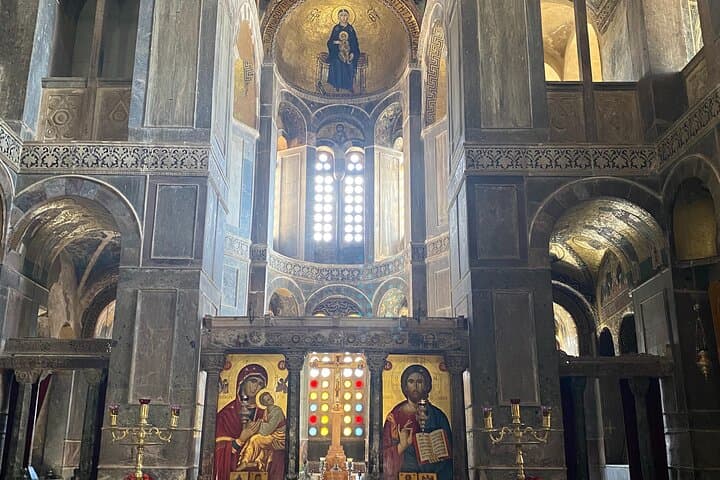
Morning light spills over olive groves as a private vehicle climbs toward the monastery of Hosios Loukas, its stone walls and luminous 11th‑century mosaics appearing against a blue Greek sky.
Verified experiences and guided adventures in the surrounding area.
Operated by ON THE GO · Delphi, Phocis
Morning light spills over olive groves as a private vehicle climbs toward the monastery of Hosios Loukas, its stone walls and luminous 11th‑century mosaics appearing against a blue Greek sky.
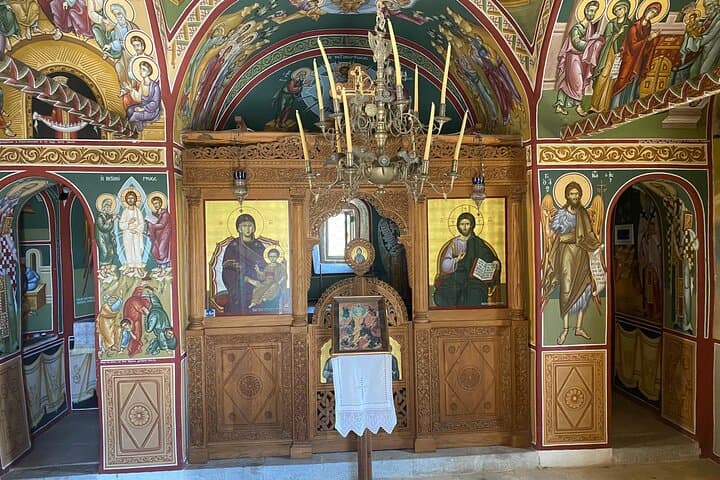
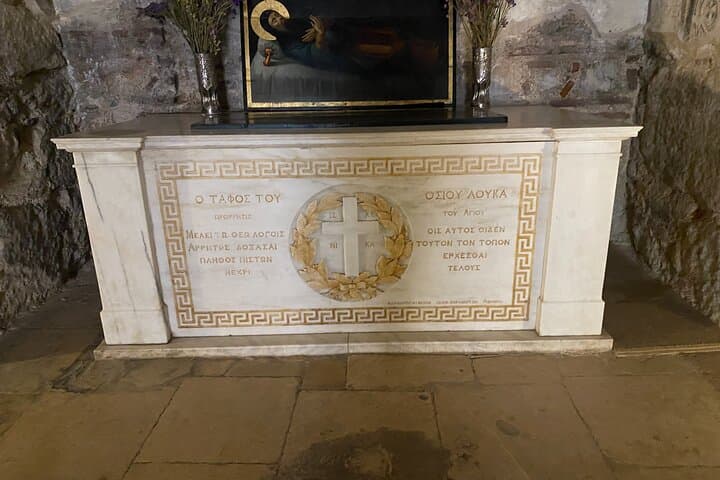
The day opens in quiet contemplation: the katholikon’s tesserae catch the light, frescoes in the crypt whisper stories of medieval monastic life, and the hill below falls away into terraced olives. Later the road winds to Delphi, where the Sacred Way still lays out the route pilgrims once took to consult the Pythia. Here, ruins of the Temple of Apollo, the theatre and the stadium sit on the shoulders of Mount Parnassus, offering broad views over the Gulf of Itea.
Geology and history converge—Parnassus’ limestone slopes shape dramatic terraces and viewpoints, while Delphi’s stones preserve votive treasuries and inscriptions tied to ancient city‑states. Arachova nearby supplies mountain culture: clock‑tower squares, formaella cheese and handwoven textiles.
Practical guidance is simple: expect an 8–10 hour day with moderate walking on uneven stone and steps. Dress modestly for monastic areas (shoulders and knees covered), bring sun protection, sturdy shoes, and a refillable water bottle—the tour provides bottled water but walking the site means you’ll want hands free. The museum at Delphi houses the Charioteer and Omphalos; buy tickets early or enjoy them with your guide’s commentary. Timing your visit for early morning light or late afternoon reduces crowds and makes the views sharper. Respect restricted areas and photography rules in both sites to help preserve fragile mosaics and ruins.
moderate.
8–10 hours.
Suitable for travelers in average fitness who can walk several hours on uneven terrain and climb stairs.
The private tour lasts about 8–10 hours and includes private transportation, an English‑speaking driver/guide, bottled water and visits to Hosios Loukas, Delphi archaeological site and museum, and Arachova.
Hosios Loukas has uneven surfaces and steps; while some areas are stroller/wheelchair accessible, parts of the katholikon and crypt require stairs—check with the operator for specific access arrangements.
Admissions to Delphi’s archaeological site and museum are typically not included—confirm with the operator and consider purchasing tickets in advance to avoid lines.
Yes, private transfers commonly depart from Athens; pickup and drop‑off details are arranged at booking and depend on group size and chosen pickup point.
Delphi was the pan‑Hellenic sanctuary of Apollo and home to the famous oracle; Hosios Loukas is a key 11th‑century Byzantine monastery renowned for its mosaics and monastic architecture.
Both sites are vulnerable to erosion and wear—stay on marked paths, avoid touching frescoes or mosaics, and support local preservation efforts by following site rules.
ON THE GO operates guided outdoor trips and adventures with an emphasis on safety, stewardship, and memorable experiences.
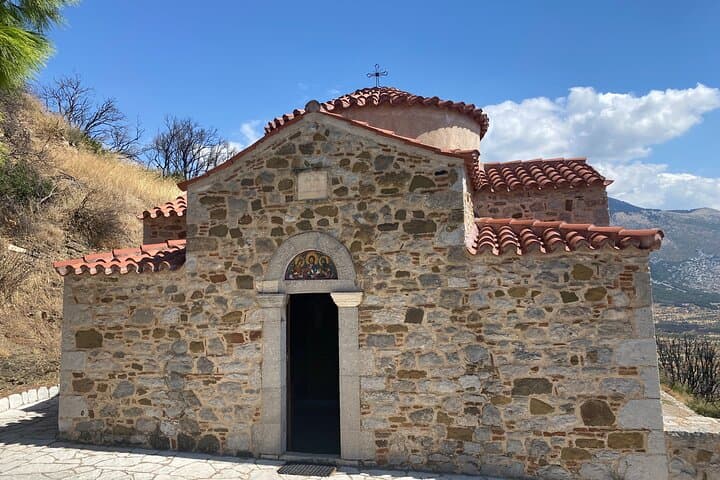
Morning light spills over olive groves as a private vehicle climbs toward the monastery of Hosios Loukas, its stone walls and luminous 11th‑century mosaics appearing against a blue Greek sky.
Morning light spills over olive groves as a private vehicle climbs toward the monastery of Hosios Loukas, its stone walls and luminous 11th‑century mosaics appearing against a blue Greek sky.
The day opens in quiet contemplation: the katholikon’s tesserae catch the light, frescoes in the crypt whisper stories of medieval monastic life, and the hill below falls away into terraced olives. Later the road winds to Delphi, where the Sacred Way still lays out the route pilgrims once took to consult the Pythia. Here, ruins of the Temple of Apollo, the theatre and the stadium sit on the shoulders of Mount Parnassus, offering broad views over the Gulf of Itea.
Geology and history converge—Parnassus’ limestone slopes shape dramatic terraces and viewpoints, while Delphi’s stones preserve votive treasuries and inscriptions tied to ancient city‑states. Arachova nearby supplies mountain culture: clock‑tower squares, formaella cheese and handwoven textiles.
Practical guidance is simple: expect an 8–10 hour day with moderate walking on uneven stone and steps. Dress modestly for monastic areas (shoulders and knees covered), bring sun protection, sturdy shoes, and a refillable water bottle—the tour provides bottled water but walking the site means you’ll want hands free. The museum at Delphi houses the Charioteer and Omphalos; buy tickets early or enjoy them with your guide’s commentary. Timing your visit for early morning light or late afternoon reduces crowds and makes the views sharper. Respect restricted areas and photography rules in both sites to help preserve fragile mosaics and ruins.