THE ADVENTURE COLLECTIVE® · Independent discovery and booking for outdoor travel

A short ferry from Mykonos delivers you to Delos, one of Greece’s most important archaeological islands. This half-day guided tour traces temples, mosaics and lion terraces while offering practical tips for navigating exposed ruins and limited facilities.
A short ferry from Mykonos delivers you to Delos, one of Greece’s most important archaeological islands. This half-day guided tour traces temples, mosaics and lion terraces while offering practical tips for navigating exposed ruins and limited facilities.
Morning wind pushes the ferry out of Mykonos harbor and the Cycladic sea opens like a sheet of glass. By the time you spot Delos’ low profile on the horizon, the island’s stone ruins are already gesturing—columns, terraces, and the squat silhouette of houses that once hummed with trade and ritual.
Verified experiences and guided adventures in the surrounding area.
Operated by MTM Experiences · Mykonos, Cyclades
Morning wind pushes the ferry out of Mykonos harbor and the Cycladic sea opens like a sheet of glass. By the time you spot Delos’ low profile on the horizon, the island’s stone ruins are already gesturing—columns, terraces, and the squat silhouette of houses that once hummed with trade and ritual.
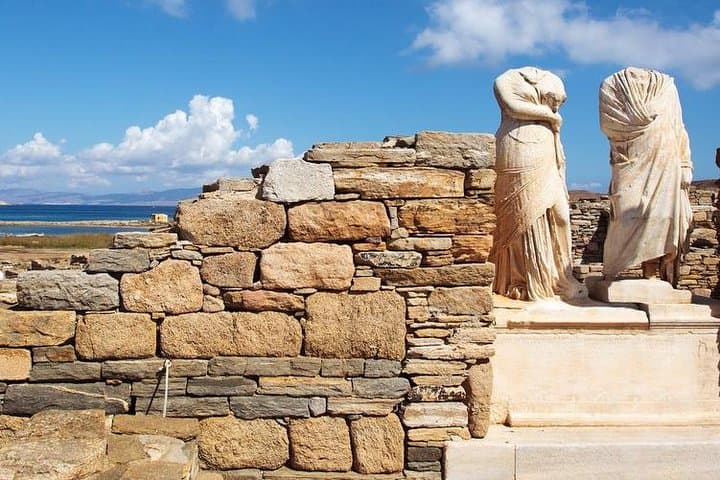
Delos was one of the Mediterranean’s preeminent sacred islands: myth claims it the birthplace of Apollo and Artemis, and the archaeology reflects centuries of religious, commercial, and maritime importance. Bedrock here is weathered schist and marble fragments; the Terrace of the Lions and Doric temple remains are carved from local stone and imported Pentelic marble, giving the site a pale, sun-baked palette. Culture on Delos is an encounter with antiquity: markets, mosaics, and shrines lie exposed to wind and light rather than behind glass.
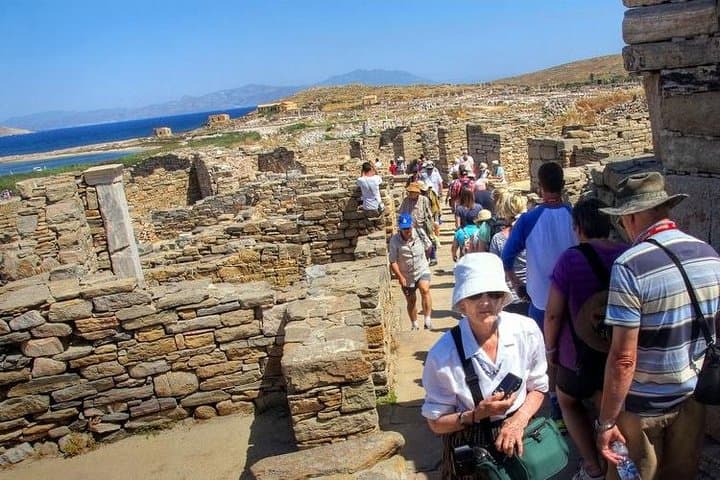
Expect a mostly flat, exposed walking route of compacted dirt and stone, with steps at select ruins and short climbs to viewpoints—comfortable walking shoes are a must. A licensed guide will narrate the highlights: House of Dionysus mosaics, the agora, and the ferry-stamped shoreline where goods once landed. The Archaeological Museum has been under restoration intermittently, so check ahead for exhibits.
Plan for strong sun, limited shade, and only basic facilities on the island. Bring water, a wide-brim hat, and a light layer for sea breezes. Arrive 30 minutes before departure at the Old Port ticket counter; the crossing is brief, but timing is strict. Move respectfully across marked paths—this is a protected UNESCO site—and allow two to four hours to absorb the stones and the history they still hold.
easy.
3–4 hours.
Suitable for most fitness levels; requires standing and walking up to two hours across uneven ground
The crossing is short—typically 20–30 minutes depending on the vessel and sea conditions; the tour schedule is strict so arrive 30 minutes early.
The museum has had intermittent closures for restoration; check current status with the operator before booking to know what exhibits will be available.
Independent visits are possible during public hours, but guided tours provide historical context and ensure efficient use of limited time on the island.
Much of Delos consists of uneven stone paths and steps; access is limited for wheelchairs and strollers, and assistance is usually required.
Delos was a major religious and commercial center in the first millennium BCE and later became a Roman slave market and cosmopolitan hub—its ruins record continuous Mediterranean exchange.
Delos is a protected UNESCO archaeological site; visitors must stay on marked routes, avoid touching ruins, and follow guide instructions to minimize wear on ancient fabric.
MTM Experiences operates guided outdoor trips and adventures with an emphasis on safety, stewardship, and memorable experiences.
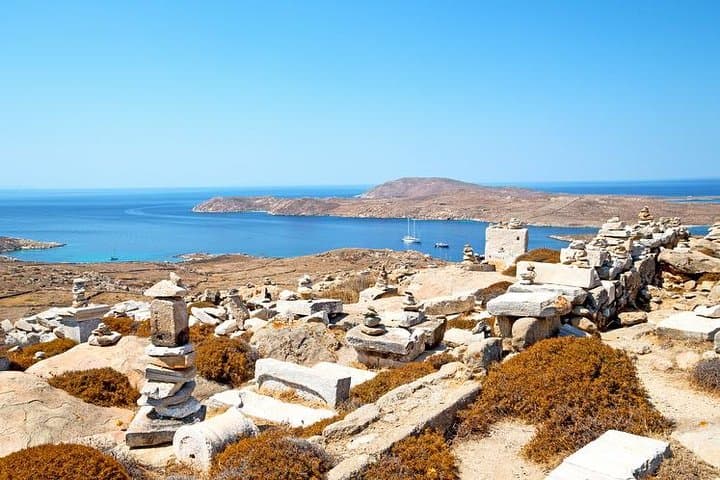
Morning wind pushes the ferry out of Mykonos harbor and the Cycladic sea opens like a sheet of glass. By the time you spot Delos’ low profile on the horizon, the island’s stone ruins are already gesturing—columns, terraces, and the squat silhouette of houses that once hummed with trade and ritual.
Morning wind pushes the ferry out of Mykonos harbor and the Cycladic sea opens like a sheet of glass. By the time you spot Delos’ low profile on the horizon, the island’s stone ruins are already gesturing—columns, terraces, and the squat silhouette of houses that once hummed with trade and ritual.
Delos was one of the Mediterranean’s preeminent sacred islands: myth claims it the birthplace of Apollo and Artemis, and the archaeology reflects centuries of religious, commercial, and maritime importance. Bedrock here is weathered schist and marble fragments; the Terrace of the Lions and Doric temple remains are carved from local stone and imported Pentelic marble, giving the site a pale, sun-baked palette. Culture on Delos is an encounter with antiquity: markets, mosaics, and shrines lie exposed to wind and light rather than behind glass.
Expect a mostly flat, exposed walking route of compacted dirt and stone, with steps at select ruins and short climbs to viewpoints—comfortable walking shoes are a must. A licensed guide will narrate the highlights: House of Dionysus mosaics, the agora, and the ferry-stamped shoreline where goods once landed. The Archaeological Museum has been under restoration intermittently, so check ahead for exhibits.
Plan for strong sun, limited shade, and only basic facilities on the island. Bring water, a wide-brim hat, and a light layer for sea breezes. Arrive 30 minutes before departure at the Old Port ticket counter; the crossing is brief, but timing is strict. Move respectfully across marked paths—this is a protected UNESCO site—and allow two to four hours to absorb the stones and the history they still hold.