THE ADVENTURE COLLECTIVE® · Independent discovery and booking for outdoor travel

Board a morning AC chair-class train from New Delhi for a focused, private day in Jaipur—Amber Fort, Hawa Mahal, Jal Mahal and Jantar Mantar make for a full 16–18 hour loop. Expect photo stops, stair climbs and markets on a schedule designed to maximize daylight.
Board a morning AC chair-class train from New Delhi for a focused, private day in Jaipur—Amber Fort, Hawa Mahal, Jal Mahal and Jantar Mantar make for a full 16–18 hour loop. Expect photo stops, stair climbs and markets on a schedule designed to maximize daylight.
The day breaks in New Delhi before dawn and the train platform fills with the low hum of departure—tea steaming in paper cups, rickshaw brakes calling from distant streets. Guests board an AC chair-class service at 06:00 and watch the plains unfurl: fields, small towns, and the first distant rise of the Aravalli Hills that frame Jaipur.
Verified experiences and guided adventures in the surrounding area.
Operated by Deejohn Holidays India Tours · Jaipur, Rajasthan
The day breaks in New Delhi before dawn and the train platform fills with the low hum of departure—tea steaming in paper cups, rickshaw brakes calling from distant streets. Guests board an AC chair-class service at 06:00 and watch the plains unfurl: fields, small towns, and the first distant rise of the Aravalli Hills that frame Jaipur.
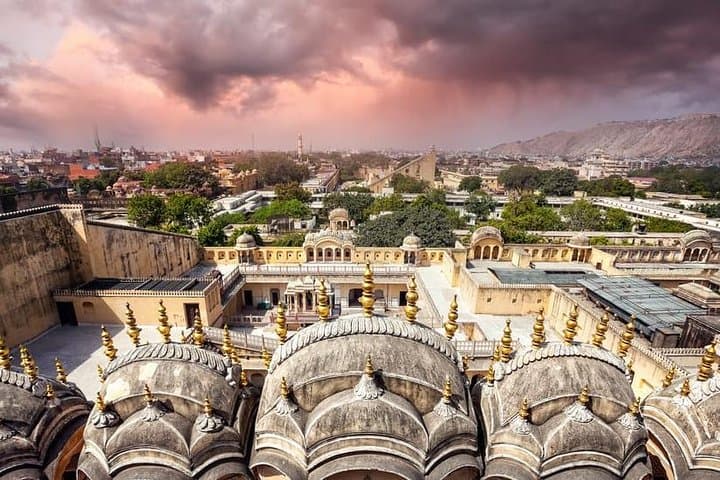
Arriving mid-morning in Jaipur, the pace shifts to a private vehicle moving through ochre streets toward Amber Fort, perched on a rocky ridge above Maota Lake. The fort’s stepped courtyards and carved gateways speak to Rajput militaria and Mughal influence, while Hawa Mahal’s honeycomb façade offers a photographic pause along the old city’s main thoroughfare. Jal Mahal sits like a poised figure on the Man Sagar reservoir—sometimes reduced to mud flats in dry months, but reflective and green after monsoon rains.
History and astronomy meet at Jantar Mantar, Jaipur’s 18th-century observatory and UNESCO site, where stone instruments still read the sun’s angle. Cultural threads—block-printed textiles, blue pottery, and gemstone trade—line the late-afternoon markets if time allows.
Practicalities shape the day: this private option runs roughly 16–18 hours door-to-door, uses AC chair-class rail, and requires basic walking and stair-climbing at monuments. Travelers should carry ID/passport details for booking, bring sun protection, and expect short photo stops rather than long on-site explorations. Timing matters—an early train arrival and a late-evening return maximize daylight for sightseeing while keeping the journey efficient and comfortable.
easy.
16–18 hours.
Easy: suitable for most travelers who can stand and walk short to moderate distances and climb stairs.
Yes—AC chair-class round-trip train tickets between New Delhi and Jaipur are included in the standard option.
Expect moderate walking and several flights of stairs at Amber Fort and within city monuments; most stops are short photo or guided visits rather than long hikes.
Monument fees and a professional guide are included only if the booked option specifies them; check your booking confirmation for inclusions.
Yes—infants and small children are allowed (stroller-accessible in parts), but infants must sit on an adult’s lap on the train and some sites have uneven terrain.
Jaipur was founded in 1727 by Maharaja Sawai Jai Singh II and blends Rajput architecture with Mughal planning; Jantar Mantar reflects the ruler’s scientific interest in astronomy.
Man Sagar Lake and Jal Mahal have undergone restoration efforts; visitors can help by avoiding littering, minimizing plastic, and respecting restricted areas.
Deejohn Holidays India Tours operates guided outdoor trips and adventures with an emphasis on safety, stewardship, and memorable experiences.


The day breaks in New Delhi before dawn and the train platform fills with the low hum of departure—tea steaming in paper cups, rickshaw brakes calling from distant streets. Guests board an AC chair-class service at 06:00 and watch the plains unfurl: fields, small towns, and the first distant rise of the Aravalli Hills that frame Jaipur.
The day breaks in New Delhi before dawn and the train platform fills with the low hum of departure—tea steaming in paper cups, rickshaw brakes calling from distant streets. Guests board an AC chair-class service at 06:00 and watch the plains unfurl: fields, small towns, and the first distant rise of the Aravalli Hills that frame Jaipur.
Arriving mid-morning in Jaipur, the pace shifts to a private vehicle moving through ochre streets toward Amber Fort, perched on a rocky ridge above Maota Lake. The fort’s stepped courtyards and carved gateways speak to Rajput militaria and Mughal influence, while Hawa Mahal’s honeycomb façade offers a photographic pause along the old city’s main thoroughfare. Jal Mahal sits like a poised figure on the Man Sagar reservoir—sometimes reduced to mud flats in dry months, but reflective and green after monsoon rains.
History and astronomy meet at Jantar Mantar, Jaipur’s 18th-century observatory and UNESCO site, where stone instruments still read the sun’s angle. Cultural threads—block-printed textiles, blue pottery, and gemstone trade—line the late-afternoon markets if time allows.
Practicalities shape the day: this private option runs roughly 16–18 hours door-to-door, uses AC chair-class rail, and requires basic walking and stair-climbing at monuments. Travelers should carry ID/passport details for booking, bring sun protection, and expect short photo stops rather than long on-site explorations. Timing matters—an early train arrival and a late-evening return maximize daylight for sightseeing while keeping the journey efficient and comfortable.