THE ADVENTURE COLLECTIVE® · Independent discovery and booking for outdoor travel

A private 8–9 hour day tour from Amsterdam linking Kinderdijk’s UNESCO windmills with Delft’s pottery and The Hague’s cultural heart. Expect modest walking, historic interiors, and a mix of open-water views and city architecture.
A private 8–9 hour day tour from Amsterdam linking Kinderdijk’s UNESCO windmills with Delft’s pottery and The Hague’s cultural heart. Expect modest walking, historic interiors, and a mix of open-water views and city architecture.
You step into a northwesterly wind as the van eases out of Amsterdam—low clouds skimming a flat horizon, reeds whispering along drainage ditches that have reshaped this land for centuries.
Verified experiences and guided adventures in the surrounding area.
Operated by Dutch Tours and Transfers · Amsterdam, North Holland
You step into a northwesterly wind as the van eases out of Amsterdam—low clouds skimming a flat horizon, reeds whispering along drainage ditches that have reshaped this land for centuries.
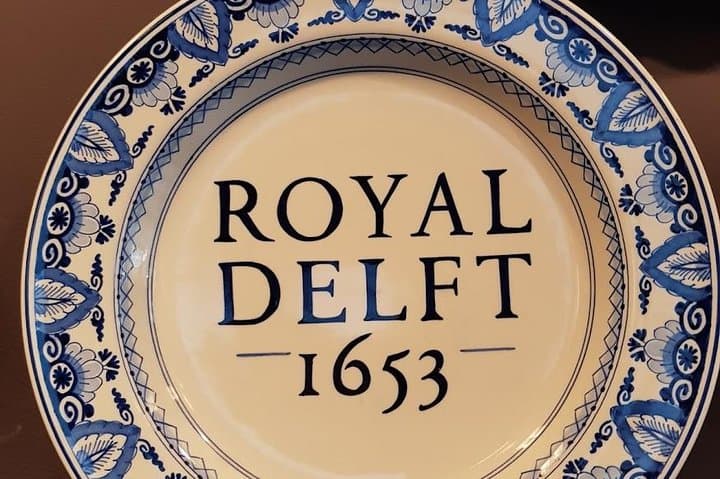
The first real breath of Holland comes at Kinderdijk: a row of 19 wooden windmills balanced on the polder like slow-moving gears of a living machine. Walk boards grooved by generations, climb narrow steps into a working mill and listen to oak beams that creak and spin while the river beyond dares you to lean in for a photo. From there the route threads to Delft, where blue-and-white ceramics trace a craft culture born in the 17th century when trade and clay met.
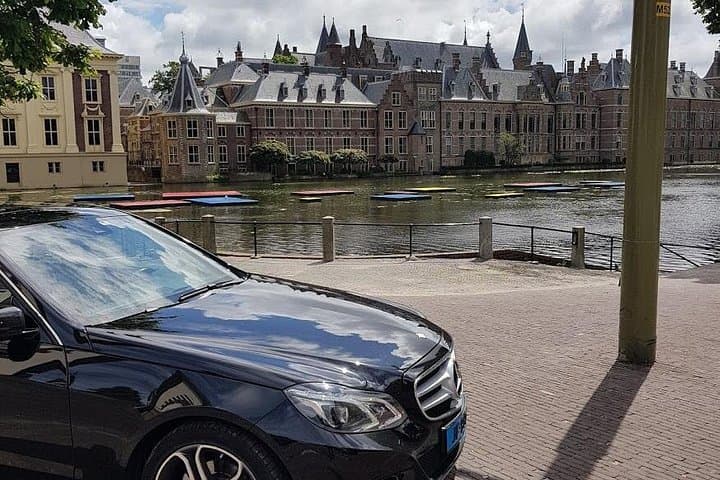
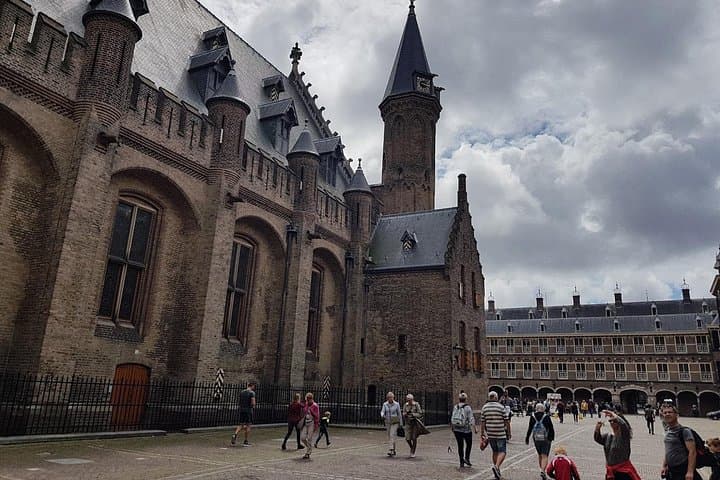
The Hague folds history into architecture—Mauritshuis holds Vermeer’s quiet gaze and the Binnenhof shows a continuity of governance since the 1200s. Rotterdam brings a different voice: modern angles, Cube Houses, the Erasmus Bridge, and a harbor edge that still remembers its shipping past.
Expect mostly flat walking, cobbled market squares, and short staircases inside historic buildings; some mill interiors are steep and low-ceilinged. The full private day runs about 8–9 hours with an air-conditioned vehicle, onboard Wi‑Fi, bottled water, and flexible stops for lunch.
Practical planning: wear sturdy shoes for uneven cobbles, pack a lightweight rain shell, and bring a camera with extra battery—light changes fast over open water and urban skylines. For quieter photos at Kinderdijk, aim for early departures to avoid coach crowds.
easy.
8–9 hours.
Suitable for travelers who can handle light walking and standing for several short periods; not strenuous but involves stairs and uneven surfaces.
Most departures begin and end in Amsterdam; your private chauffeur will confirm the specific pickup point when you book.
Some sites like the Mauritshuis and certain mill interiors may require separate tickets—confirm which admissions are included when booking.
Stroller access is possible, but many historic sites and mills have narrow stairs or uneven flooring; inquire about accessibility for specific stops before booking.
A short scenic cruise is often available locally at Kinderdijk; it’s season- and schedule-dependent and may be an optional extra on the day.
The Binnenhof complex dates back to the 13th century and remains the oldest seat of parliament still in use; Kinderdijk’s windmills, largely built in the 18th century, are a UNESCO World Heritage site for Dutch water-management innovation.
The low-lying polder landscape relies on careful stewardship—stay on designated paths at Kinderdijk, avoid feeding wildlife, and respect local signage to minimize visitor impact.
Dutch Tours and Transfers operates guided outdoor trips and adventures with an emphasis on safety, stewardship, and memorable experiences.

You step into a northwesterly wind as the van eases out of Amsterdam—low clouds skimming a flat horizon, reeds whispering along drainage ditches that have reshaped this land for centuries.
You step into a northwesterly wind as the van eases out of Amsterdam—low clouds skimming a flat horizon, reeds whispering along drainage ditches that have reshaped this land for centuries.
The first real breath of Holland comes at Kinderdijk: a row of 19 wooden windmills balanced on the polder like slow-moving gears of a living machine. Walk boards grooved by generations, climb narrow steps into a working mill and listen to oak beams that creak and spin while the river beyond dares you to lean in for a photo. From there the route threads to Delft, where blue-and-white ceramics trace a craft culture born in the 17th century when trade and clay met.
The Hague folds history into architecture—Mauritshuis holds Vermeer’s quiet gaze and the Binnenhof shows a continuity of governance since the 1200s. Rotterdam brings a different voice: modern angles, Cube Houses, the Erasmus Bridge, and a harbor edge that still remembers its shipping past.
Expect mostly flat walking, cobbled market squares, and short staircases inside historic buildings; some mill interiors are steep and low-ceilinged. The full private day runs about 8–9 hours with an air-conditioned vehicle, onboard Wi‑Fi, bottled water, and flexible stops for lunch.
Practical planning: wear sturdy shoes for uneven cobbles, pack a lightweight rain shell, and bring a camera with extra battery—light changes fast over open water and urban skylines. For quieter photos at Kinderdijk, aim for early departures to avoid coach crowds.