THE ADVENTURE COLLECTIVE® · Independent discovery and booking for outdoor travel

Head offshore from Trincomalee for a five-hour deep sea fishing charter that mixes local expertise and modern tackle. Early mornings give the calmest conditions and the best chance at yellowfin, dorado or a billfish—plus dramatic seascapes for photos.
Head offshore from Trincomalee for a five-hour deep sea fishing charter that mixes local expertise and modern tackle. Early mornings give the calmest conditions and the best chance at yellowfin, dorado or a billfish—plus dramatic seascapes for photos.
The boat slips away from Trincomalee’s breakwater before dawn, engines low, the horizon a clean line of pale light. Salt cuts the air; crew move with the economy of people who read the sea for a living. Within an hour the harbor gives way to broad blue and the gentle heave becomes companionable—waves daring you to stand steady, currents nudging the hull toward deeper promise.
Verified experiences and guided adventures in the surrounding area.
Operated by ZRI Adventures · Trincomalee, Eastern Province
The boat slips away from Trincomalee’s breakwater before dawn, engines low, the horizon a clean line of pale light. Salt cuts the air; crew move with the economy of people who read the sea for a living. Within an hour the harbor gives way to broad blue and the gentle heave becomes companionable—waves daring you to stand steady, currents nudging the hull toward deeper promise.
Trincomalee has been a harbor for millennia: an anchorage for traders from India and the Middle East, later a strategic port for Portuguese, Dutch and British fleets. Offshore, the continental shelf drops sharply and coral outcrops like Pigeon Island create channels that attract pelagic gamefish. Local crews still blend old knowledge—where the tides concentrate baitfish—with modern tackle and GPS marks, so a half-day trip can range from patient trolling to adrenaline-fueled battles with tuna or billfish.
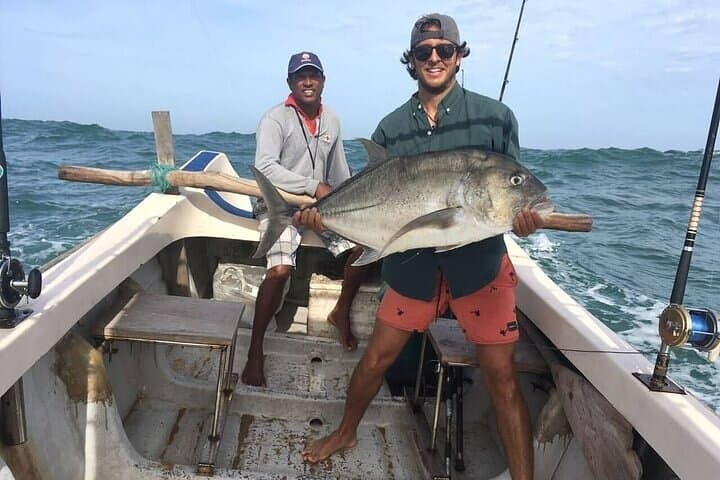
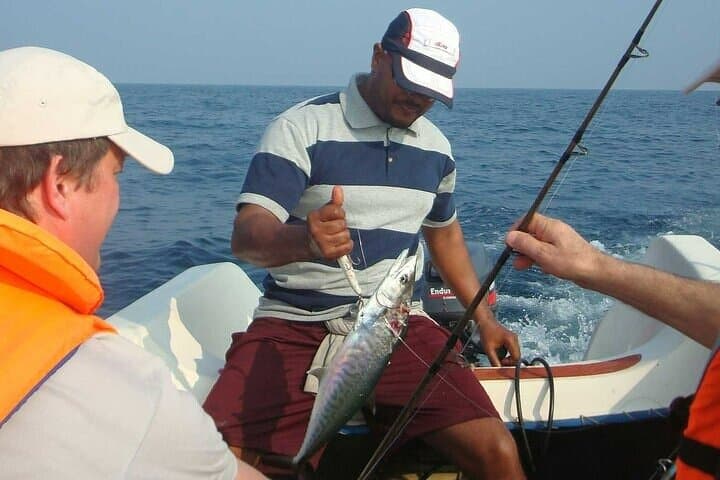
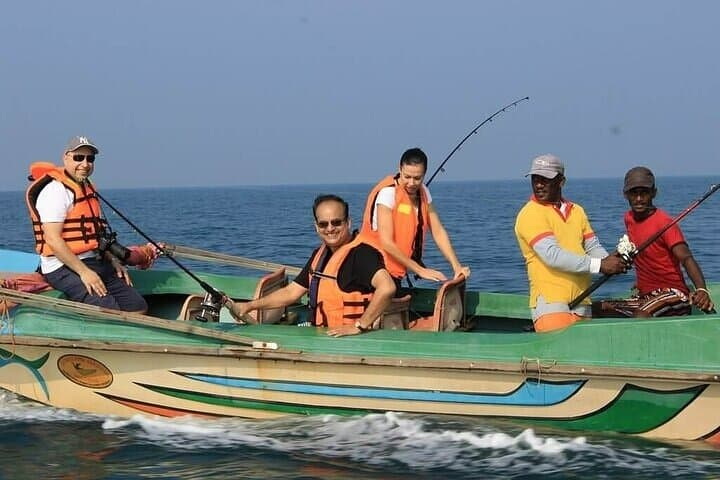
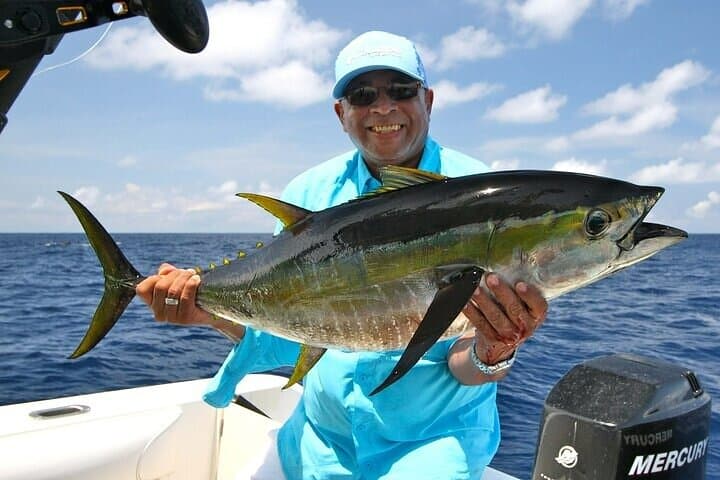
A typical charter runs five hours and pushes 10–25 nautical miles offshore. Expect trolling lines, live-bait options, and—depending on conditions—bottom rigs for snapper and grouper near reefs. Target species include yellowfin tuna, Spanish mackerel, dorado (mahi-mahi), and occasional sailfish or blue marlin. The boat is supplied with basic safety gear, two rods per guest, snacks and drinks; the crew assists with setup and landing fish, so beginners can learn while anglers chase personal bests.
Practicalities matter: seas can be glassy or build into a lumpier swell, particularly outside the May–September window. Morning trips often offer the calmest conditions and the best light for photos; later departures can encounter more wind. Wear non-slip shoes, a warm cover-up for the ride back, and pack motion-sickness meds if you’re prone to queasiness—the Atlantic-sized Indian Ocean can test anyone.
Respect for the water is part of the day. Crews follow local rules about size and protected species; if you plan to keep fish, confirm handling and cleaning policies in advance. Photography opportunities are uncommonly cinematic: the bow rolling into a bright expanse, a line screaming under tension, or the silhouette of Koneswaram Temple on the promontory when you return to harbor.
If you want an afternoon with more certainty of calm water and coral views, combine a fishing day with a snorkel stop at the Pigeon Island reef system. For an efficient half-day that still delivers the thrill of the hunt, head out early, hydrate, and trust the crew’s knowledge of the currents—the ocean here will push, test and occasionally reward you with the strip of silver that tells you the fight is on.
moderate.
5 hours.
Good balance and the ability to stand for periods; not strenuous but expect bursts of exertion when reeling.
Trips typically run 10–25 nautical miles offshore depending on weather and target species; the crew selects productive marks for that day.
No—this tour is suitable for beginners; crew provide rods, tackle and instruction, though experienced anglers will appreciate local knowledge and custom rigs.
Often yes, but check local size limits and ask the operator in advance about cleaning and storage—some species may be released by regulation or conservation practice.
Tours are cancellable for bad weather; operators often refund or reschedule if conditions make offshore fishing unsafe.
Light snacks and bottled water are included; bring extra water and a packed lunch for longer or private charters.
Yes, but this trip is not recommended for very young children or anyone with serious mobility or heart problems due to boat motion and activity level.
Trincomalee has been a strategic harbor for centuries, used by regional traders and later by European colonial powers; the nearby Koneswaram Temple marks the city’s long cultural significance.
Operators generally follow local fishing regulations and encourage catch-and-release for billfish; avoid single-use plastics and support reef protection by not anchoring on coral.
ZRI Adventures operates guided outdoor trips and adventures with an emphasis on safety, stewardship, and memorable experiences.
The boat slips away from Trincomalee’s breakwater before dawn, engines low, the horizon a clean line of pale light. Salt cuts the air; crew move with the economy of people who read the sea for a living. Within an hour the harbor gives way to broad blue and the gentle heave becomes companionable—waves daring you to stand steady, currents nudging the hull toward deeper promise.
The boat slips away from Trincomalee’s breakwater before dawn, engines low, the horizon a clean line of pale light. Salt cuts the air; crew move with the economy of people who read the sea for a living. Within an hour the harbor gives way to broad blue and the gentle heave becomes companionable—waves daring you to stand steady, currents nudging the hull toward deeper promise.
Trincomalee has been a harbor for millennia: an anchorage for traders from India and the Middle East, later a strategic port for Portuguese, Dutch and British fleets. Offshore, the continental shelf drops sharply and coral outcrops like Pigeon Island create channels that attract pelagic gamefish. Local crews still blend old knowledge—where the tides concentrate baitfish—with modern tackle and GPS marks, so a half-day trip can range from patient trolling to adrenaline-fueled battles with tuna or billfish.
A typical charter runs five hours and pushes 10–25 nautical miles offshore. Expect trolling lines, live-bait options, and—depending on conditions—bottom rigs for snapper and grouper near reefs. Target species include yellowfin tuna, Spanish mackerel, dorado (mahi-mahi), and occasional sailfish or blue marlin. The boat is supplied with basic safety gear, two rods per guest, snacks and drinks; the crew assists with setup and landing fish, so beginners can learn while anglers chase personal bests.
Practicalities matter: seas can be glassy or build into a lumpier swell, particularly outside the May–September window. Morning trips often offer the calmest conditions and the best light for photos; later departures can encounter more wind. Wear non-slip shoes, a warm cover-up for the ride back, and pack motion-sickness meds if you’re prone to queasiness—the Atlantic-sized Indian Ocean can test anyone.
Respect for the water is part of the day. Crews follow local rules about size and protected species; if you plan to keep fish, confirm handling and cleaning policies in advance. Photography opportunities are uncommonly cinematic: the bow rolling into a bright expanse, a line screaming under tension, or the silhouette of Koneswaram Temple on the promontory when you return to harbor.
If you want an afternoon with more certainty of calm water and coral views, combine a fishing day with a snorkel stop at the Pigeon Island reef system. For an efficient half-day that still delivers the thrill of the hunt, head out early, hydrate, and trust the crew’s knowledge of the currents—the ocean here will push, test and occasionally reward you with the strip of silver that tells you the fight is on.