THE ADVENTURE COLLECTIVE® · Independent discovery and booking for outdoor travel

Discover Shinsekai’s offbeat food lanes — kushikatsu, cozy izakaya and old-school arcades — on a 2.5-hour local-led walking tour. Small groups, authentic stops, and a guide who escorts you through Osaka’s lived-in nightlife.
Discover Shinsekai’s offbeat food lanes — kushikatsu, cozy izakaya and old-school arcades — on a 2.5-hour local-led walking tour. Small groups, authentic stops, and a guide who escorts you through Osaka’s lived-in nightlife.
You step out beneath a neon penguin and the air fills with the steady hiss of fryers and the chatter of late-night workers — Shinsekai announces itself in salt, oil and laughter. The meeting point in front of Don Quijote’s giant penguin is unmistakable; from there the alleyways pull you into a compact urban patchwork where kushikatsu stalls, tiny izakaya counters and old arcades press close.
Verified experiences and guided adventures in the surrounding area.
Operated by Tom · Osaka, Osaka Prefecture
You step out beneath a neon penguin and the air fills with the steady hiss of fryers and the chatter of late-night workers — Shinsekai announces itself in salt, oil and laughter. The meeting point in front of Don Quijote’s giant penguin is unmistakable; from there the alleyways pull you into a compact urban patchwork where kushikatsu stalls, tiny izakaya counters and old arcades press close.
Shinsekai was rebuilt in the early 20th century as an entertainment district and still wears that era’s grit: Tsutenkaku tower’s steel spine, Billiken’s outstretched feet and the retro game halls are relics of Osaka’s popular-culture past. Geologically, you’re on Osaka’s alluvial plain, a flat cityscape shaped by the rivers flowing to Osaka Bay — the urban fabric replaced natural wetlands long ago, concentrating culture and commerce into dense streets.
On this 2–3 hour walk you taste kushikatsu in Janjan Yokocho, share drinks at a lively izakaya, try local bar snacks and play Showa-era arcade games. Expect communal tables, loud banter and rules — don’t double-dip your skewer in the sauce. Guides choose three to four venues from a curated list, so each tour feels intimate and local.
Practical notes: bring cash for cover charges and extra drinks, wear comfortable shoes for standing and short walks, and arrive on time — the tour moves in set slots. If you want quieter moments, ask the guide to adjust stops. This is urban exploration with a culinary focus: social, sensory and rooted in Osaka’s street-level culture.
easy.
2–3 hours.
Suitable for most fitness levels; requires standing and short urban walks over flat terrain.
The meeting spot is in front of Don Quijote in Shinsekai near the big penguin sign; arrive a few minutes early so the group can leave on time.
Yes — guides can avoid certain ingredients if informed in advance, but confirm at booking to allow venue selection adjustments.
The tour is family-friendly in terms of walking difficulty, but venues serve alcohol and late-night environments; infant laps are required and participant discretion is advised.
Tipping is not customary in Japan; polite thanks and buying another round are common ways to show appreciation instead.
Shinsekai was planned in the early 1900s as a modern entertainment district; after wartime decline it preserved much of its mid-century character and popular culture landmarks like Tsutenkaku and the Billiken statue.
Support local businesses, avoid single-use plastics where possible and follow established smoking and noise rules to minimize impact in this densely populated neighborhood.
Tom operates guided outdoor trips and adventures with an emphasis on safety, stewardship, and memorable experiences.

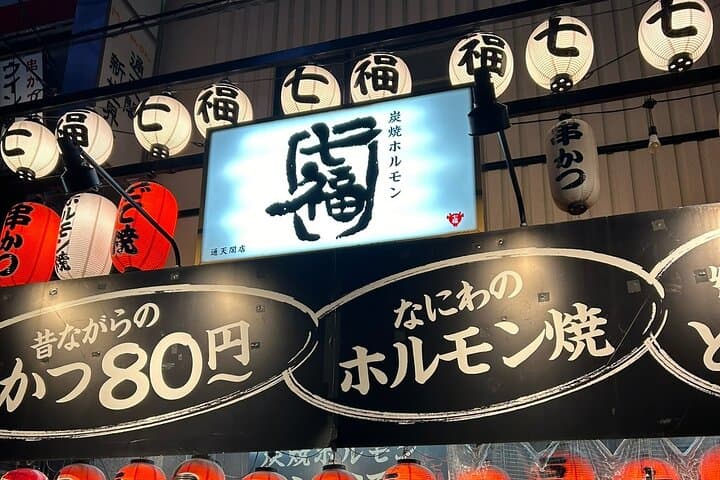


You step out beneath a neon penguin and the air fills with the steady hiss of fryers and the chatter of late-night workers — Shinsekai announces itself in salt, oil and laughter. The meeting point in front of Don Quijote’s giant penguin is unmistakable; from there the alleyways pull you into a compact urban patchwork where kushikatsu stalls, tiny izakaya counters and old arcades press close.
You step out beneath a neon penguin and the air fills with the steady hiss of fryers and the chatter of late-night workers — Shinsekai announces itself in salt, oil and laughter. The meeting point in front of Don Quijote’s giant penguin is unmistakable; from there the alleyways pull you into a compact urban patchwork where kushikatsu stalls, tiny izakaya counters and old arcades press close.
Shinsekai was rebuilt in the early 20th century as an entertainment district and still wears that era’s grit: Tsutenkaku tower’s steel spine, Billiken’s outstretched feet and the retro game halls are relics of Osaka’s popular-culture past. Geologically, you’re on Osaka’s alluvial plain, a flat cityscape shaped by the rivers flowing to Osaka Bay — the urban fabric replaced natural wetlands long ago, concentrating culture and commerce into dense streets.
On this 2–3 hour walk you taste kushikatsu in Janjan Yokocho, share drinks at a lively izakaya, try local bar snacks and play Showa-era arcade games. Expect communal tables, loud banter and rules — don’t double-dip your skewer in the sauce. Guides choose three to four venues from a curated list, so each tour feels intimate and local.
Practical notes: bring cash for cover charges and extra drinks, wear comfortable shoes for standing and short walks, and arrive on time — the tour moves in set slots. If you want quieter moments, ask the guide to adjust stops. This is urban exploration with a culinary focus: social, sensory and rooted in Osaka’s street-level culture.