THE ADVENTURE COLLECTIVE® · Independent discovery and booking for outdoor travel

A private, seven‑hour day trip from Seattle that pairs the raw tide‑raced drama of Deception Pass Bridge with the historic wharves and bluffs of Whidbey Island. Expect easy walking, ferry time, tide pools, and quick lessons in coastal military history.
A private, seven‑hour day trip from Seattle that pairs the raw tide‑raced drama of Deception Pass Bridge with the historic wharves and bluffs of Whidbey Island. Expect easy walking, ferry time, tide pools, and quick lessons in coastal military history.
The bus eases out of Seattle before dawn and the city’s glass towers shrink behind you. By the time the Deception Pass Bridge appears—its steel ribs arcing over a throat of water—the wind has found the passengers and the salt tang is in the air. Walkers on the bridge move with purpose, cameras raised; below, the current snarls and drops like a living thing as tidal flows race between Puget Sound and the Pacific.
Verified experiences and guided adventures in the surrounding area.
Operated by Cheryl's Northwest Tours LLC · Oak Harbor, Washington
The bus eases out of Seattle before dawn and the city’s glass towers shrink behind you. By the time the Deception Pass Bridge appears—its steel ribs arcing over a throat of water—the wind has found the passengers and the salt tang is in the air. Walkers on the bridge move with purpose, cameras raised; below, the current snarls and drops like a living thing as tidal flows race between Puget Sound and the Pacific.
This private, seven‑hour loop pulls together the dramatic geology and quiet towns of northern Whidbey Island. Deception Pass itself is a glacial carve: fractured basalt and glacial till funneled by ice-age melt into a narrow channel that still forces the ocean to hurry. The bridge, completed in 1935, stitches Fidalgo and Whidbey islands together and has become both an engineering landmark and an operating lookout for migrating seabirds.
Down the island, Coupeville preserves its early‑1900s piers and clapboard storefronts—an Ebenezarian slice of maritime Washington where oyster racks and wooden wharves still mark working water. Fort Casey, a short drive further, opens onto salt-scrub bluffs; concrete gun emplacements and the “disappearing” guns of the Endicott era make the fort feel like a slowly decaying sentinel watching the shipping lanes. A lighthouse perched on a bluff adds a postcard punctuation to the coastline and makes for a tidy cliffside stop.
The itinerary is compact but varied: paved viewpoints on the bridge, gravel and sand at several beaches, and a walkable historic town center. Expect easy terrain—short beach scrambles and paved park paths rather than steep hikes—but stinging wind and spray mean conditions can change fast. The tour includes a round‑trip ferry segment back to the mainland, which adds a layer of local travel choreography and an opportunity to watch seals and scoters move past the wake.
Practical guidance: wear sturdy walking shoes with good traction for wet rocks and driftwood, and dress in layers—windproof shell over fleece is a reliable combo. Bring a water bottle and snacks (some are provided), plus a small daypack for camera gear and extra layers. If you want to collect a few beach rocks, follow local rules and leave larger driftwood and historical artifacts behind; Coupeville and park staff ask visitors to respect shorelines and historic structures.
Timing matters: tides sculpt the shore—low tide reveals tide pools and exposed cobbles, high tide makes the channels feel more cinematic—and morning light on the bridge typically delivers the cleanest colors. This private tour is designed for all fitness levels and for travelers who want a concentrated Pacific Northwest day that blends geology, maritime history, and a few of the island’s best viewpoints without the logistics of driving and planning on your own.
easy.
7 hours.
Suitable for most fitness levels—short walks and paved viewpoints with minimal elevation gain
Yes—pickup from Seattle hotels or ports is included; confirm your pickup point at booking.
The tour runs about 7 hours (420 minutes) and includes time at Deception Pass, Coupeville, Fort Casey, and ferry travel.
Admission to Fort Casey is included where noted in the itinerary; some park areas are public and free to explore.
Yes; the tour is rated easy and accessible for most ages, but mobility concerns should be flagged at booking for accommodations.
Small, non‑protected rocks and shells may be collected in limited amounts, but please avoid removing historical artifacts or large driftwood and follow park rules.
Tours run rain or shine; bring waterproof layers. The operator does not cancel for typical coastal weather unless conditions are unsafe.
Whidbey Island has long been a maritime hub; settlement and military fortifications like Fort Casey date to the late 19th and early 20th centuries to protect Puget Sound shipping routes.
Visitors are encouraged to stay on designated trails, pack out trash, and respect tidepool habitats; local stewardship groups work to protect shoreline ecosystems.
Cheryl's Northwest Tours LLC operates guided outdoor trips and adventures with an emphasis on safety, stewardship, and memorable experiences.
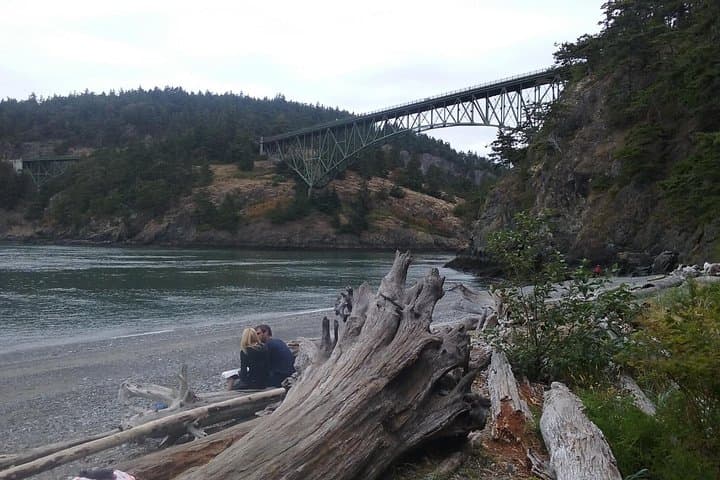


The bus eases out of Seattle before dawn and the city’s glass towers shrink behind you. By the time the Deception Pass Bridge appears—its steel ribs arcing over a throat of water—the wind has found the passengers and the salt tang is in the air. Walkers on the bridge move with purpose, cameras raised; below, the current snarls and drops like a living thing as tidal flows race between Puget Sound and the Pacific.
The bus eases out of Seattle before dawn and the city’s glass towers shrink behind you. By the time the Deception Pass Bridge appears—its steel ribs arcing over a throat of water—the wind has found the passengers and the salt tang is in the air. Walkers on the bridge move with purpose, cameras raised; below, the current snarls and drops like a living thing as tidal flows race between Puget Sound and the Pacific.
This private, seven‑hour loop pulls together the dramatic geology and quiet towns of northern Whidbey Island. Deception Pass itself is a glacial carve: fractured basalt and glacial till funneled by ice-age melt into a narrow channel that still forces the ocean to hurry. The bridge, completed in 1935, stitches Fidalgo and Whidbey islands together and has become both an engineering landmark and an operating lookout for migrating seabirds.
Down the island, Coupeville preserves its early‑1900s piers and clapboard storefronts—an Ebenezarian slice of maritime Washington where oyster racks and wooden wharves still mark working water. Fort Casey, a short drive further, opens onto salt-scrub bluffs; concrete gun emplacements and the “disappearing” guns of the Endicott era make the fort feel like a slowly decaying sentinel watching the shipping lanes. A lighthouse perched on a bluff adds a postcard punctuation to the coastline and makes for a tidy cliffside stop.
The itinerary is compact but varied: paved viewpoints on the bridge, gravel and sand at several beaches, and a walkable historic town center. Expect easy terrain—short beach scrambles and paved park paths rather than steep hikes—but stinging wind and spray mean conditions can change fast. The tour includes a round‑trip ferry segment back to the mainland, which adds a layer of local travel choreography and an opportunity to watch seals and scoters move past the wake.
Practical guidance: wear sturdy walking shoes with good traction for wet rocks and driftwood, and dress in layers—windproof shell over fleece is a reliable combo. Bring a water bottle and snacks (some are provided), plus a small daypack for camera gear and extra layers. If you want to collect a few beach rocks, follow local rules and leave larger driftwood and historical artifacts behind; Coupeville and park staff ask visitors to respect shorelines and historic structures.
Timing matters: tides sculpt the shore—low tide reveals tide pools and exposed cobbles, high tide makes the channels feel more cinematic—and morning light on the bridge typically delivers the cleanest colors. This private tour is designed for all fitness levels and for travelers who want a concentrated Pacific Northwest day that blends geology, maritime history, and a few of the island’s best viewpoints without the logistics of driving and planning on your own.