THE ADVENTURE COLLECTIVE® · Independent discovery and booking for outdoor travel

A 90-minute walking tour that challenges common stories about Charleston's past. Expect close-up looks at Waterfront Park, Rainbow Row, and the citys oldest building while a professional historian separates myth from record.
A 90-minute walking tour that challenges common stories about Charleston's past. Expect close-up looks at Waterfront Park, Rainbow Row, and the citys oldest building while a professional historian separates myth from record.
The spray from the harbor cuts the summer heat as the group gathers around the round fountain across from the HarborView Inn. A guide, not a storyteller in full costume but a practiced historian, peels back the varnish on familiar monuments: cobblestones underfoot, brick facades reflecting a century of trade, and the odd ironwork that still remembers tides of commerce.
Verified experiences and guided adventures in the surrounding area.
Operated by Blueberry Tours · Charleston, South Carolina
The spray from the harbor cuts the summer heat as the group gathers around the round fountain across from the HarborView Inn. A guide, not a storyteller in full costume but a practiced historian, peels back the varnish on familiar monuments: cobblestones underfoot, brick facades reflecting a century of trade, and the odd ironwork that still remembers tides of commerce.
Charleston's streets are living layers — from colonial oyster middens to antebellum warehouses — and this ninety-minute walk steers straight for the facts the guide insists schools left out. You move past Waterfront Park and Rainbow Row, trace East Bay Street where merchants and privateers once traded news and contraband, and pause at the city's oldest 1685 structure to hear how recorded proclamations, public rituals, and civic myth-making shaped modern celebrations.
Geology and port logistics peek through the narrative: low-lying marsh soils that shaped building techniques, the tidal pull that made Charleston a commercial hub, and the cultural exchanges that folded into cuisine, religion, and language.
Practicality matches provocation: this is an easy, mostly flat urban walk on cobbles and sidewalks, suitable for families and visitors who want a critical perspective on public memory. Wear supportive shoes, bring water, and expect stops every 5–10 minutes for stories, clarifications, and questions. The tour is intimate — max 15 people — so late arrivals mean missing context. If rain threatens, check cancellation policy and plan for light rain gear.
Come ready to reassess what you thought you knew about holidays, heroes, and the cracks between history and headline.
easy.
1.5 hours.
Minimal—able to walk and stand for 90 minutes with short pauses
Meet by the large round fountain directly across from the HarborView Inn at Waterfront Park.
Yes—suitable for children and stroller-accessible; content critiques historical narratives which may prompt discussion.
Shared tours are capped at 15 people to keep the experience conversational.
Full refund available if you cancel at least 24 hours before the scheduled departure; check the operator's policy for weather-related cancellations.
Charleston grew as a port city in the 17th and 18th centuries; its public rituals and proclamations were often staged in market buildings and on East Bay Street where merchants debated politics and commerce.
Waterfront maintenance and historic district rules aim to protect shoreline habitats and historic fabric; visitors are encouraged to stay on paths and minimize single-use plastics.
Blueberry Tours operates guided outdoor trips and adventures with an emphasis on safety, stewardship, and memorable experiences.


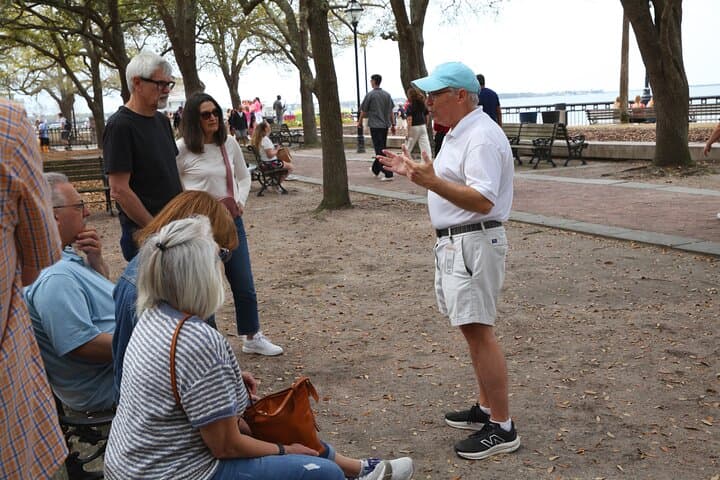

The spray from the harbor cuts the summer heat as the group gathers around the round fountain across from the HarborView Inn. A guide, not a storyteller in full costume but a practiced historian, peels back the varnish on familiar monuments: cobblestones underfoot, brick facades reflecting a century of trade, and the odd ironwork that still remembers tides of commerce.
The spray from the harbor cuts the summer heat as the group gathers around the round fountain across from the HarborView Inn. A guide, not a storyteller in full costume but a practiced historian, peels back the varnish on familiar monuments: cobblestones underfoot, brick facades reflecting a century of trade, and the odd ironwork that still remembers tides of commerce.
Charleston's streets are living layers — from colonial oyster middens to antebellum warehouses — and this ninety-minute walk steers straight for the facts the guide insists schools left out. You move past Waterfront Park and Rainbow Row, trace East Bay Street where merchants and privateers once traded news and contraband, and pause at the city's oldest 1685 structure to hear how recorded proclamations, public rituals, and civic myth-making shaped modern celebrations.
Geology and port logistics peek through the narrative: low-lying marsh soils that shaped building techniques, the tidal pull that made Charleston a commercial hub, and the cultural exchanges that folded into cuisine, religion, and language.
Practicality matches provocation: this is an easy, mostly flat urban walk on cobbles and sidewalks, suitable for families and visitors who want a critical perspective on public memory. Wear supportive shoes, bring water, and expect stops every 5–10 minutes for stories, clarifications, and questions. The tour is intimate — max 15 people — so late arrivals mean missing context. If rain threatens, check cancellation policy and plan for light rain gear.
Come ready to reassess what you thought you knew about holidays, heroes, and the cracks between history and headline.