THE ADVENTURE COLLECTIVE® · Independent discovery and booking for outdoor travel

A full-day private tour from Addis that pairs Ethiopia’s largest monastery with dramatic Jemma River Gorge views, Gelada sightings, a Portuguese bridge, and an authentic coffee ceremony.
A full-day private tour from Addis that pairs Ethiopia’s largest monastery with dramatic Jemma River Gorge views, Gelada sightings, a Portuguese bridge, and an authentic coffee ceremony.
You leave Addis Ababa as the city thins and the highlands take over, the road unspooling across patchwork farmland toward a cliff-line the Jemma River has cut deep into the volcanic plateau. The gorge dares you to peer over stone parapets; below, the river threads through steep walls where Gelada baboons graze on grassy benches.
Verified experiences and guided adventures in the surrounding area.
Operated by Merit Ethiopian Experience Tours · Debre Libanos, Oromia
You leave Addis Ababa as the city thins and the highlands take over, the road unspooling across patchwork farmland toward a cliff-line the Jemma River has cut deep into the volcanic plateau. The gorge dares you to peer over stone parapets; below, the river threads through steep walls where Gelada baboons graze on grassy benches.
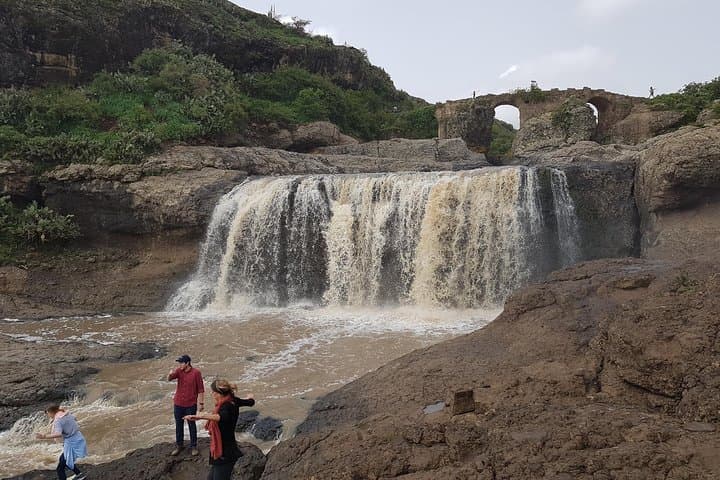
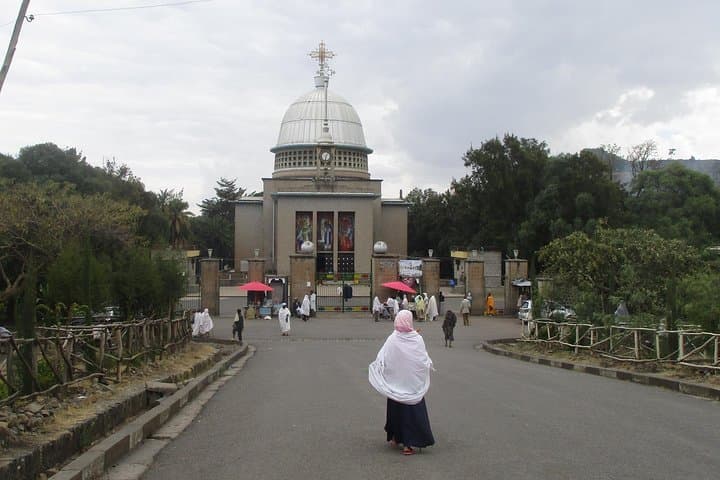
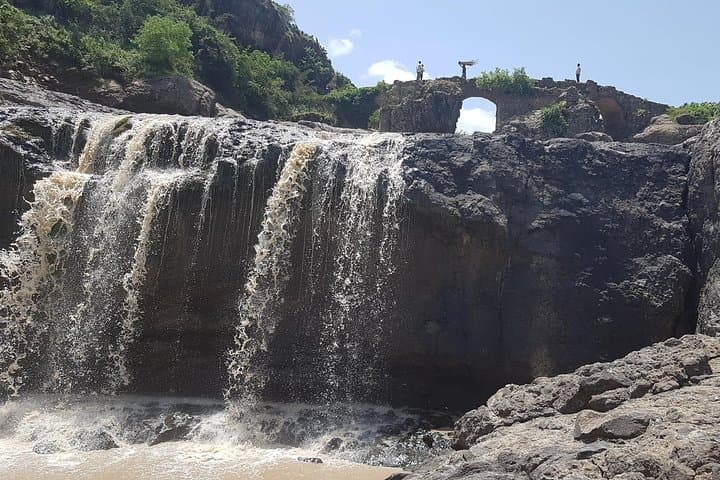
Debre Libanos dates to the 13th century and remains one of Ethiopia’s principal Orthodox centers. The monastery compound and its museum hold liturgical manuscripts and relics; nearby, the 16th-century Portuguese Bridge arches across the gorge, a vestige of early contact between Ethiopia and Europe. Geologically, the gorge slices through basaltic highlands created by ancient eruptions, then widened by the patient force of river incision.
Culture here is tangible: monastic rhythm, Oromo villages, and the coffee ceremony — a slow, social ritual that frames everyday life. Women are expected to cover hair and shoulders when entering holy spaces; photography is normal but ask first.
Practical guidance: expect a full day (7–9 hours) with several short walks and viewpoints rather than strenuous hiking. Wear sturdy shoes for uneven stone paths, bring water and sun protection, and carry small change for entrance fees and tips. Rain is likely June–September, so a packable rain jacket helps. Binoculars make Gelada sightings more rewarding. The tour is private with hotel pickup and includes lunch and a coffee ceremony, but not all entrance fees, so plan accordingly.
easy.
7–9 hours.
Suitable for most fitness levels; short walks on uneven ground and steps required
The drive is about 100–120 km each way, typically 2–2.5 hours depending on traffic and road conditions.
Entrance fees are not included in the tour price; bring local currency to pay at sites.
Geladas are common in the area and often visible from viewpoints, but wildlife sightings can't be guaranteed.
Yes; the tour is rated easy with minimal walking, but those with spinal or cardiovascular issues should consult the operator.
Debre Libanos was founded in the 13th century by Saint Tekle Haymanot and has long been a major center of Ethiopian Orthodox Christianity; the Portuguese Bridge dates to the 16th century.
Visitors should stick to paths and avoid feeding wildlife; erosion control and litter reduction are priorities in the gorge to protect fragile highland soils.
Merit Ethiopian Experience Tours operates guided outdoor trips and adventures with an emphasis on safety, stewardship, and memorable experiences.
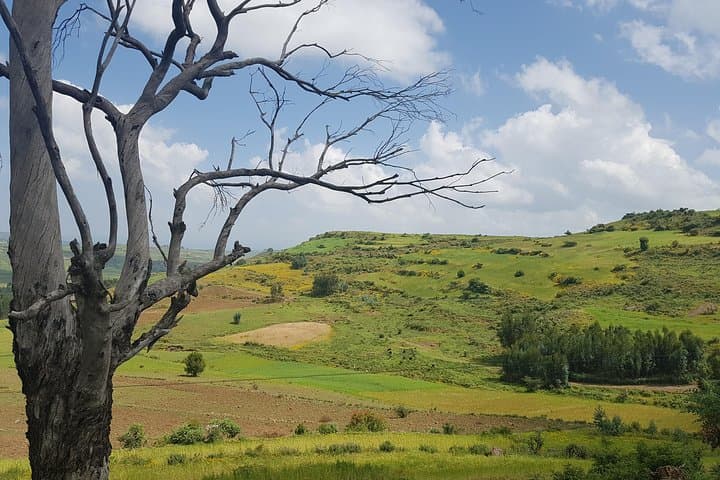
You leave Addis Ababa as the city thins and the highlands take over, the road unspooling across patchwork farmland toward a cliff-line the Jemma River has cut deep into the volcanic plateau. The gorge dares you to peer over stone parapets; below, the river threads through steep walls where Gelada baboons graze on grassy benches.
You leave Addis Ababa as the city thins and the highlands take over, the road unspooling across patchwork farmland toward a cliff-line the Jemma River has cut deep into the volcanic plateau. The gorge dares you to peer over stone parapets; below, the river threads through steep walls where Gelada baboons graze on grassy benches.
Debre Libanos dates to the 13th century and remains one of Ethiopia’s principal Orthodox centers. The monastery compound and its museum hold liturgical manuscripts and relics; nearby, the 16th-century Portuguese Bridge arches across the gorge, a vestige of early contact between Ethiopia and Europe. Geologically, the gorge slices through basaltic highlands created by ancient eruptions, then widened by the patient force of river incision.
Culture here is tangible: monastic rhythm, Oromo villages, and the coffee ceremony — a slow, social ritual that frames everyday life. Women are expected to cover hair and shoulders when entering holy spaces; photography is normal but ask first.
Practical guidance: expect a full day (7–9 hours) with several short walks and viewpoints rather than strenuous hiking. Wear sturdy shoes for uneven stone paths, bring water and sun protection, and carry small change for entrance fees and tips. Rain is likely June–September, so a packable rain jacket helps. Binoculars make Gelada sightings more rewarding. The tour is private with hotel pickup and includes lunch and a coffee ceremony, but not all entrance fees, so plan accordingly.