THE ADVENTURE COLLECTIVE® · Independent discovery and booking for outdoor travel

Leave Las Vegas for an 11-hour small-group trip that pairs Death Valley’s surreal landscapes with a desert sunset at Zabriskie Point and stargazing in a certified Dark Sky Park. Expect salt flats, panoramic viewpoints and a guide who ties geology and history together.
Leave Las Vegas for an 11-hour small-group trip that pairs Death Valley’s surreal landscapes with a desert sunset at Zabriskie Point and stargazing in a certified Dark Sky Park. Expect salt flats, panoramic viewpoints and a guide who ties geology and history together.
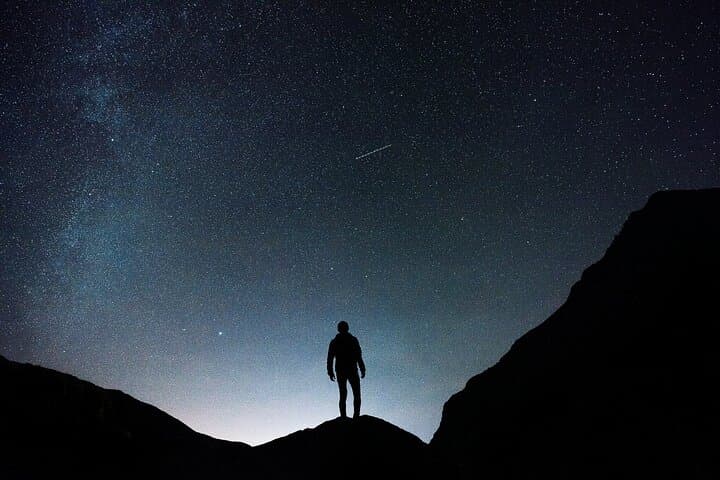
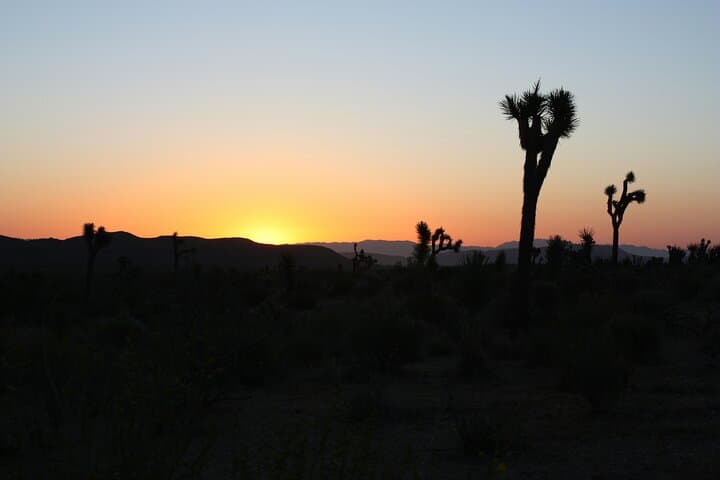
You leave Las Vegas as the city exhales its neon, the highway stretching into the high desert as the strip lights shrink in your rearview. By late afternoon the bus dips into a landscape that seems to have been pared down to rock, salt and sky. At Zabriskie Point the color of the badland folds deepens as the sun tilts west; ridges take on the kind of detail only a desert can invent. When darkness falls, the Milky Way detonates overhead—an impossible ceiling in this International Dark Sky Park.
Verified experiences and guided adventures in the surrounding area.
Operated by MaxTour · Furnace Creek, California
You leave Las Vegas as the city exhales its neon, the highway stretching into the high desert as the strip lights shrink in your rearview. By late afternoon the bus dips into a landscape that seems to have been pared down to rock, salt and sky. At Zabriskie Point the color of the badland folds deepens as the sun tilts west; ridges take on the kind of detail only a desert can invent. When darkness falls, the Milky Way detonates overhead—an impossible ceiling in this International Dark Sky Park.
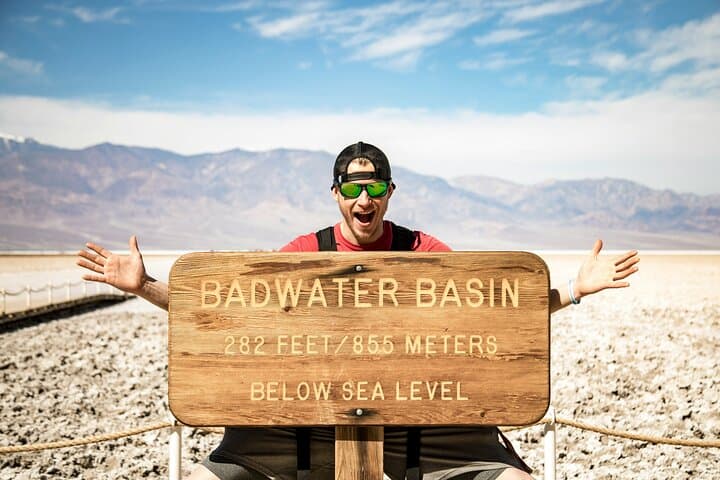
The tour threads together Death Valley’s most iconic sites: Furnace Creek Visitor Center, the jagged salt polygons of Devil’s Golf Course, the vast white plane of Badwater Basin (the lowest point in North America at roughly 282 feet below sea level), the mineral-brushed slopes of Artists Palette, the sweeping vantage of Dante’s View (about 5,475 feet elevation), and the final act at Zabriskie Point for sunset and stargazing.
Geology here reads like an open ledger. The basin formed as tectonic forces stretched the crust, dropping valley floors and uplifting flanking ranges. Evaporation over millennia left salt pans and crystals that fracture into serrated textures. Human history is shorter but dramatic: from Timbisha Shoshone habitation to 19th-century prospectors and the borax 20-mule teams that once routed freight across the flats; each era left traces—settlements, mining scars, and stories your guide will point out along the way.
Practically speaking this is an 11-hour day tour that departs Las Vegas and returns the same evening. Expect long stretches of driving—roughly two to two-and-a-half hours each way depending on traffic—interspersed with multiple 20–120 minute stops for short walks and photo ops. Terrain at stops is mostly flat and accessible (salt flats, viewpoints, short paved pullouts), but Dante’s View involves higher elevation and cooler temperatures.
Tips to plan: carry at least 2–3 liters of water, wear closed-toe shoes for salt crust and rocky pullouts, and bring layered clothing—daytime heat can be extreme in summer while nights and high viewpoints get chilly. For stargazing, leave bright phone screens off or use red light mode and bring binoculars if you have them. The small-group format (up to 14) means more time at viewpoints and a guided narrative about geology, flora, fauna and historical context.
This tour is ideal for travelers who want a concentrated Death Valley experience without self-driving logistics—sunset at Zabriskie and a certified Dark Sky nightcap make it an efficient, memorable introduction to one of the continent’s most uncompromising landscapes.
moderate.
11 hours.
Suitable for people in average fitness; most stops require short, easy walks but long seated stretches on the vehicle.
Most tours depart from Las Vegas with hotel pickup available; exact pickup time is confirmed the day before and you should be ready about 45 minutes prior to departure.
No—Badwater is a flat walk on salt crust; short and easy but wear sturdy shoes as the surface can be rough and reflective.
Bring a warm layer, red-light flashlight, binoculars if you have them, and avoid bright phone screens to retain night vision.
Restrooms are available at the visitor center and some pullouts, but not during long drives—plan accordingly.
The tour is family-friendly but not recommended for pregnant travelers or those with serious cardiovascular or spinal issues—check with the operator before booking.
Yes—use a tripod, wide aperture lens (f/2.8 or faster), high ISO and long exposure (15–30s) to capture the Milky Way; arrive early to set up before sunset.
Timbisha Shoshone people have inhabited parts of Death Valley for centuries; 19th-century prospecting and borax mining reshaped settlement patterns and left historic artifacts across the valley.
Death Valley is a protected National Park and certified Dark Sky Park—stay on designated routes, pack out trash, and minimize light pollution during night visits.
MaxTour operates guided outdoor trips and adventures with an emphasis on safety, stewardship, and memorable experiences.

You leave Las Vegas as the city exhales its neon, the highway stretching into the high desert as the strip lights shrink in your rearview. By late afternoon the bus dips into a landscape that seems to have been pared down to rock, salt and sky. At Zabriskie Point the color of the badland folds deepens as the sun tilts west; ridges take on the kind of detail only a desert can invent. When darkness falls, the Milky Way detonates overhead—an impossible ceiling in this International Dark Sky Park.
You leave Las Vegas as the city exhales its neon, the highway stretching into the high desert as the strip lights shrink in your rearview. By late afternoon the bus dips into a landscape that seems to have been pared down to rock, salt and sky. At Zabriskie Point the color of the badland folds deepens as the sun tilts west; ridges take on the kind of detail only a desert can invent. When darkness falls, the Milky Way detonates overhead—an impossible ceiling in this International Dark Sky Park.
The tour threads together Death Valley’s most iconic sites: Furnace Creek Visitor Center, the jagged salt polygons of Devil’s Golf Course, the vast white plane of Badwater Basin (the lowest point in North America at roughly 282 feet below sea level), the mineral-brushed slopes of Artists Palette, the sweeping vantage of Dante’s View (about 5,475 feet elevation), and the final act at Zabriskie Point for sunset and stargazing.
Geology here reads like an open ledger. The basin formed as tectonic forces stretched the crust, dropping valley floors and uplifting flanking ranges. Evaporation over millennia left salt pans and crystals that fracture into serrated textures. Human history is shorter but dramatic: from Timbisha Shoshone habitation to 19th-century prospectors and the borax 20-mule teams that once routed freight across the flats; each era left traces—settlements, mining scars, and stories your guide will point out along the way.
Practically speaking this is an 11-hour day tour that departs Las Vegas and returns the same evening. Expect long stretches of driving—roughly two to two-and-a-half hours each way depending on traffic—interspersed with multiple 20–120 minute stops for short walks and photo ops. Terrain at stops is mostly flat and accessible (salt flats, viewpoints, short paved pullouts), but Dante’s View involves higher elevation and cooler temperatures.
Tips to plan: carry at least 2–3 liters of water, wear closed-toe shoes for salt crust and rocky pullouts, and bring layered clothing—daytime heat can be extreme in summer while nights and high viewpoints get chilly. For stargazing, leave bright phone screens off or use red light mode and bring binoculars if you have them. The small-group format (up to 14) means more time at viewpoints and a guided narrative about geology, flora, fauna and historical context.
This tour is ideal for travelers who want a concentrated Death Valley experience without self-driving logistics—sunset at Zabriskie and a certified Dark Sky nightcap make it an efficient, memorable introduction to one of the continent’s most uncompromising landscapes.