THE ADVENTURE COLLECTIVE® · Independent discovery and booking for outdoor travel

Descend the infamous Yungas ‘Death Road’ on a full-suspension bike — a high-altitude drop through tarmac, cliff-side singletrack and jungle, finished with a hotel lunch and pool. Expect 60–65 km of downhill with major elevation loss and technical chunks that reward focus and good brakes.
Descend the infamous Yungas ‘Death Road’ on a full-suspension bike — a high-altitude drop through tarmac, cliff-side singletrack and jungle, finished with a hotel lunch and pool. Expect 60–65 km of downhill with major elevation loss and technical chunks that reward focus and good brakes.
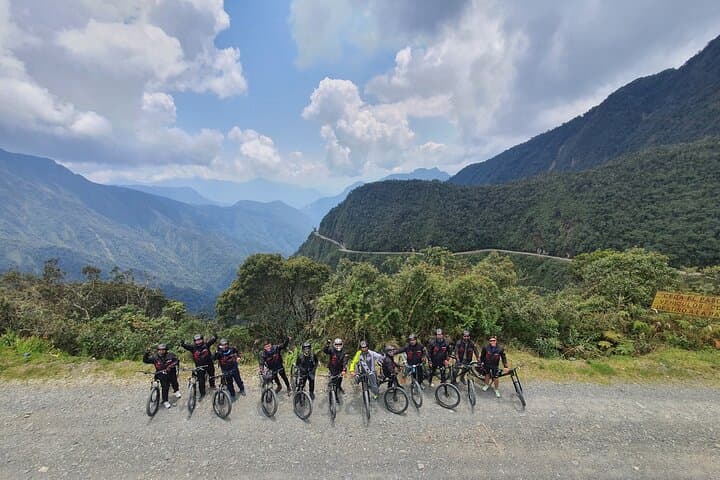
You push off at first light on the high plateau above La Paz, the air thin and bright as the valley yawns below. The road drops away in a long ribbon — paved shoulder, then the old Yungas track clinging to the canyon — and the bike pulls you into a geography that dares you to look down.
Verified experiences and guided adventures in the surrounding area.
Operated by Inti Travel · La Paz, La Paz
You push off at first light on the high plateau above La Paz, the air thin and bright as the valley yawns below. The road drops away in a long ribbon — paved shoulder, then the old Yungas track clinging to the canyon — and the bike pulls you into a geography that dares you to look down.
Once a notorious trade route known as the “Death Road,” this path threads volcanic slopes and cloud-forest fingers, carved where steep Andean geology meets humid Amazon foothills. Historic mule tracks became a single-lane dirt road with sheer drops; today engineered highways take most freight, leaving the old road for descending riders. Local communities in the Yungas grow coca, coffee and fruit; you’ll pass terraces and waterfalls that speak to a mixed highland and tropical culture.
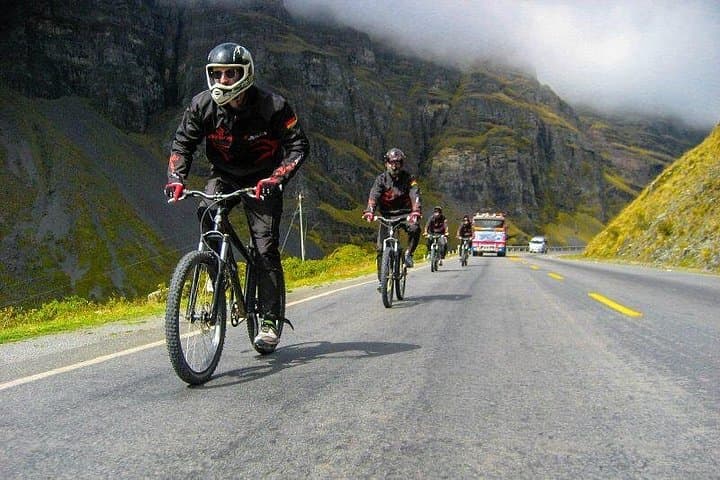
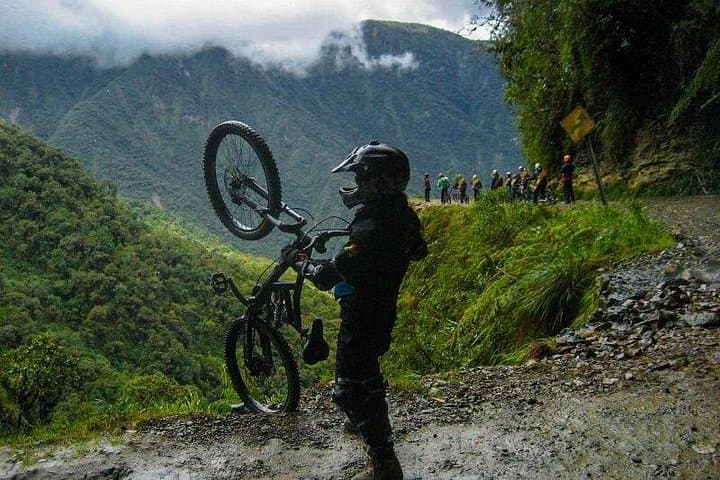
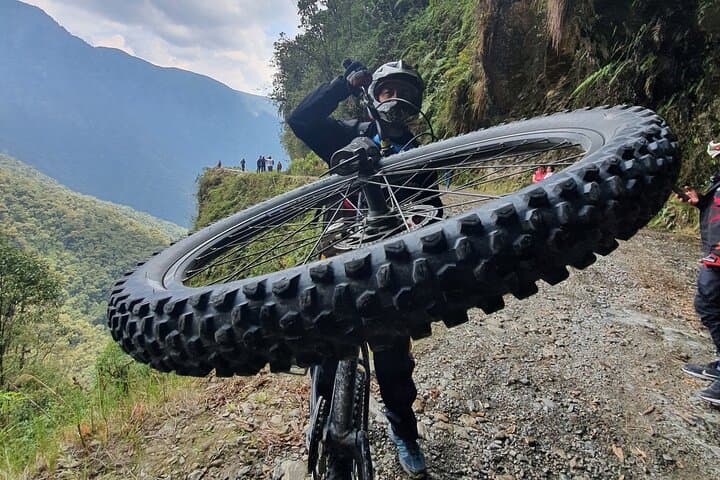
Expect an intense altitude loss (roughly 3,000–3,400 m) over about 60–65 km of rolling downhill: an initial 22 km tarmac warm-up, a 10 km technical “Death Road” section, then ~32 km of mixed dirt and wet jungle track ending at Yolosa. Terrain alternates smooth asphalt, gravel, narrow single-lane cliff edges and muddy, rutted jungle sections — full-suspension bikes with hydraulic discs are essential. Guides run safety vans, enforce compact groups and provide full-face helmets and protective gear.
Practical edge: hydrate and eat before the ride, layer for big temperature swings, and choose seatside photos sparingly — braking and line choice matter. The day finishes with a hotel shower and buffet lunch before a return drive to La Paz, tired but grounded by the raw change in landscape.
challenging.
6 hours.
Moderate to fit: short bursts of technical handling and long exposure to altitude; basic cardiovascular fitness and core stability help for braking and control.
Riders lose roughly 3,000–3,400 meters of elevation over 60–65 km; expect sustained descending with both paved and technical dirt sections.
Yes — intermediate descending skills and confidence braking on loose surfaces are required; guides can coach less experienced riders but technical competence improves safety.
Full-suspension bike, full-face helmet, protective clothing, photos, transport from La Paz, bilingual guide, lunch, water and snacks, and post-ride hotel access with showers and a pool.
Not recommended for travelers with spinal, major cardiovascular issues, or pregnancy due to high speeds, jarring terrain and altitude changes.
The Yungas Road was a vital mule and vehicle route linking highland La Paz to Amazon foothills; it gained notoriety for dangerous drops before a new highway diverted heavy traffic.
Increased adventure tourism has boosted local economies but stresses narrow road margins and adjacent forest—stay on the route, pack out waste and support locally run services.
Inti Travel operates guided outdoor trips and adventures with an emphasis on safety, stewardship, and memorable experiences.
You push off at first light on the high plateau above La Paz, the air thin and bright as the valley yawns below. The road drops away in a long ribbon — paved shoulder, then the old Yungas track clinging to the canyon — and the bike pulls you into a geography that dares you to look down.
You push off at first light on the high plateau above La Paz, the air thin and bright as the valley yawns below. The road drops away in a long ribbon — paved shoulder, then the old Yungas track clinging to the canyon — and the bike pulls you into a geography that dares you to look down.
Once a notorious trade route known as the “Death Road,” this path threads volcanic slopes and cloud-forest fingers, carved where steep Andean geology meets humid Amazon foothills. Historic mule tracks became a single-lane dirt road with sheer drops; today engineered highways take most freight, leaving the old road for descending riders. Local communities in the Yungas grow coca, coffee and fruit; you’ll pass terraces and waterfalls that speak to a mixed highland and tropical culture.
Expect an intense altitude loss (roughly 3,000–3,400 m) over about 60–65 km of rolling downhill: an initial 22 km tarmac warm-up, a 10 km technical “Death Road” section, then ~32 km of mixed dirt and wet jungle track ending at Yolosa. Terrain alternates smooth asphalt, gravel, narrow single-lane cliff edges and muddy, rutted jungle sections — full-suspension bikes with hydraulic discs are essential. Guides run safety vans, enforce compact groups and provide full-face helmets and protective gear.
Practical edge: hydrate and eat before the ride, layer for big temperature swings, and choose seatside photos sparingly — braking and line choice matter. The day finishes with a hotel shower and buffet lunch before a return drive to La Paz, tired but grounded by the raw change in landscape.