THE ADVENTURE COLLECTIVE® · Independent discovery and booking for outdoor travel

Descend 62 km from 4,700 m into the Yungas jungle on the famed ‘Death Road.’ This full-day ride pairs high-altitude exposure with technical dirt descents, scenic waterfalls and a caffeine-rich valley finish.
Descend 62 km from 4,700 m into the Yungas jungle on the famed ‘Death Road.’ This full-day ride pairs high-altitude exposure with technical dirt descents, scenic waterfalls and a caffeine-rich valley finish.
You push off at dawn from a high Andean pass where thin air makes each pedal feel larger than life. The summit sits near 4,700 meters; below, the old Yungas Road cuts through fog and cloud into a green, narrow canyon. A ribbon of asphalt gives way to a single-track dirt ledge carved into the cliff — the descent demands attention and rewards you with waterfalls, jungle sounds and dizzying vistas.
Verified experiences and guided adventures in the surrounding area.
Operated by Red Line · La Paz, La Paz
You push off at dawn from a high Andean pass where thin air makes each pedal feel larger than life. The summit sits near 4,700 meters; below, the old Yungas Road cuts through fog and cloud into a green, narrow canyon. A ribbon of asphalt gives way to a single-track dirt ledge carved into the cliff — the descent demands attention and rewards you with waterfalls, jungle sounds and dizzying vistas.
The road’s modern notoriety springs from its history: a narrow 20th‑century supply route later nicknamed the "Death Road" after decades of dangerous traffic. Geologically you move from puna plateaus to the humid Yungas slopes as elevation drops roughly 3,500 meters, and culturally you pass small Quechua and Aymara communities that tend coffee and fruit in the valley below.
Expect steep, exposed sections with loose gravel, muddy patches after rain, and frequent photo stops; guides brief safety and fit you with protective gear before the first 20 km of asphalt descent. The trip is high-altitude riding first and technical downhill second: conserve energy early, use engine braking on long steep runs, and keep hydrated — altitude blunts thirst and decision speed.
Practical: bring layers for extremes (cold at the summit, hot in the valley), a quality front-facing light if you start before sunrise, and shoes with decent grip for occasional short hikes. Most tours finish with a hearty buffet and transport back to La Paz — a cold shower and a good meal are part of the closure.
challenging.
6–8 hours.
Moderate to strong cardiovascular fitness; comfortable on long descents and able to ride for several hours after a high-altitude start
The full route covered on most tours is about 62 kilometres from the summit near 4,700 m down to roughly 1,180 m.
Yes — tours require moderate-to-strong bike handling skills for steep, exposed, and loose sections; guides provide helmets and pads but not basic training.
Guides monitor riders closely; they can stop, slow pace, provide water and return transport is usually available if someone cannot continue.
Most operators restrict participation to adults; the trip is typically not recommended for people under 18 due to safety and physical demands.
The Yungas Road was carved in the 20th century and expanded over time; built with minimal machinery, its dangerous stretches became infamous as vehicle traffic increased before modern bypasses opened.
Recreational use brings income but also erosion and waste; choose operators that follow leave-no-trace practices and use established parking and lunch sites to limit impact.
Red Line operates guided outdoor trips and adventures with an emphasis on safety, stewardship, and memorable experiences.
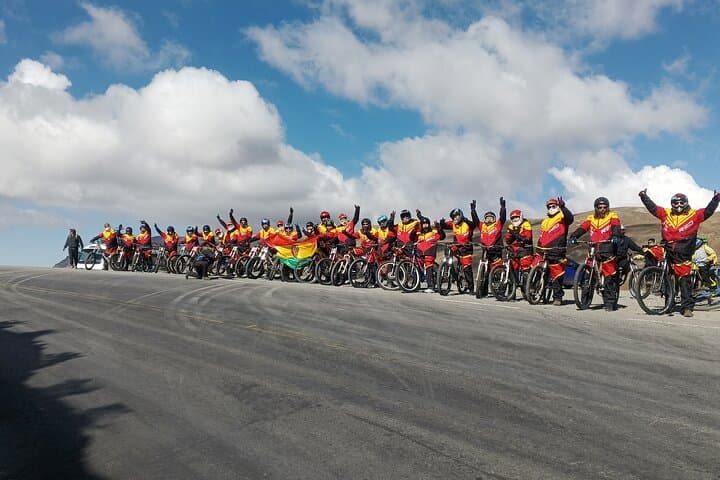
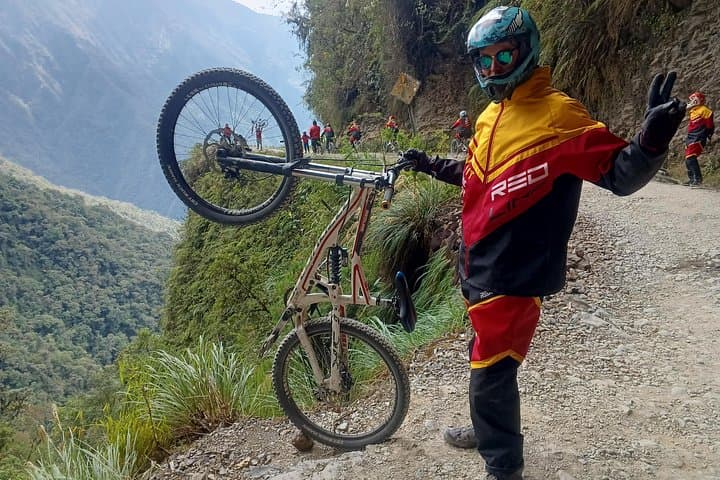
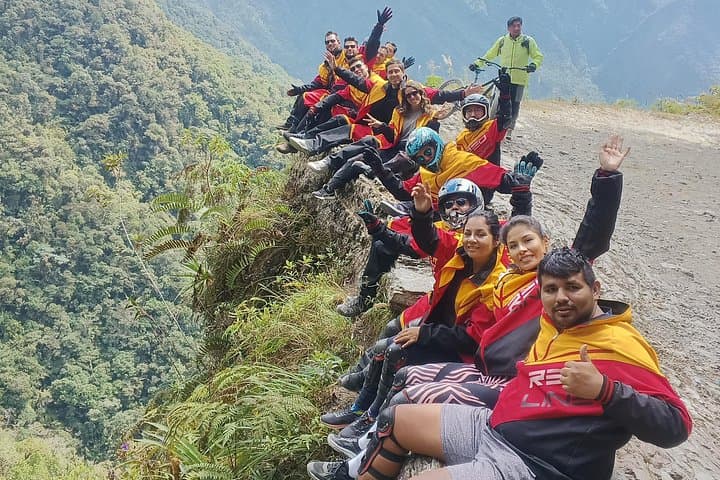
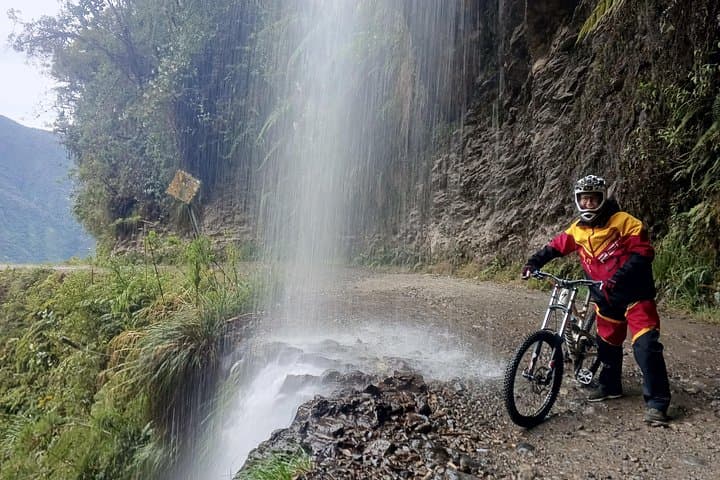
You push off at dawn from a high Andean pass where thin air makes each pedal feel larger than life. The summit sits near 4,700 meters; below, the old Yungas Road cuts through fog and cloud into a green, narrow canyon. A ribbon of asphalt gives way to a single-track dirt ledge carved into the cliff — the descent demands attention and rewards you with waterfalls, jungle sounds and dizzying vistas.
You push off at dawn from a high Andean pass where thin air makes each pedal feel larger than life. The summit sits near 4,700 meters; below, the old Yungas Road cuts through fog and cloud into a green, narrow canyon. A ribbon of asphalt gives way to a single-track dirt ledge carved into the cliff — the descent demands attention and rewards you with waterfalls, jungle sounds and dizzying vistas.
The road’s modern notoriety springs from its history: a narrow 20th‑century supply route later nicknamed the "Death Road" after decades of dangerous traffic. Geologically you move from puna plateaus to the humid Yungas slopes as elevation drops roughly 3,500 meters, and culturally you pass small Quechua and Aymara communities that tend coffee and fruit in the valley below.
Expect steep, exposed sections with loose gravel, muddy patches after rain, and frequent photo stops; guides brief safety and fit you with protective gear before the first 20 km of asphalt descent. The trip is high-altitude riding first and technical downhill second: conserve energy early, use engine braking on long steep runs, and keep hydrated — altitude blunts thirst and decision speed.
Practical: bring layers for extremes (cold at the summit, hot in the valley), a quality front-facing light if you start before sunrise, and shoes with decent grip for occasional short hikes. Most tours finish with a hearty buffet and transport back to La Paz — a cold shower and a good meal are part of the closure.