THE ADVENTURE COLLECTIVE® · Independent discovery and booking for outdoor travel

Step into Dealey Plaza and trace the route, witnesses, and evidence that shaped the JFK assassination narrative. This concise walking and van tour pairs live storytelling with archival media to ground one of America’s most debated events.
Step into Dealey Plaza and trace the route, witnesses, and evidence that shaped the JFK assassination narrative. This concise walking and van tour pairs live storytelling with archival media to ground one of America’s most debated events.
A cold wind threads between low-rise brick buildings as the van pulls up beside Elm Street. You step onto pavement walked by tens of thousands on November 22, 1963 — the parade route still etched into the city's memory. Dealey Plaza presents itself bluntly: a carved-in-place urban plaza, a shallow rise called the grassy knoll, and the former Texas School Book Depository looming where the Sixth Floor Museum now interprets the event.
Verified experiences and guided adventures in the surrounding area.
Operated by Epic Dallas Tours · Dallas, Texas
A cold wind threads between low-rise brick buildings as the van pulls up beside Elm Street. You step onto pavement walked by tens of thousands on November 22, 1963 — the parade route still etched into the city's memory. Dealey Plaza presents itself bluntly: a carved-in-place urban plaza, a shallow rise called the grassy knoll, and the former Texas School Book Depository looming where the Sixth Floor Museum now interprets the event.
The tour layers primary material and oral history with journalistic context. Guides — often journalists or historians — unpack the Warren Commission findings alongside the contested witness accounts, media reactions, and the Zapruder film that fixed the assassination into public consciousness. Geology matters here only as the flat Trinity River floodplain that shaped Dallas’s grid and parade circulation; culturally the event reoriented the nation's faith in institutions and remains a touchstone in American civic life.
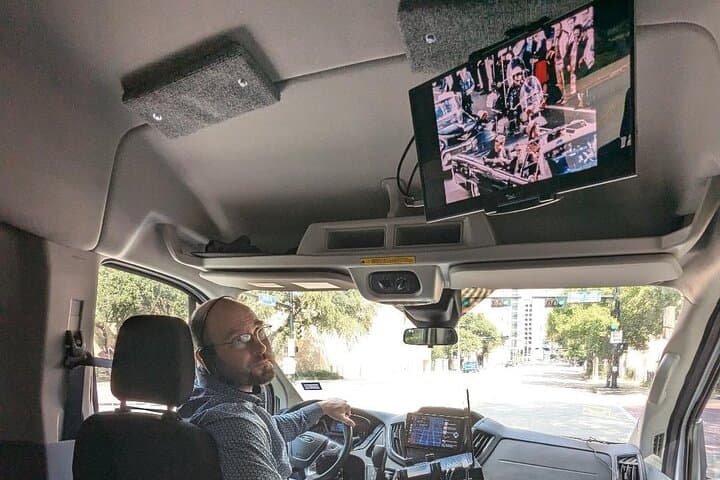
Expect a mix of short van segments and two short walks in Dealey Plaza; multimedia elements and live narration give structure to what can be an emotionally charged subject. Practicalities: allow about 65 minutes, wear comfortable shoes for pavement, and plan your metro or parking logistics — the West End and nearby spots get busy.
The tone is investigative not sensational. Guides encourage respectful observation: photograph from public walkways, avoid climbing fences, and follow directions at memorial sites. For history-minded travelers this compact experience provides concentrated context and precise on-the-ground orientation of one of the 20th century's most consequential scenes.
easy.
1–1.5 hours.
Minimal fitness required — short, flat walks and brief van rides; suitable for most adults and older children.
The tour runs approximately 65 minutes and combines short van rides with on-foot stops in Dealey Plaza.
Yes — content is historical and factual; parents should consider age-appropriateness for discussions about an assassination.
Meeting and drop-off are in the West End/Dealey Plaza area; your ticket confirmation gives exact pickup details and public transit options.
Yes — guides present archival footage and commentary as part of the narration to explain the sequence of events and evidence.
Dealey Plaza is the site of President John F. Kennedy’s assassination on November 22, 1963; the Warren Commission later concluded Lee Harvey Oswald acted alone, a finding still debated by many.
Dealey Plaza is a designated historic site — respect for markers and limits protects fragile memorials and preserves public interpretation for future visitors.
Epic Dallas Tours operates guided outdoor trips and adventures with an emphasis on safety, stewardship, and memorable experiences.
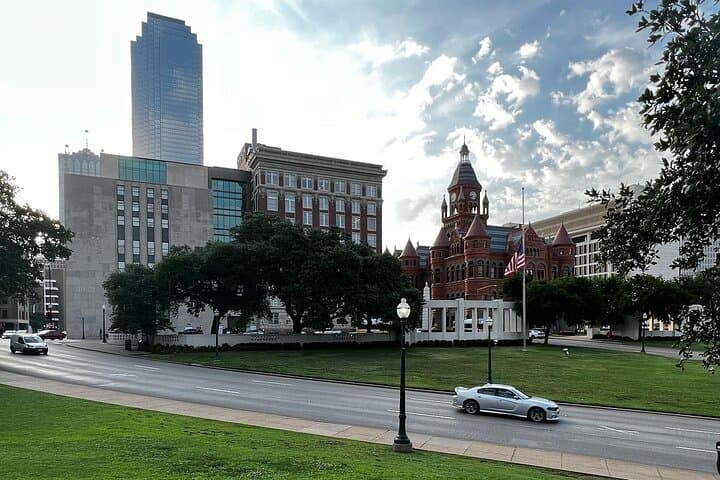
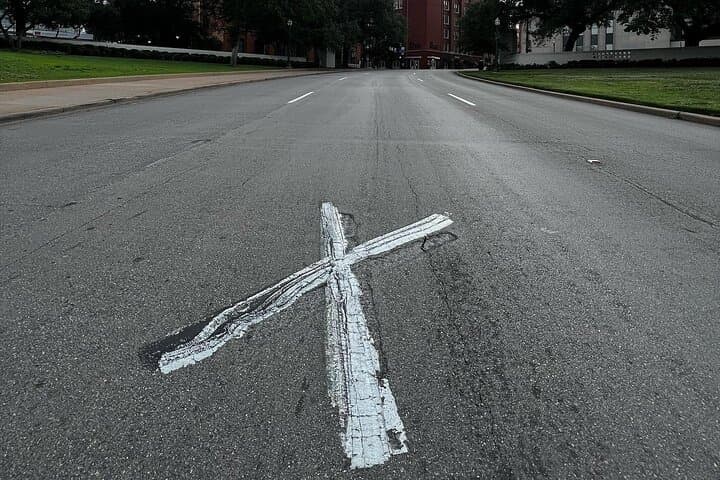
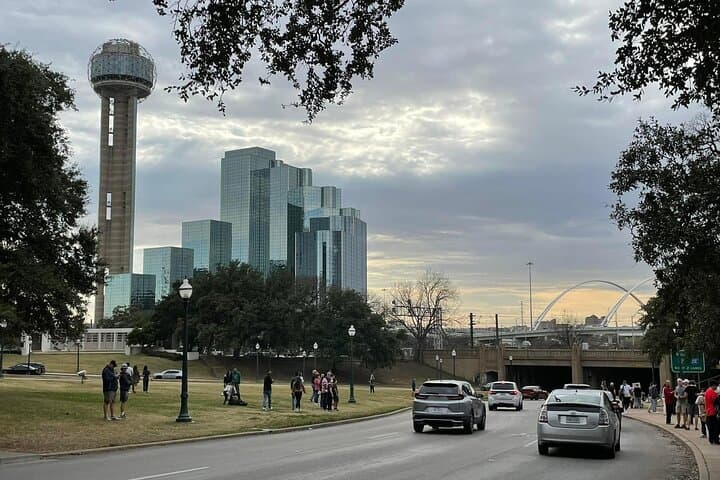
A cold wind threads between low-rise brick buildings as the van pulls up beside Elm Street. You step onto pavement walked by tens of thousands on November 22, 1963 — the parade route still etched into the city's memory. Dealey Plaza presents itself bluntly: a carved-in-place urban plaza, a shallow rise called the grassy knoll, and the former Texas School Book Depository looming where the Sixth Floor Museum now interprets the event.
A cold wind threads between low-rise brick buildings as the van pulls up beside Elm Street. You step onto pavement walked by tens of thousands on November 22, 1963 — the parade route still etched into the city's memory. Dealey Plaza presents itself bluntly: a carved-in-place urban plaza, a shallow rise called the grassy knoll, and the former Texas School Book Depository looming where the Sixth Floor Museum now interprets the event.
The tour layers primary material and oral history with journalistic context. Guides — often journalists or historians — unpack the Warren Commission findings alongside the contested witness accounts, media reactions, and the Zapruder film that fixed the assassination into public consciousness. Geology matters here only as the flat Trinity River floodplain that shaped Dallas’s grid and parade circulation; culturally the event reoriented the nation's faith in institutions and remains a touchstone in American civic life.
Expect a mix of short van segments and two short walks in Dealey Plaza; multimedia elements and live narration give structure to what can be an emotionally charged subject. Practicalities: allow about 65 minutes, wear comfortable shoes for pavement, and plan your metro or parking logistics — the West End and nearby spots get busy.
The tone is investigative not sensational. Guides encourage respectful observation: photograph from public walkways, avoid climbing fences, and follow directions at memorial sites. For history-minded travelers this compact experience provides concentrated context and precise on-the-ground orientation of one of the 20th century's most consequential scenes.