THE ADVENTURE COLLECTIVE® · Independent discovery and booking for outdoor travel

Float effortlessly in one of the planet’s lowest basins, then relax with a resort lunch at Holiday Inn Dead Sea. This self-guided visit blends surreal salt-sculpted shores with practical tips for a safe, comfortable experience.
Float effortlessly in one of the planet’s lowest basins, then relax with a resort lunch at Holiday Inn Dead Sea. This self-guided visit blends surreal salt-sculpted shores with practical tips for a safe, comfortable experience.
You step off the coastal road and the world tilts: a shimmering basin stretches below, the air heavier and warmer, and the horizon sits unnervingly close.
Verified experiences and guided adventures in the surrounding area.
You step off the coastal road and the world tilts: a shimmering basin stretches below, the air heavier and warmer, and the horizon sits unnervingly close.
At the Jordanian shore of the Dead Sea you don a swimsuit, feel the thick, saline water lift you, and let the strange physics of the place hold you upright without effort. Rocks at the waterline wear bright white salt crusts like armor; a thin breeze pushes micro-ripples that seem to glow under the sun.
This basin—roughly 430 meters below sea level—is both geological sink and historical archive. Tectonic movement along the Dead Sea Transform created deep rifts; over millennia evaporation left behind concentrated salts and minerals that drew ancient trade, religious pilgrimage, and modern mineral industries. Nearby towns once traded bitumen and salts; today resorts cluster where the shore is accessible.
Culturally, the Jordanian Dead Sea blends Bedouin heritage with hotel hospitality: local guides, regional cuisine, and the chance to try mineral mud touted for skin benefits. Conservation concerns are visible: receding shorelines and industrial pumping have reshaped the coast.
Practically, expect a 5–6 hour self-guided visit if you combine floating, rinsing, and a hotel lunch at Holiday Inn Dead Sea Resort. Bring plenty of fresh water, strong sunscreen, a towel and footwear for sharp, salty rocks, and plan your visit for morning or late afternoon to avoid peak sun. No guide is included—this excursion is about a slow, buoyant encounter with one of Earth’s most unusual seas.
easy.
5–6 hours.
Low to moderate — basic mobility for short shoreline walks and getting in/out of shallow water is sufficient
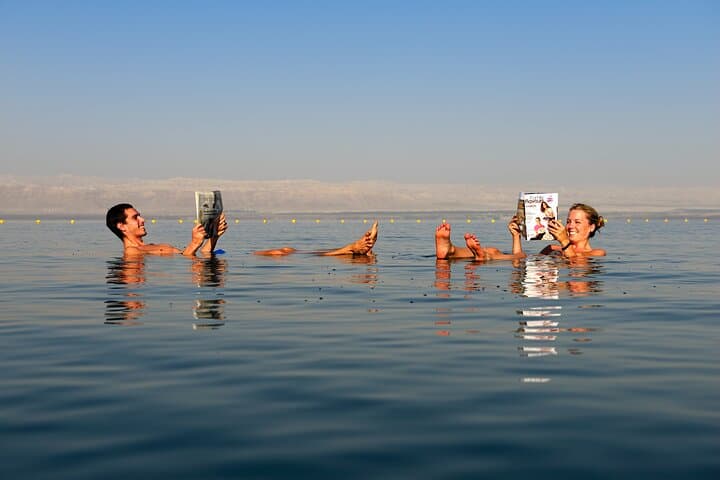
Yes — the high salinity makes floating easy for most people; avoid getting water in your eyes or mouth and do not submerge your head.
No — this listing is self-guided. The Holiday Inn Dead Sea Resort provides access and amenities, but no tour leader is included.
Most resorts and public access points permit applying mineral-rich mud; rinse with fresh water afterward to remove excess salt.
People with open wounds, eye conditions, or certain cardiovascular issues should consult a physician; children should be supervised at all times.
The Dead Sea region has been a center for salt, bitumen and mineral extraction for millennia and appears repeatedly in ancient texts and trade records.
Water diversion and mineral extraction have lowered the sea level for decades; choose low-impact behaviors and support resorts with sustainable water and waste practices.
You step off the coastal road and the world tilts: a shimmering basin stretches below, the air heavier and warmer, and the horizon sits unnervingly close.
You step off the coastal road and the world tilts: a shimmering basin stretches below, the air heavier and warmer, and the horizon sits unnervingly close.
At the Jordanian shore of the Dead Sea you don a swimsuit, feel the thick, saline water lift you, and let the strange physics of the place hold you upright without effort. Rocks at the waterline wear bright white salt crusts like armor; a thin breeze pushes micro-ripples that seem to glow under the sun.
This basin—roughly 430 meters below sea level—is both geological sink and historical archive. Tectonic movement along the Dead Sea Transform created deep rifts; over millennia evaporation left behind concentrated salts and minerals that drew ancient trade, religious pilgrimage, and modern mineral industries. Nearby towns once traded bitumen and salts; today resorts cluster where the shore is accessible.
Culturally, the Jordanian Dead Sea blends Bedouin heritage with hotel hospitality: local guides, regional cuisine, and the chance to try mineral mud touted for skin benefits. Conservation concerns are visible: receding shorelines and industrial pumping have reshaped the coast.
Practically, expect a 5–6 hour self-guided visit if you combine floating, rinsing, and a hotel lunch at Holiday Inn Dead Sea Resort. Bring plenty of fresh water, strong sunscreen, a towel and footwear for sharp, salty rocks, and plan your visit for morning or late afternoon to avoid peak sun. No guide is included—this excursion is about a slow, buoyant encounter with one of Earth’s most unusual seas.