THE ADVENTURE COLLECTIVE® · Independent discovery and booking for outdoor travel

Float effortlessly on the Dead Sea, smear mineral-rich mud, and enjoy a beachfront buffet on this private round-trip from Amman. A short drive delivers a unique geological and cultural experience—perfect for a restorative day away from the city.
Float effortlessly on the Dead Sea, smear mineral-rich mud, and enjoy a beachfront buffet on this private round-trip from Amman. A short drive delivers a unique geological and cultural experience—perfect for a restorative day away from the city.
The Dead Sea opens like a polished horizon—flat, brilliant, and stubbornly horizontal. Step off an air-conditioned coach onto a private Amman tourist beach and the first impression is the salt: a crunchy rim along the waterline, mineral-smelling breeze, and a turquoise surface that refuses to sink you. You’ll feel the water push you up as if the lake itself is making room.
Verified experiences and guided adventures in the surrounding area.
Operated by The Jordanian Mappers · Amman, Amman Governorate
The Dead Sea opens like a polished horizon—flat, brilliant, and stubbornly horizontal. Step off an air-conditioned coach onto a private Amman tourist beach and the first impression is the salt: a crunchy rim along the waterline, mineral-smelling breeze, and a turquoise surface that refuses to sink you. You’ll feel the water push you up as if the lake itself is making room.
Geology gives the show its rules: the Dead Sea sits roughly 430 meters below sea level and is one of the saltiest bodies of water on earth, a product of intense evaporation in a tectonically active rift valley. Human history presses against that geology—ancient trade routes, biblical references, and a long tradition of using its mud and salts for therapeutic and cosmetic purposes.
Culturally, the shore is practical: private beaches, small boutiques selling Dead Sea products, and simple buffet lunch setups. Local operators focus on short, restorative visits—float, smear mineral mud, rinse, and relax.
Practical guidance: plan for strong sun and saline sting—don’t shave beforehand, keep water away from eyes and mouth, and rinse thoroughly after. Expect a 45–60 minute drive from central Amman, locker and shower facilities at the beach, and a moderate amount of walking on uneven salt-crusted shore. Bring water shoes to protect your feet from jagged salt, a wide-brim hat for shade, and a lightweight towel.
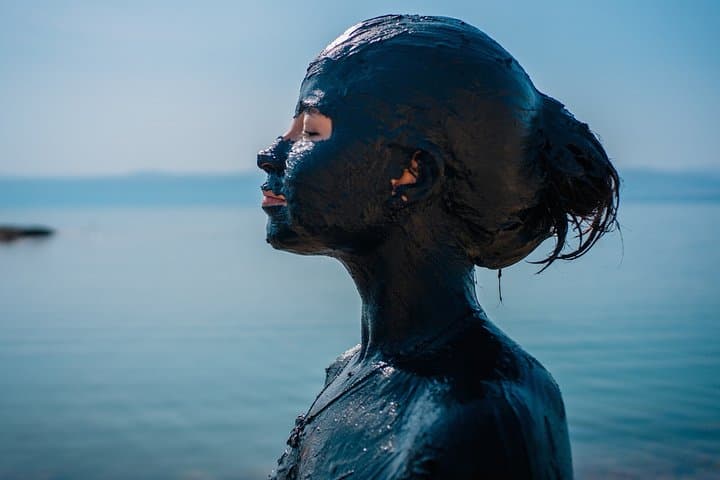
This is an accessible, sensory experience: the buoyant calm of the water, mud that clings like slow paint, and a lunch that brings you back to land. It’s short, restorative, and deeply linked to the landscape’s unique geology and long human use.
easy.
4 hours.
Suitable for most fitness levels; minimal walking and no technical exertion required
Typical transfer time is about 45–60 minutes each way depending on traffic and the exact pick-up point in Amman.
Yes—floating is safe for most people due to the high buoyancy; avoid swallowing water, keep it out of your eyes, and stay seated or reclined in shallow water if uncertain.
Children can float but should be supervised at all times; infants and toddlers are at greater risk from immersion or accidental ingestion of saline water.
Most tourist beaches provide lockers, showers, and restrooms—use them to rinse salt and mud off before leaving.
The Dead Sea’s salts and mud have been harvested for millennia; it appears in ancient texts and supported nearby settlements tied to regional trade routes.
The Dead Sea’s level is dropping due to upstream water diversion and mineral extraction—use designated facilities, avoid littering, and support operators that follow local conservation practices.
The Jordanian Mappers operates guided outdoor trips and adventures with an emphasis on safety, stewardship, and memorable experiences.
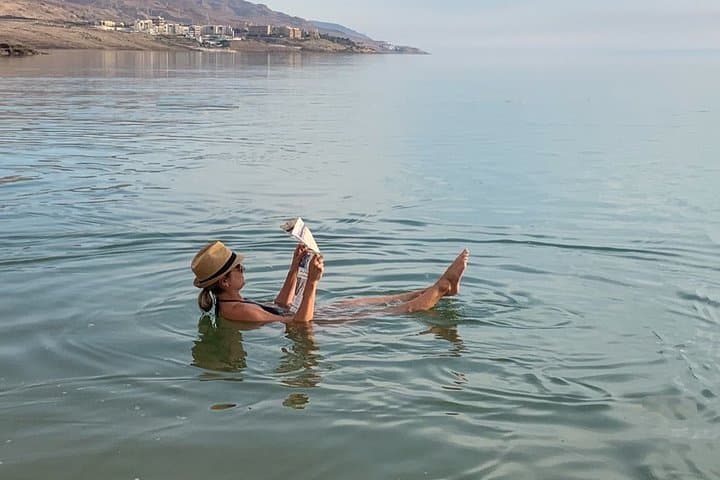
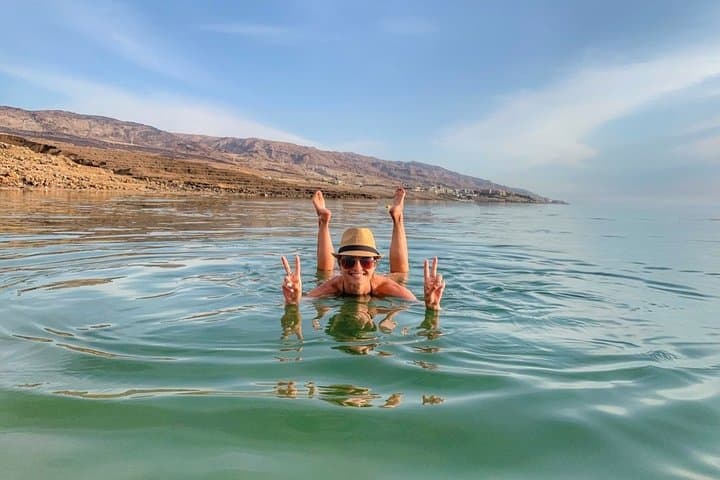
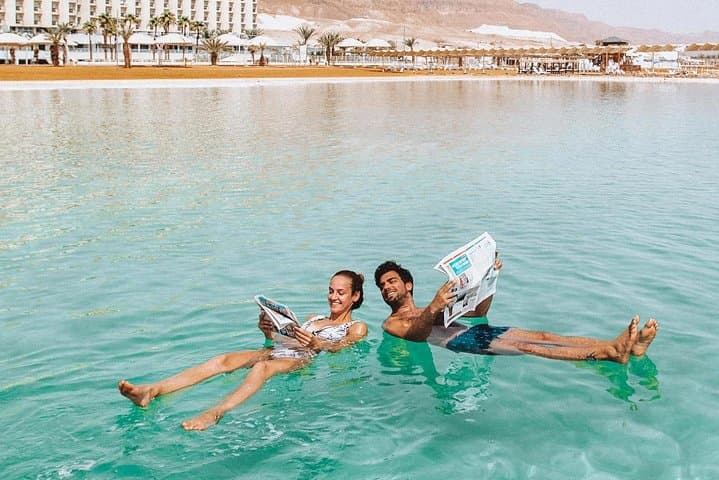
The Dead Sea opens like a polished horizon—flat, brilliant, and stubbornly horizontal. Step off an air-conditioned coach onto a private Amman tourist beach and the first impression is the salt: a crunchy rim along the waterline, mineral-smelling breeze, and a turquoise surface that refuses to sink you. You’ll feel the water push you up as if the lake itself is making room.
The Dead Sea opens like a polished horizon—flat, brilliant, and stubbornly horizontal. Step off an air-conditioned coach onto a private Amman tourist beach and the first impression is the salt: a crunchy rim along the waterline, mineral-smelling breeze, and a turquoise surface that refuses to sink you. You’ll feel the water push you up as if the lake itself is making room.
Geology gives the show its rules: the Dead Sea sits roughly 430 meters below sea level and is one of the saltiest bodies of water on earth, a product of intense evaporation in a tectonically active rift valley. Human history presses against that geology—ancient trade routes, biblical references, and a long tradition of using its mud and salts for therapeutic and cosmetic purposes.
Culturally, the shore is practical: private beaches, small boutiques selling Dead Sea products, and simple buffet lunch setups. Local operators focus on short, restorative visits—float, smear mineral mud, rinse, and relax.
Practical guidance: plan for strong sun and saline sting—don’t shave beforehand, keep water away from eyes and mouth, and rinse thoroughly after. Expect a 45–60 minute drive from central Amman, locker and shower facilities at the beach, and a moderate amount of walking on uneven salt-crusted shore. Bring water shoes to protect your feet from jagged salt, a wide-brim hat for shade, and a lightweight towel.
This is an accessible, sensory experience: the buoyant calm of the water, mud that clings like slow paint, and a lunch that brings you back to land. It’s short, restorative, and deeply linked to the landscape’s unique geology and long human use.