THE ADVENTURE COLLECTIVE® · Independent discovery and booking for outdoor travel

A focused small-group walk across the National Mall that pairs close-up views of major memorials with guide-led interpretation. Expect about 2–2.5 hours of mostly flat walking, plenty of history, and prompts for group discussion.
A focused small-group walk across the National Mall that pairs close-up views of major memorials with guide-led interpretation. Expect about 2–2.5 hours of mostly flat walking, plenty of history, and prompts for group discussion.
You step off 17th Street into a wide, cool corridor of flagpoles and open sky — the Washington Monument to your right, the Mall stretching west toward the Lincoln Memorial. The air carries a mix of city grit and the hush of granite and bronze; tour guide in a green shirt gathers the group and the walk begins.
Verified experiences and guided adventures in the surrounding area.
Operated by Rethinking History · Washington, DC
You step off 17th Street into a wide, cool corridor of flagpoles and open sky — the Washington Monument to your right, the Mall stretching west toward the Lincoln Memorial. The air carries a mix of city grit and the hush of granite and bronze; tour guide in a green shirt gathers the group and the walk begins.
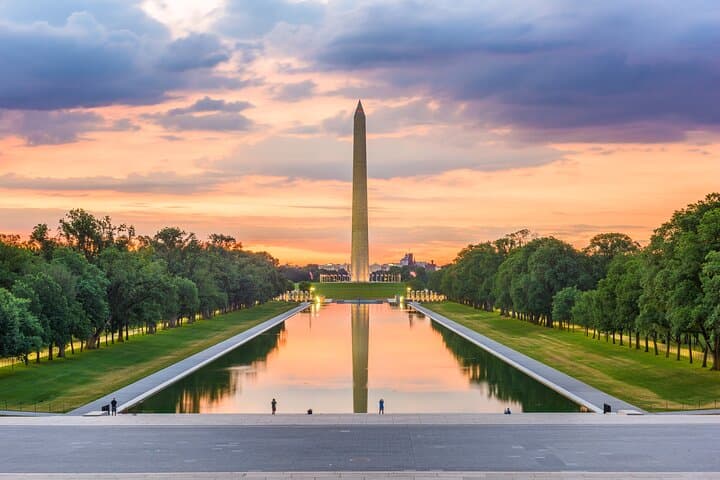
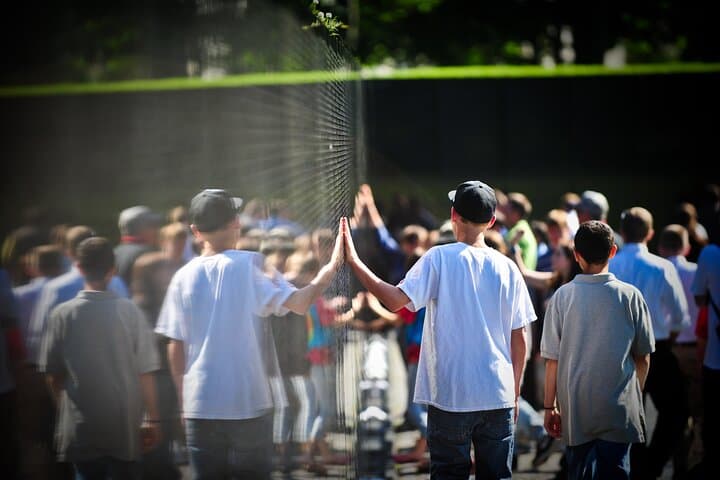
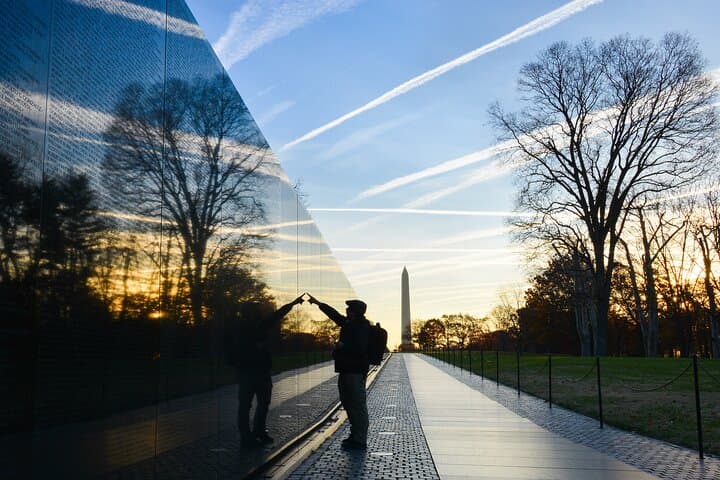
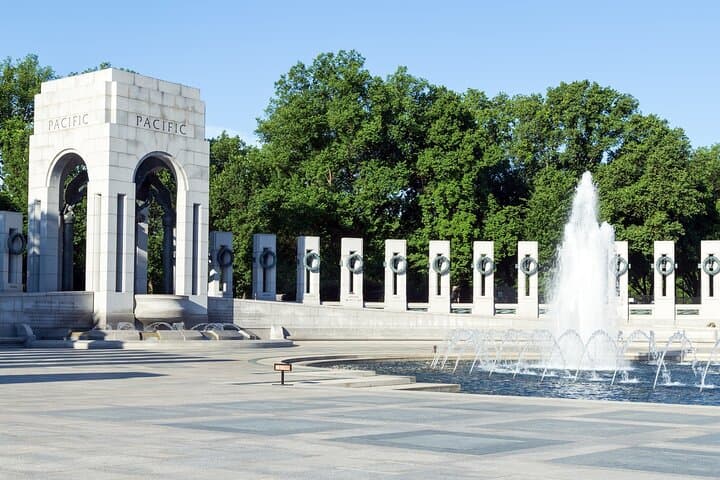
This small-group route covers roughly a mile of the Mall over two to two-and-a-half hours, pausing at the Washington Monument (viewed from a distance), the World War II Memorial, the Vietnam Veterans Memorial and The Wall, the Korean War Veterans Memorial, and ending at the Lincoln Memorial. These sites span late 19th-century neoclassical statuary to mid-20th-century memorials—each built with different stone, design language, and public intent. The Mall’s geology is reclaimed tidal flats and man-made terraces; monuments sit on engineered fill and open lawn designed for civic procession.
Culturally, the tour unpacks who is memorialized and why, and prompts conversation about memorial meanings in public space. Expect stories drawn from National Park Service interpretation, architectural choices, and evolving public debate.
Practically: the itinerary is flat pavement and stone plazas with benches at some stops; total walking is about 1–1.6 km with intermittent standing. Bring a refillable water bottle, sun protection, and comfortable shoes. Mornings and late afternoons offer softer light for photos and thinner crowds; weekends and peak cherry-blossom season are busiest.
Accessibility: the route is wheelchair- and stroller-friendly on paved surfaces, but brief ramps and distances between stops mean planning rests if needed. This is an interpretive, conversational walk—come ready to listen and ask questions.
easy.
2–2.5 hours.
Suitable for most people who can walk short distances and stand for brief interpretive stops; plan rest breaks if mobility is limited.
Meet on the east side of 17th St SW between Independence and Constitution Avenues, about halfway between the two; guide will wear a green shirt.
Yes — the route uses paved surfaces and is listed as wheelchair-accessible, though there are distances between stops and some ramps.
Public restrooms are available at some Mall locations but not at every stop; plan ahead if you need frequent access.
Tipping is appreciated but not required; standard guided-tour gratuity is 10–20% of the tour price if you enjoyed the experience.
The National Mall evolved from early 19th-century civic plans into a federal ceremonial landscape; the monuments were built over decades reflecting shifting national narratives.
High foot traffic requires sticking to paths, avoiding climbing on monuments, and carrying out trash to protect stonework and lawns.
Rethinking History operates guided outdoor trips and adventures with an emphasis on safety, stewardship, and memorable experiences.
You step off 17th Street into a wide, cool corridor of flagpoles and open sky — the Washington Monument to your right, the Mall stretching west toward the Lincoln Memorial. The air carries a mix of city grit and the hush of granite and bronze; tour guide in a green shirt gathers the group and the walk begins.
You step off 17th Street into a wide, cool corridor of flagpoles and open sky — the Washington Monument to your right, the Mall stretching west toward the Lincoln Memorial. The air carries a mix of city grit and the hush of granite and bronze; tour guide in a green shirt gathers the group and the walk begins.
This small-group route covers roughly a mile of the Mall over two to two-and-a-half hours, pausing at the Washington Monument (viewed from a distance), the World War II Memorial, the Vietnam Veterans Memorial and The Wall, the Korean War Veterans Memorial, and ending at the Lincoln Memorial. These sites span late 19th-century neoclassical statuary to mid-20th-century memorials—each built with different stone, design language, and public intent. The Mall’s geology is reclaimed tidal flats and man-made terraces; monuments sit on engineered fill and open lawn designed for civic procession.
Culturally, the tour unpacks who is memorialized and why, and prompts conversation about memorial meanings in public space. Expect stories drawn from National Park Service interpretation, architectural choices, and evolving public debate.
Practically: the itinerary is flat pavement and stone plazas with benches at some stops; total walking is about 1–1.6 km with intermittent standing. Bring a refillable water bottle, sun protection, and comfortable shoes. Mornings and late afternoons offer softer light for photos and thinner crowds; weekends and peak cherry-blossom season are busiest.
Accessibility: the route is wheelchair- and stroller-friendly on paved surfaces, but brief ramps and distances between stops mean planning rests if needed. This is an interpretive, conversational walk—come ready to listen and ask questions.