THE ADVENTURE COLLECTIVE® · Independent discovery and booking for outdoor travel

Leave Marrakech for a day in the High Atlas, where a short hike or mule ride leads to traditional Berber villages beneath Mount Toubkal. Expect rocky paths, home-cooked breakfasts, and clear valley views—an accessible cultural mountain day.
Leave Marrakech for a day in the High Atlas, where a short hike or mule ride leads to traditional Berber villages beneath Mount Toubkal. Expect rocky paths, home-cooked breakfasts, and clear valley views—an accessible cultural mountain day.
Morning sunlight cuts across the High Atlas as a vehicle leaves Marrakech and the lowland heat behind. The road climbs through cedar and olive terraces, then folds into a narrow valley where Imlil sits beneath the craggy shoulders of Mount Toubkal. Here, stone houses and terraced fields feel contingent on the mountains themselves; streams hurry down gullies, daring you to follow them higher.
Verified experiences and guided adventures in the surrounding area.
Morning sunlight cuts across the High Atlas as a vehicle leaves Marrakech and the lowland heat behind. The road climbs through cedar and olive terraces, then folds into a narrow valley where Imlil sits beneath the craggy shoulders of Mount Toubkal. Here, stone houses and terraced fields feel contingent on the mountains themselves; streams hurry down gullies, daring you to follow them higher.
The High Atlas formed from tectonic uplift and persistent erosion; granite ridgelines and volcanic outcrops frame valleys that have sheltered Berber (Amazigh) communities for millennia. Visiting a Berber village is as much cultural geography as hike—hosts often demonstrate bread-baking, mint tea rituals, and seasonal sheep herding. Expect language fragments of Tamazight and Arabic and a living rural economy shaped by altitude and water.
The day typically includes a soft hike or a mule ride to a higher hamlet, with panoramic views of deep valleys and the snow-capped cone of Toubkal on clear days. Trails are rocky and steep in places but well-worn; seasonal runoff can make paths slippery.
Practical guidance: start early to avoid afternoon heat and to maximize light for photos. Wear broken-in hiking shoes, layer for sudden temperature swings, and bring at least 2 liters of water. Carry cash for simple home-cooked meals and small gratuities. Respect private homes and ask before photographing people.
This trip suits travelers seeking an approachable mountain day that balances culture, geology, and short alpine hiking without committing to multi-day trekking.
moderate.
8 hours.
Moderate; comfortable walking on uneven ground and short uphill sections. Not for those with serious mobility limits.
The transfer to Imlil typically takes 60–90 minutes depending on traffic and weather.
No—mule rides are optional and useful for those who prefer less walking; the walking route is accessible for most moderately fit travelers.
Home-cooked traditional breakfast is usually included or available locally; bring cash for additional snacks or lunch.
No technical experience is required, but you should be comfortable on uneven, sometimes steep trails for short periods.
The High Atlas has been inhabited by Amazigh (Berber) communities for thousands of years; villages here preserve traditional stone architecture and seasonal farming practices.
Visitors should stick to trails, avoid single-use plastics in villages, and support local guides to ensure tourism benefits the community and reduces informal impacts.
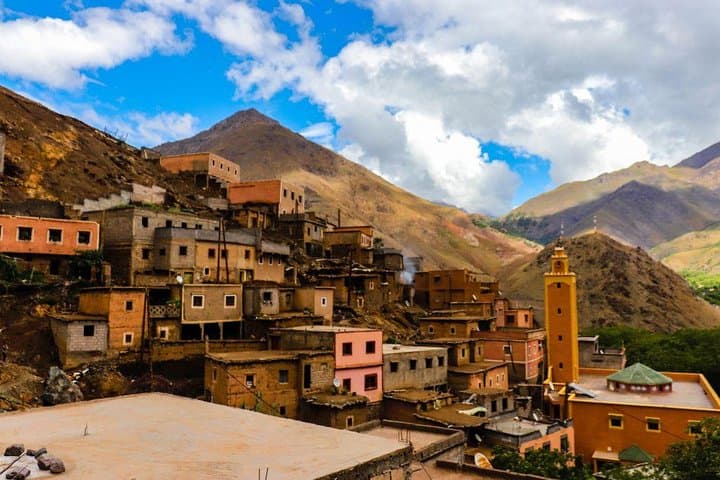
Morning sunlight cuts across the High Atlas as a vehicle leaves Marrakech and the lowland heat behind. The road climbs through cedar and olive terraces, then folds into a narrow valley where Imlil sits beneath the craggy shoulders of Mount Toubkal. Here, stone houses and terraced fields feel contingent on the mountains themselves; streams hurry down gullies, daring you to follow them higher.
Morning sunlight cuts across the High Atlas as a vehicle leaves Marrakech and the lowland heat behind. The road climbs through cedar and olive terraces, then folds into a narrow valley where Imlil sits beneath the craggy shoulders of Mount Toubkal. Here, stone houses and terraced fields feel contingent on the mountains themselves; streams hurry down gullies, daring you to follow them higher.
The High Atlas formed from tectonic uplift and persistent erosion; granite ridgelines and volcanic outcrops frame valleys that have sheltered Berber (Amazigh) communities for millennia. Visiting a Berber village is as much cultural geography as hike—hosts often demonstrate bread-baking, mint tea rituals, and seasonal sheep herding. Expect language fragments of Tamazight and Arabic and a living rural economy shaped by altitude and water.
The day typically includes a soft hike or a mule ride to a higher hamlet, with panoramic views of deep valleys and the snow-capped cone of Toubkal on clear days. Trails are rocky and steep in places but well-worn; seasonal runoff can make paths slippery.
Practical guidance: start early to avoid afternoon heat and to maximize light for photos. Wear broken-in hiking shoes, layer for sudden temperature swings, and bring at least 2 liters of water. Carry cash for simple home-cooked meals and small gratuities. Respect private homes and ask before photographing people.
This trip suits travelers seeking an approachable mountain day that balances culture, geology, and short alpine hiking without committing to multi-day trekking.