THE ADVENTURE COLLECTIVE® · Independent discovery and booking for outdoor travel

A full-day safari into Tsavo East swaps the coast for wide, red-soiled plains where lions, elephants, and giraffes gather around river corridors. This guide outlines what to expect on a day trip from Mombasa—wildlife highlights, practical packing tips, and timing advice for the best sightings.
A full-day safari into Tsavo East swaps the coast for wide, red-soiled plains where lions, elephants, and giraffes gather around river corridors. This guide outlines what to expect on a day trip from Mombasa—wildlife highlights, practical packing tips, and timing advice for the best sightings.
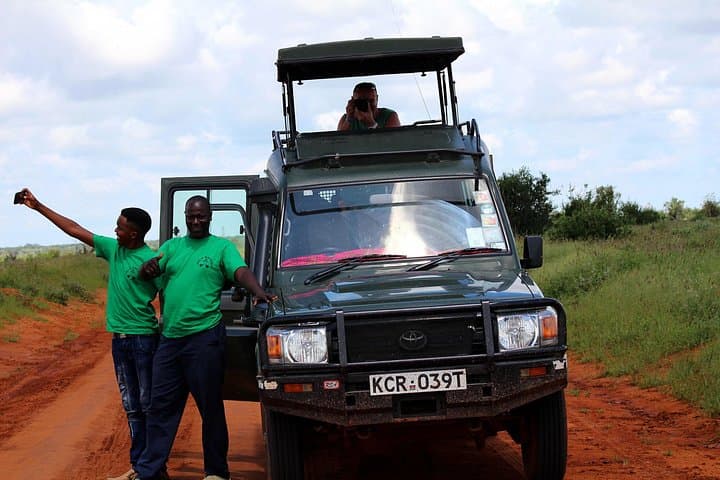
Dust lifts from the safari vehicle as the road opens into wide, sun-baked plains; acacia shadows march across the scrub while a distant dust-cloud betrays the passage of elephants. On a one-day run into Tsavo East you trade the coast’s humidity for a raw inland rhythm—long lenses and patient silence do most of the work.
Verified experiences and guided adventures in the surrounding area.
Operated by Jolu Safaris Limited · Voi, Taita-Taveta County
Dust lifts from the safari vehicle as the road opens into wide, sun-baked plains; acacia shadows march across the scrub while a distant dust-cloud betrays the passage of elephants. On a one-day run into Tsavo East you trade the coast’s humidity for a raw inland rhythm—long lenses and patient silence do most of the work.
Tsavo East, one of Kenya’s largest parks, was carved through red volcanic soils and ancient river channels. The landscape alternates open grasslands, seasonal riverine corridors, and rocky outcrops that catch the light. Human history here ranges from colonial-era railway tales to the modern Maasai and Kamba communities whose lives still orbit wildlife and seasonal grazing.
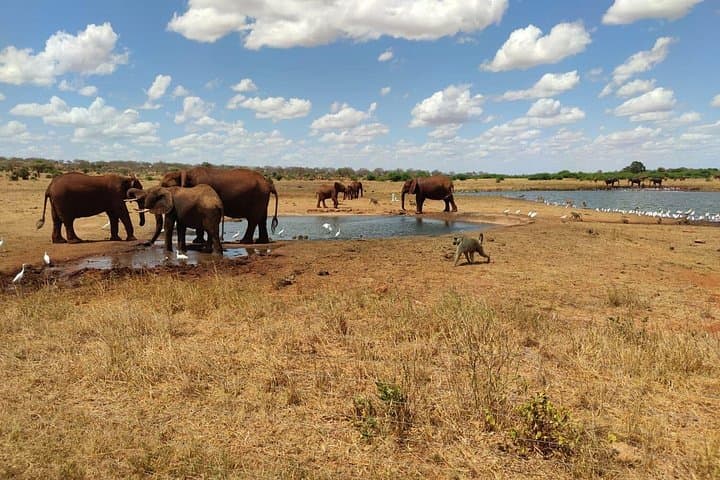
Expect big mammals: lions lounging on termite mounds, herds of red-dust elephants, and giraffes picking at thorn trees. The park’s geology—lava flows and old riverbeds—creates salt licks that gather animals and make game viewing reliable. Local guides read the land like a map, following spoor where the rest of the savanna moves; the wind can be as much a partner as the driver.
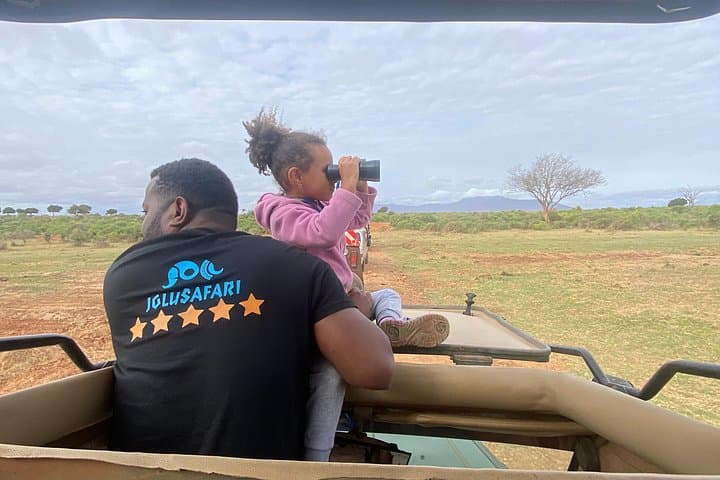
Practical guidance: plan for long, bumpy drives and early starts to catch predators at dawn. Bring sun protection, binoculars, and layered clothing for cooler mornings. Vehicles are open-sided—camera gear should be secured and dust-protected. Lunch is normally served at a park restaurant or lodge viewpoint; bottled water is typically provided.
A day here is compact but intense: you leave with images of wide horizons and the knowledge that this park’s wild core still shapes life in southeastern Kenya.
easy.
4–17 hours.
Light fitness required—able to sit for extended periods, handle short, uneven walks and bumpy roads.
Drive time varies with pickup point and traffic—expect roughly 2–4 hours each way from Mombasa depending on route and stops.
Tsavo East hosts lion, elephant, buffalo, leopard, and rhino (rare); sightings aren’t guaranteed, but the park’s open landscape increases the odds for elephants, lions, giraffes and plains game.
Many day-trip packages include bottled water and lunch at a park restaurant; confirm whether park entry fees, guide fees, and lunch are covered when booking.
The safari is generally family-friendly, but vehicles and terrain can be bumpy; check with the operator about infant seats and accessibility if you have mobility concerns.
Tsavo’s history includes the construction of the Kenya-Uganda Railway and tales of early 20th-century man-eaters; indigenous communities such as the Maasai and Kamba maintain cultural ties to the land.
Tsavo faces pressures from poaching and habitat fragmentation; support responsible operators, stick to roads, and avoid single-use plastics to limit your impact.
Jolu Safaris Limited operates guided outdoor trips and adventures with an emphasis on safety, stewardship, and memorable experiences.
Dust lifts from the safari vehicle as the road opens into wide, sun-baked plains; acacia shadows march across the scrub while a distant dust-cloud betrays the passage of elephants. On a one-day run into Tsavo East you trade the coast’s humidity for a raw inland rhythm—long lenses and patient silence do most of the work.
Dust lifts from the safari vehicle as the road opens into wide, sun-baked plains; acacia shadows march across the scrub while a distant dust-cloud betrays the passage of elephants. On a one-day run into Tsavo East you trade the coast’s humidity for a raw inland rhythm—long lenses and patient silence do most of the work.
Tsavo East, one of Kenya’s largest parks, was carved through red volcanic soils and ancient river channels. The landscape alternates open grasslands, seasonal riverine corridors, and rocky outcrops that catch the light. Human history here ranges from colonial-era railway tales to the modern Maasai and Kamba communities whose lives still orbit wildlife and seasonal grazing.
Expect big mammals: lions lounging on termite mounds, herds of red-dust elephants, and giraffes picking at thorn trees. The park’s geology—lava flows and old riverbeds—creates salt licks that gather animals and make game viewing reliable. Local guides read the land like a map, following spoor where the rest of the savanna moves; the wind can be as much a partner as the driver.
Practical guidance: plan for long, bumpy drives and early starts to catch predators at dawn. Bring sun protection, binoculars, and layered clothing for cooler mornings. Vehicles are open-sided—camera gear should be secured and dust-protected. Lunch is normally served at a park restaurant or lodge viewpoint; bottled water is typically provided.
A day here is compact but intense: you leave with images of wide horizons and the knowledge that this park’s wild core still shapes life in southeastern Kenya.