THE ADVENTURE COLLECTIVE® · Independent discovery and booking for outdoor travel

Spend a full day exploring Trang An’s karst waterways, cycling past rice fields, visiting Bich Dong Pagoda and climbing Hang Mua for sweeping views of Tam Coc. This private trip blends easy paddling, a village bike ride and a rewarding viewpoint hike—ideal for travelers wanting a concentrated dose of Ninh Binh's landscape and culture.
Spend a full day exploring Trang An’s karst waterways, cycling past rice fields, visiting Bich Dong Pagoda and climbing Hang Mua for sweeping views of Tam Coc. This private trip blends easy paddling, a village bike ride and a rewarding viewpoint hike—ideal for travelers wanting a concentrated dose of Ninh Binh's landscape and culture.
You push off in a narrow bamboo boat and the river folds around steep limestone towers, reflections breaking as the oars slide through water that has tracked these karsts for millennia. Villagers cycle past rice paddies hemmed by cliffs, and a stairway of hundreds of stone steps climbs the flank of Ngoa Long Mountain to the Mua Cave viewpoint, where Tam Coc spreads like a living map.
Verified experiences and guided adventures in the surrounding area.
Operated by Authentic Hanoi Homestay & Travel · Tam Coc / Ninh Binh, Ninh Binh Province
You push off in a narrow bamboo boat and the river folds around steep limestone towers, reflections breaking as the oars slide through water that has tracked these karsts for millennia. Villagers cycle past rice paddies hemmed by cliffs, and a stairway of hundreds of stone steps climbs the flank of Ngoa Long Mountain to the Mua Cave viewpoint, where Tam Coc spreads like a living map.
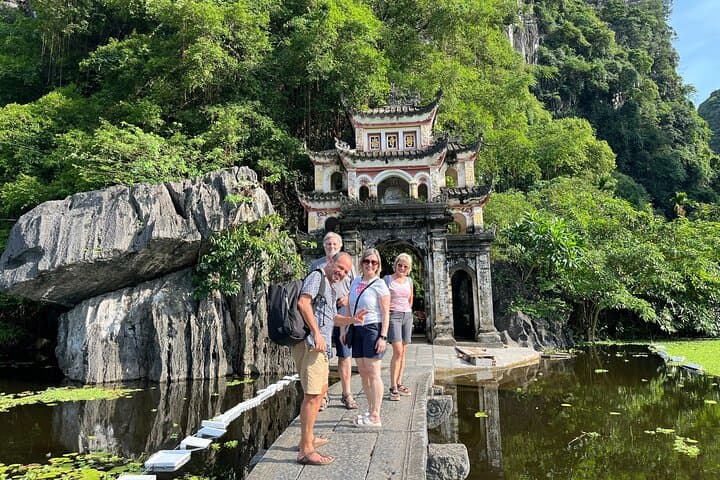
This landscape—the Trang An-Giam Xuyen complex—was inscribed as a UNESCO World Natural Heritage site for its dramatic karst topography and the cultural landscape carved by centuries of rice farming and temple-building. Bich Dong is a layered pagoda complex set into a low mountain; Trang An’s water caves and channels were eroded through soluble limestone, creating tunnels and grottoes that local rowers have navigated for generations.
Expect a day that alternates calm and exertion: a gentle 90–120 minute row through water caves, a flat bike loop through villages and rice fields, a cultural visit to a three-generation household, then a steep 15–30 minute climb to the Mua peak with panoramic payoff. Practicalities matter—early start from Hanoi makes the drive manageable, and midday heat or sudden tropical showers will change the feel rapidly.
Bring sun protection, modest clothing for temples, sturdy closed shoes for the Mua stairs, and a small dry bag for cameras. Respect local customs when visiting family homes and temples, carry cash for small purchases, and plan transport time back to Hanoi. For a single day you’ll touch geology, agrarian life, and living culture—compact, varied, and unmistakably Vietnamese.
moderate.
11 hours.
Good for travelers able to walk on uneven ground, climb steps and ride a short village bike loop; not technically demanding but full-day stamina required.
The one-way drive from Hanoi Old Quarter to Ninh Binh area is about 2–2.5 hours depending on traffic, so expect roughly 4–5 hours driving total for the round trip.
No—boats are rowed by local skippers and the ride is relaxed, though you should be able to step into a low boat from a riverbank.
Yes, the tour notes indicate they can handle vegetarian, vegan and gluten-free requests if communicated at booking.
Yes—the Hang Mua viewpoint involves climbing a carved stairway of several hundred steps; take breaks and wear good shoes.
The area combines long-standing agrarian traditions with Buddhist practice—the pagodas and temples here have served local communities for centuries, while the river routes have sustained trade and rice cultivation.
Trang An’s UNESCO status emphasizes protecting both geological formations and traditional farming; visitors should stick to paths, avoid littering and limit noise to preserve wildlife and cultural sites.
Authentic Hanoi Homestay & Travel operates guided outdoor trips and adventures with an emphasis on safety, stewardship, and memorable experiences.

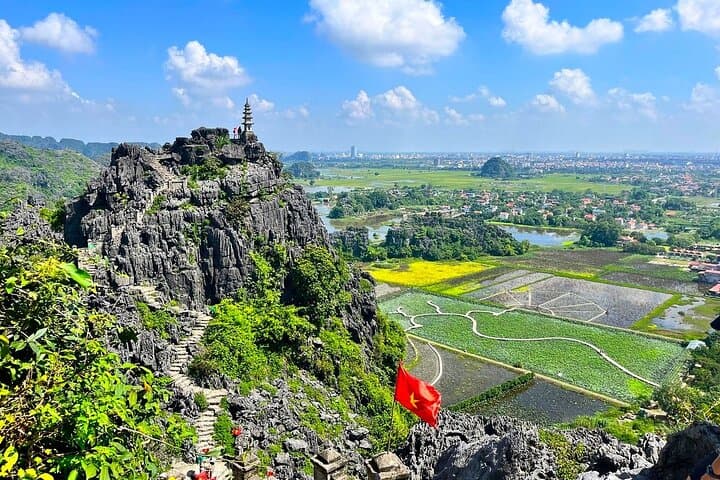

You push off in a narrow bamboo boat and the river folds around steep limestone towers, reflections breaking as the oars slide through water that has tracked these karsts for millennia. Villagers cycle past rice paddies hemmed by cliffs, and a stairway of hundreds of stone steps climbs the flank of Ngoa Long Mountain to the Mua Cave viewpoint, where Tam Coc spreads like a living map.
You push off in a narrow bamboo boat and the river folds around steep limestone towers, reflections breaking as the oars slide through water that has tracked these karsts for millennia. Villagers cycle past rice paddies hemmed by cliffs, and a stairway of hundreds of stone steps climbs the flank of Ngoa Long Mountain to the Mua Cave viewpoint, where Tam Coc spreads like a living map.
This landscape—the Trang An-Giam Xuyen complex—was inscribed as a UNESCO World Natural Heritage site for its dramatic karst topography and the cultural landscape carved by centuries of rice farming and temple-building. Bich Dong is a layered pagoda complex set into a low mountain; Trang An’s water caves and channels were eroded through soluble limestone, creating tunnels and grottoes that local rowers have navigated for generations.
Expect a day that alternates calm and exertion: a gentle 90–120 minute row through water caves, a flat bike loop through villages and rice fields, a cultural visit to a three-generation household, then a steep 15–30 minute climb to the Mua peak with panoramic payoff. Practicalities matter—early start from Hanoi makes the drive manageable, and midday heat or sudden tropical showers will change the feel rapidly.
Bring sun protection, modest clothing for temples, sturdy closed shoes for the Mua stairs, and a small dry bag for cameras. Respect local customs when visiting family homes and temples, carry cash for small purchases, and plan transport time back to Hanoi. For a single day you’ll touch geology, agrarian life, and living culture—compact, varied, and unmistakably Vietnamese.