THE ADVENTURE COLLECTIVE® · Independent discovery and booking for outdoor travel

A full-day private drive from La Paz brings you to Tiwanaku and Puma Punku—ancient ruins of precise stonework on the high-altiplano. This guide outlines what you’ll see, the site’s history, and practical tips to handle altitude, weather, and uneven terrain.
A full-day private drive from La Paz brings you to Tiwanaku and Puma Punku—ancient ruins of precise stonework on the high-altiplano. This guide outlines what you’ll see, the site’s history, and practical tips to handle altitude, weather, and uneven terrain.
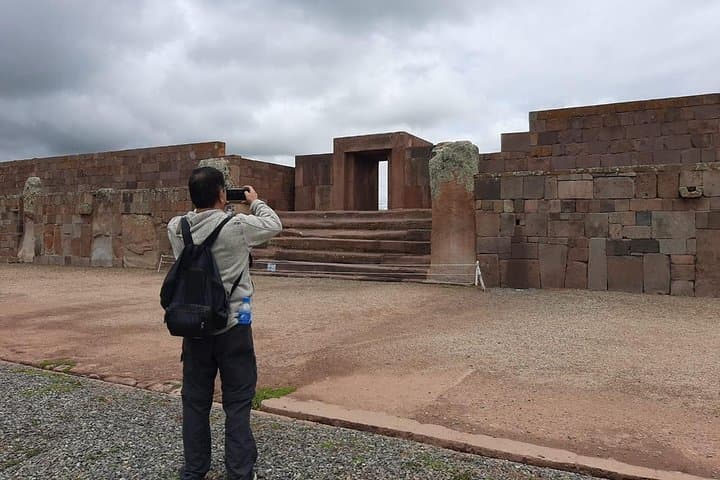
You step out of your vehicle onto the high-altitude plain and the air feels thinner; wind across the altiplano pushes at your jacket as if to test how steady you’ll be. The first view opens across low scrub and the square, ordered stones of Kalasasaya—massive dressed blocks, doorways and sun-aligned walls that force a recalibration of scale and time.
Verified experiences and guided adventures in the surrounding area.
Operated by Joker Expedition, Bolivia. · Tiwanaku, La Paz Department
You step out of your vehicle onto the high-altitude plain and the air feels thinner; wind across the altiplano pushes at your jacket as if to test how steady you’ll be. The first view opens across low scrub and the square, ordered stones of Kalasasaya—massive dressed blocks, doorways and sun-aligned walls that force a recalibration of scale and time.
Tiwanaku served as the political and ceremonial core of a pre-Incan state from roughly 500–1000 CE. The site’s architecture—Kalasasaya’s weeping-faced stelae, the stepped Akapana platform and the precise masonry at Puma Punku—reveals advanced stone-cutting and astronomical observation in a cold, windy landscape carved from uplifted lake sediments of the Titicaca basin.
Visitors get a mix of cultural history and raw geology: red-brown clay loam underfoot, fossil-rich stones in cut blocks, and low Andean grass that frames views of distant Lake Titicaca. Local Aymara communities maintain living traditions here; markets in Tiwanaku town offer crafts and fresh highland food.
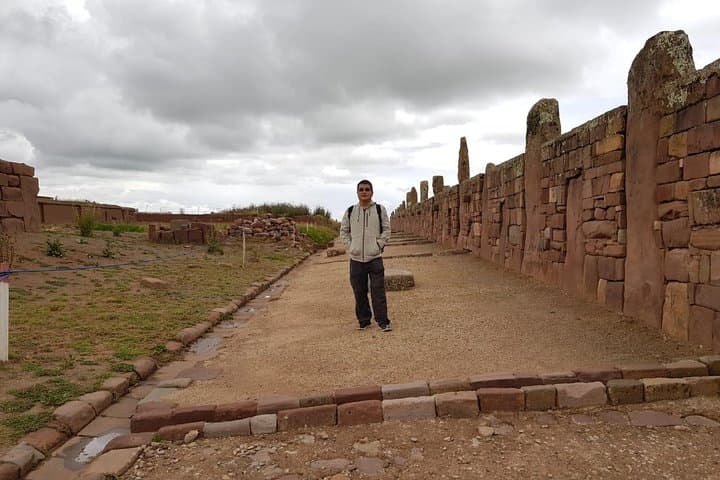
Practically, expect a 7–8 hour day with roughly two hours each way from La Paz by private transport. Trails are short but uneven—stone slabs, loose gravel and steps at ruins require steady footing. Altitude is the real variable: hydrate, move deliberately, and prioritize sun protection; mornings are cold, afternoons can be bright and windy. Confirm whether site admissions are included with your operator and pack small Bolivian currency for local purchases. A private guide will pace the visit, point out astronomical alignments and explain how the plateau shaped Tiwanaku life.
moderate.
7–8 hours.
Able to walk short distances on uneven ground and tolerate several hours at high altitude; good baseline endurance recommended.
Expect roughly 1.5–2 hours each way by private vehicle, depending on traffic and exact pickup location in La Paz.
Yes—Tiwanaku sits around 3,800–3,900 m; acclimatize in La Paz, hydrate, eat lightly and consider altitude medication if you have past issues.
Some operators include site admissions but the itinerary lists certain stops with "admission not included"—confirm with the tour operator before travel and carry local currency.
The tour is physically easy in terms of walking distances, but high altitude and uneven footing may be challenging for very young children or guests with serious mobility or spinal issues.
Tiwanaku was the ceremonial and administrative heart of a pre-Incan polity between roughly 500–1000 CE, noted for its astronomical architecture and megalithic masonry.
The high-altiplano environment and fragile stone monuments require respectful visitation—avoid climbing on carved stones, follow paths, and support local guides and conservation fees.
Joker Expedition, Bolivia. operates guided outdoor trips and adventures with an emphasis on safety, stewardship, and memorable experiences.
You step out of your vehicle onto the high-altitude plain and the air feels thinner; wind across the altiplano pushes at your jacket as if to test how steady you’ll be. The first view opens across low scrub and the square, ordered stones of Kalasasaya—massive dressed blocks, doorways and sun-aligned walls that force a recalibration of scale and time.
You step out of your vehicle onto the high-altitude plain and the air feels thinner; wind across the altiplano pushes at your jacket as if to test how steady you’ll be. The first view opens across low scrub and the square, ordered stones of Kalasasaya—massive dressed blocks, doorways and sun-aligned walls that force a recalibration of scale and time.
Tiwanaku served as the political and ceremonial core of a pre-Incan state from roughly 500–1000 CE. The site’s architecture—Kalasasaya’s weeping-faced stelae, the stepped Akapana platform and the precise masonry at Puma Punku—reveals advanced stone-cutting and astronomical observation in a cold, windy landscape carved from uplifted lake sediments of the Titicaca basin.
Visitors get a mix of cultural history and raw geology: red-brown clay loam underfoot, fossil-rich stones in cut blocks, and low Andean grass that frames views of distant Lake Titicaca. Local Aymara communities maintain living traditions here; markets in Tiwanaku town offer crafts and fresh highland food.
Practically, expect a 7–8 hour day with roughly two hours each way from La Paz by private transport. Trails are short but uneven—stone slabs, loose gravel and steps at ruins require steady footing. Altitude is the real variable: hydrate, move deliberately, and prioritize sun protection; mornings are cold, afternoons can be bright and windy. Confirm whether site admissions are included with your operator and pack small Bolivian currency for local purchases. A private guide will pace the visit, point out astronomical alignments and explain how the plateau shaped Tiwanaku life.