THE ADVENTURE COLLECTIVE® · Independent discovery and booking for outdoor travel

A concentrated, private day trip from Delhi to Agra that hits the Taj Mahal, Agra Fort, the Baby Taj and local workshops. Expect a 14-hour round trip by car, monument lines, a required passport for tickets, and an unforgettable close-up of Mughal architecture.
A concentrated, private day trip from Delhi to Agra that hits the Taj Mahal, Agra Fort, the Baby Taj and local workshops. Expect a 14-hour round trip by car, monument lines, a required passport for tickets, and an unforgettable close-up of Mughal architecture.
You arrive before sunrise, the road from Delhi folding away behind you as the Yamuna’s mist begins to lift and the white dome of the Taj Mahal first appears on the horizon like something demanding attention. The city of Agra hums around the monument—vendors setting out chai, rickshaws threading streets—and the mausoleum’s marble cools under the morning light, daring you to step closer.
Verified experiences and guided adventures in the surrounding area.
Operated by Indian Food Cooking Class · Agra, Uttar Pradesh
You arrive before sunrise, the road from Delhi folding away behind you as the Yamuna’s mist begins to lift and the white dome of the Taj Mahal first appears on the horizon like something demanding attention. The city of Agra hums around the monument—vendors setting out chai, rickshaws threading streets—and the mausoleum’s marble cools under the morning light, daring you to step closer.
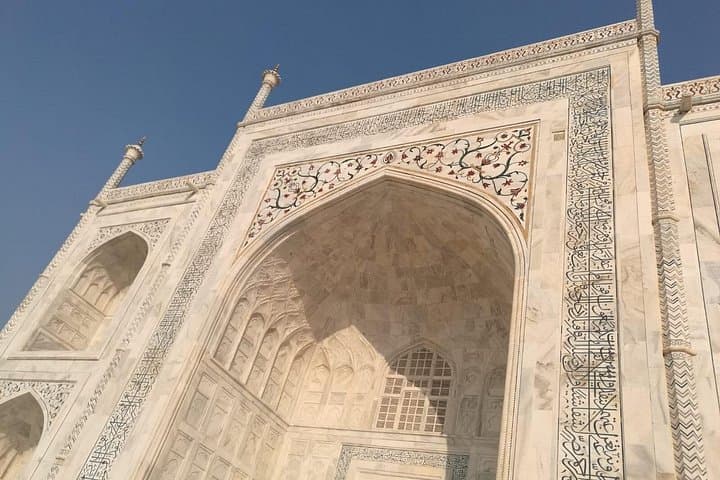
Built between 1631 and 1648 by Emperor Shah Jahan for Mumtaz Mahal, the Taj sits on a raised plinth of riverine plains carved by the Yamuna. Nearby Agra Fort and the smaller Itimad-ud-Daulah (the “Baby Taj”) trace Mughal architectural evolution: red sandstone solidity giving way to intricate inlaid marble. The tour also passes craftspeople—carpet weavers and marble artisans—whose work keeps centuries-old skills in use.
Practical guidance: this is a long, guided day trip (about 14 hours door-to-door from Delhi), mostly by private air-conditioned car with several short walks and stair sections at monuments. The tour typically does not include monument entrance fees (current foreigner fee ~2300 INR) and the Taj is closed Fridays. Carry your passport for ticketing and ID checks, wear comfortable shoes (you’ll remove them at the mausoleum), and plan for sun and crowds—early arrival helps.
Expect security lines and bag checks, a strong photographic draw, and the steady rhythm of a well-trodden cultural route. For travelers who want a concentrated introduction to Mughal Agra in a single day, this itinerary balances monuments, local craft stops, and time for photos without overnight logistics.
easy.
14 hours.
Suitable for most fitness levels but expect multiple short walks, stairs, and a long day in transit
No—most bookings cover transport and guide services; monument entrance fees (e.g., Taj Mahal foreign fee) are typically paid separately on site.
Yes—stroller access is possible and infants may sit on laps, but expect a long day with multiple transfers and walks.
The Taj is closed on Fridays; operators usually note this and may adjust the itinerary or provide alternative visits if it falls on your travel date.
Driving is usually 3–4 hours each way depending on traffic; the full tour runs about 14 hours door-to-door from central Delhi.
Agra was a Mughal capital; the Taj Mahal is Shah Jahan’s 17th-century mausoleum and Agra Fort served as the dynasty’s principal fortress and residence.
The Taj sits within the Taj Trapezium Zone, where pollution controls and visitor limits aim to protect marble surfaces; visitors should minimize litter and follow site rules to reduce wear.
Indian Food Cooking Class operates guided outdoor trips and adventures with an emphasis on safety, stewardship, and memorable experiences.
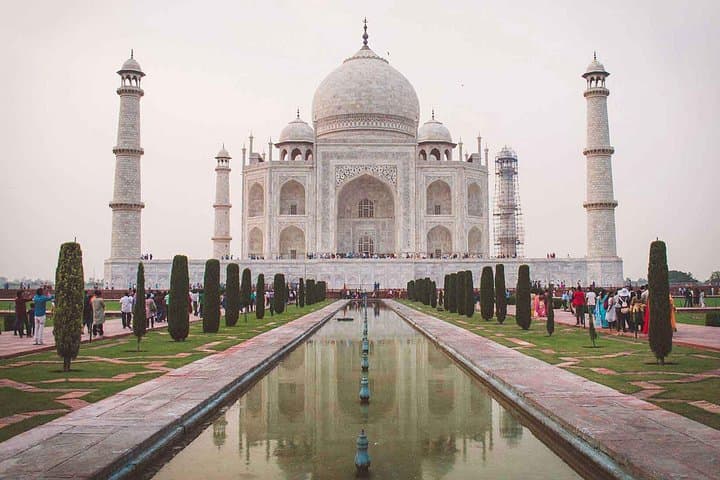


You arrive before sunrise, the road from Delhi folding away behind you as the Yamuna’s mist begins to lift and the white dome of the Taj Mahal first appears on the horizon like something demanding attention. The city of Agra hums around the monument—vendors setting out chai, rickshaws threading streets—and the mausoleum’s marble cools under the morning light, daring you to step closer.
You arrive before sunrise, the road from Delhi folding away behind you as the Yamuna’s mist begins to lift and the white dome of the Taj Mahal first appears on the horizon like something demanding attention. The city of Agra hums around the monument—vendors setting out chai, rickshaws threading streets—and the mausoleum’s marble cools under the morning light, daring you to step closer.
Built between 1631 and 1648 by Emperor Shah Jahan for Mumtaz Mahal, the Taj sits on a raised plinth of riverine plains carved by the Yamuna. Nearby Agra Fort and the smaller Itimad-ud-Daulah (the “Baby Taj”) trace Mughal architectural evolution: red sandstone solidity giving way to intricate inlaid marble. The tour also passes craftspeople—carpet weavers and marble artisans—whose work keeps centuries-old skills in use.
Practical guidance: this is a long, guided day trip (about 14 hours door-to-door from Delhi), mostly by private air-conditioned car with several short walks and stair sections at monuments. The tour typically does not include monument entrance fees (current foreigner fee ~2300 INR) and the Taj is closed Fridays. Carry your passport for ticketing and ID checks, wear comfortable shoes (you’ll remove them at the mausoleum), and plan for sun and crowds—early arrival helps.
Expect security lines and bag checks, a strong photographic draw, and the steady rhythm of a well-trodden cultural route. For travelers who want a concentrated introduction to Mughal Agra in a single day, this itinerary balances monuments, local craft stops, and time for photos without overnight logistics.