THE ADVENTURE COLLECTIVE® · Independent discovery and booking for outdoor travel

Travel overnight from Sharm El Sheikh for a full-day encounter with Cairo’s two headline draws: the Egyptian Museum and the Pyramids of Giza. This coach-based excursion pairs curated history with hands-on moments—boat rides, camel options, and close-up views of Khufu’s monument.
Travel overnight from Sharm El Sheikh for a full-day encounter with Cairo’s two headline draws: the Egyptian Museum and the Pyramids of Giza. This coach-based excursion pairs curated history with hands-on moments—boat rides, camel options, and close-up views of Khufu’s monument.
You arrive at a dawn-chilled bus, the desert beyond Sharm El Sheikh folding away as headlights stitch the highway toward the Nile. Hours later, Cairo’s dense pulse replaces the hush of the road; marble halls of the Egyptian Museum glow with vitrines, then the wind-pressed stones of Giza open up—monuments that measure human ambition in masonry.
Verified experiences and guided adventures in the surrounding area.
Operated by Stepway Tours · Cairo, Cairo Governorate
You arrive at a dawn-chilled bus, the desert beyond Sharm El Sheikh folding away as headlights stitch the highway toward the Nile. Hours later, Cairo’s dense pulse replaces the hush of the road; marble halls of the Egyptian Museum glow with vitrines, then the wind-pressed stones of Giza open up—monuments that measure human ambition in masonry.
The Egyptian Museum in Tahrir Square holds artifacts spanning millennia, including treasures from Tutankhamun’s tomb, while the Giza Plateau, dominated by Khufu’s Great Pyramid (c. 2560 BCE) and the Great Sphinx, sits on Cenozoic limestone laid down as the Mediterranean receded. Local culture is immediate: vendors call out along the plateau, cairos' layered history—Pharaonic, Islamic, Ottoman—turns every corner into a lived timeline. Ask guides about construction theories and the modern moves to protect heritage; conversations often touch on the Grand Egyptian Museum project and local conservation efforts.
Practical side: expect long coach transit (overnight schedules common), several hours of on-foot exploration on uneven, sandy stone, and optional extras like a Nile boat ride or camel/horse rides around the plateau. Carry a passport copy for checkpoints, cash for tips and optional activities, and sun protection—Egypt’s sun can be unforgiving.
Timing matters: visit museum early for lighter crowds, then spend steady time at Giza when light is best for photography. Between the museum’s artifacts and the silent scale of the pyramids, the day feels like a compact but thorough course in Egypt’s enduring landscape.
moderate.
21–23 hours.
Should handle long coach travel plus several hours of walking on uneven terrain; good stamina for a day with minimal rest.
No—admission fees are not included in the base tour price; expect to pay entry on site unless otherwise specified by your operator.
Yes—lunch at a quality restaurant is included but drinks are typically extra; confirm dietary needs when booking.
Road travel is lengthy—expect many hours each way depending on schedule; reconfirm pick-up time and plan for a long day or overnight leg.
Optional camel/horse rides and a Nile boat segment are usually available for an extra charge—ask your guide on the day for pricing and timing.
The Giza Pyramids date to the Fourth Dynasty (c. 2560 BCE) and the Egyptian Museum conserves artifacts spanning pharaonic to Greco-Roman eras, including Tutankhamun’s funerary treasures.
Heritage sites face pressures from air pollution, tourism wear, and urban growth; responsible visitation—staying on paths, avoiding touching artifacts, and supporting entrance fees—helps fund preservation.
Stepway Tours operates guided outdoor trips and adventures with an emphasis on safety, stewardship, and memorable experiences.


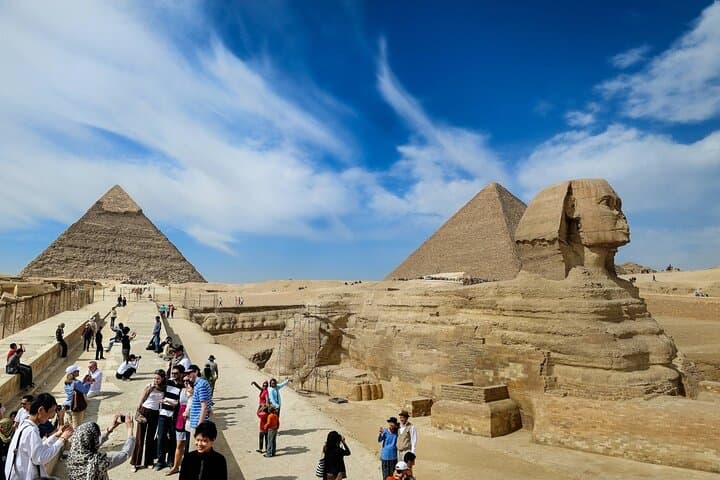
You arrive at a dawn-chilled bus, the desert beyond Sharm El Sheikh folding away as headlights stitch the highway toward the Nile. Hours later, Cairo’s dense pulse replaces the hush of the road; marble halls of the Egyptian Museum glow with vitrines, then the wind-pressed stones of Giza open up—monuments that measure human ambition in masonry.
You arrive at a dawn-chilled bus, the desert beyond Sharm El Sheikh folding away as headlights stitch the highway toward the Nile. Hours later, Cairo’s dense pulse replaces the hush of the road; marble halls of the Egyptian Museum glow with vitrines, then the wind-pressed stones of Giza open up—monuments that measure human ambition in masonry.
The Egyptian Museum in Tahrir Square holds artifacts spanning millennia, including treasures from Tutankhamun’s tomb, while the Giza Plateau, dominated by Khufu’s Great Pyramid (c. 2560 BCE) and the Great Sphinx, sits on Cenozoic limestone laid down as the Mediterranean receded. Local culture is immediate: vendors call out along the plateau, cairos' layered history—Pharaonic, Islamic, Ottoman—turns every corner into a lived timeline. Ask guides about construction theories and the modern moves to protect heritage; conversations often touch on the Grand Egyptian Museum project and local conservation efforts.
Practical side: expect long coach transit (overnight schedules common), several hours of on-foot exploration on uneven, sandy stone, and optional extras like a Nile boat ride or camel/horse rides around the plateau. Carry a passport copy for checkpoints, cash for tips and optional activities, and sun protection—Egypt’s sun can be unforgiving.
Timing matters: visit museum early for lighter crowds, then spend steady time at Giza when light is best for photography. Between the museum’s artifacts and the silent scale of the pyramids, the day feels like a compact but thorough course in Egypt’s enduring landscape.