THE ADVENTURE COLLECTIVE® · Independent discovery and booking for outdoor travel

Take a private transfer from Nukus to the haunting shoreline of the Aral Sea at Muynak. This full-day trip mixes stark landscapes, history, and a hands-on look at one of the world’s most dramatic environmental stories.
Take a private transfer from Nukus to the haunting shoreline of the Aral Sea at Muynak. This full-day trip mixes stark landscapes, history, and a hands-on look at one of the world’s most dramatic environmental stories.
You start on the cracked tarmac outside Nukus as the driver eases the air-conditioned SUV onto a straight road that seems to dare the horizon to move. The landscape flattens into a wind-swept plain; salt crusts and old river channels flash by, and the Aral’s vanished shoreline opens like a map of loss and stubborn beauty.
Verified experiences and guided adventures in the surrounding area.
Operated by Citizen Travel · Nukus, Karakalpakstan
You start on the cracked tarmac outside Nukus as the driver eases the air-conditioned SUV onto a straight road that seems to dare the horizon to move. The landscape flattens into a wind-swept plain; salt crusts and old river channels flash by, and the Aral’s vanished shoreline opens like a map of loss and stubborn beauty.
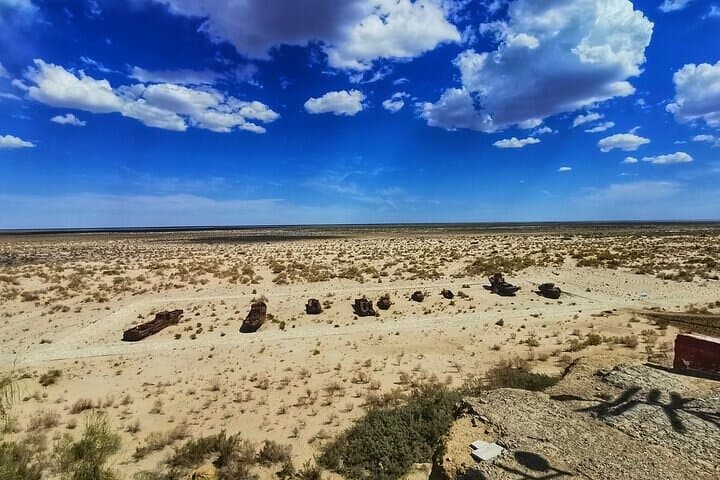
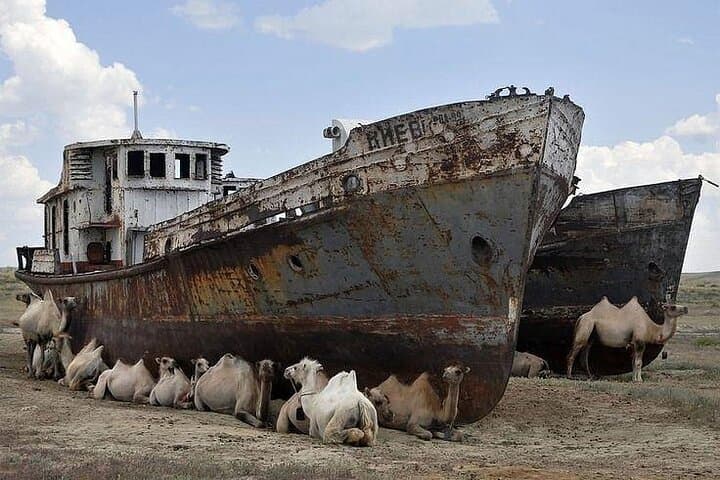
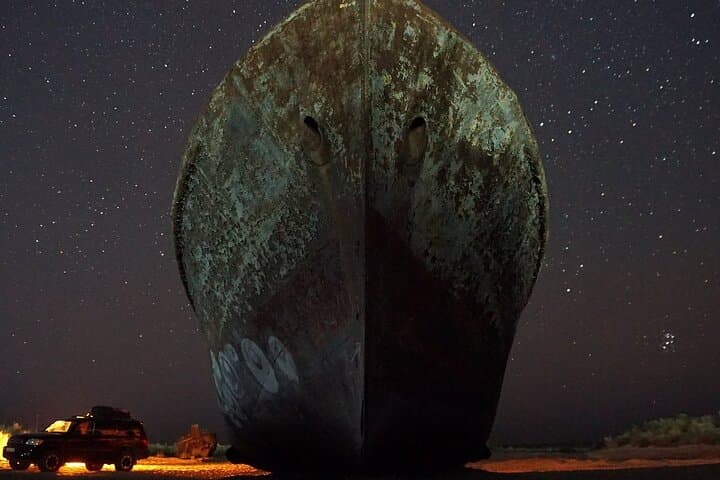
This is the story of the Aral Sea — once one of the world’s largest inland seas, reduced by Soviet-era irrigation projects that rerouted the Amu Darya. Muynak, the former port town you’ll visit, still keeps its memory in rusting hulls stranded on dry seabed and a small museum that traces local fishing culture and the environmental collapse.
Geologically the area is a low, arid delta with loose sands and exposed clay flats. Culturally, the drive runs through Karakalpak villages where you’ll see domestic livestock and small markets; drivers often stop at roadside tea stalls for a quick chai. The stark, open terrain puts the sky and wind in charge — expect sharp light and dust that moves like a low-slung river.
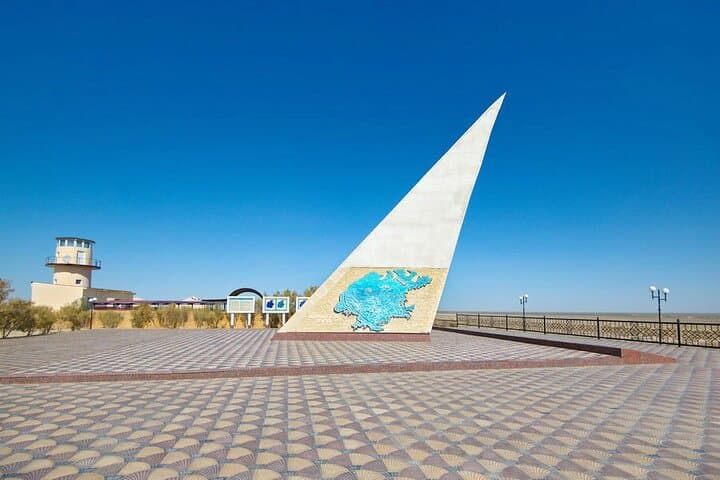
Practically: the private transfer offers flexible pickup, bottled water, and time to explore the ship graveyard, a memorial park, and observation points. Roads vary from paved to rough; plan for long stretches without services. Early morning or late afternoon light is best for photography, and layers, sun protection, and extra water are non-negotiable. Respect local guides and stay clear of fragile salt flats — the site is powerful, but also vulnerable.
easy.
Full day (up to 24 hours).
Suitable for travelers in normal physical condition; mostly travel and short walks on uneven ground
Drive time is roughly 1.5–3 hours each way depending on route and road conditions; the operator schedules a full-day window for flexible stops.
Yes, you can walk near the stranded hulls, but follow local guidance and avoid climbing on unstable metal or disturbing the salt flats.
Services are limited; the tour usually includes a stop for lunch and toilet access in Muynak or en route—bring snacks and small change for roadside stops.
Yes—this private transfer accommodates families, but infants should sit on laps as required and parents should plan for dust, heat, and long stretches in the vehicle.
Muynak was once a bustling Aral Sea port; Soviet irrigation projects diverted river inflows starting mid-20th century, shrinking the sea and collapsing local fisheries.
The Aral region remains ecologically fragile; recent restoration projects like the Kok-Aral Dam have partially revived the northern basin, but soil salinization and dust remain major issues—travelers should minimize footprint and support local guides.
Citizen Travel operates guided outdoor trips and adventures with an emphasis on safety, stewardship, and memorable experiences.
You start on the cracked tarmac outside Nukus as the driver eases the air-conditioned SUV onto a straight road that seems to dare the horizon to move. The landscape flattens into a wind-swept plain; salt crusts and old river channels flash by, and the Aral’s vanished shoreline opens like a map of loss and stubborn beauty.
You start on the cracked tarmac outside Nukus as the driver eases the air-conditioned SUV onto a straight road that seems to dare the horizon to move. The landscape flattens into a wind-swept plain; salt crusts and old river channels flash by, and the Aral’s vanished shoreline opens like a map of loss and stubborn beauty.
This is the story of the Aral Sea — once one of the world’s largest inland seas, reduced by Soviet-era irrigation projects that rerouted the Amu Darya. Muynak, the former port town you’ll visit, still keeps its memory in rusting hulls stranded on dry seabed and a small museum that traces local fishing culture and the environmental collapse.
Geologically the area is a low, arid delta with loose sands and exposed clay flats. Culturally, the drive runs through Karakalpak villages where you’ll see domestic livestock and small markets; drivers often stop at roadside tea stalls for a quick chai. The stark, open terrain puts the sky and wind in charge — expect sharp light and dust that moves like a low-slung river.
Practically: the private transfer offers flexible pickup, bottled water, and time to explore the ship graveyard, a memorial park, and observation points. Roads vary from paved to rough; plan for long stretches without services. Early morning or late afternoon light is best for photography, and layers, sun protection, and extra water are non-negotiable. Respect local guides and stay clear of fragile salt flats — the site is powerful, but also vulnerable.