THE ADVENTURE COLLECTIVE® · Independent discovery and booking for outdoor travel

Explore two of southeastern Kazakhstan’s most striking rock art sites in a single day. Walk river cliffs carved with Buddhist inscriptions at Tamgaly Tas, then study Bronze Age petroglyphs at Tanbaly—both reachable from Almaty with private transport.
Explore two of southeastern Kazakhstan’s most striking rock art sites in a single day. Walk river cliffs carved with Buddhist inscriptions at Tamgaly Tas, then study Bronze Age petroglyphs at Tanbaly—both reachable from Almaty with private transport.
You step out of the van onto sun-warmed stone and the Ili River braids itself along the valley, its current daring you to slow down and look. At Tamgaly Tas, cliff faces carry carved Buddhas and Tibetan inscriptions—weathered lines that still hold the quiet of 17th‑century pilgrims. Later, the land opens to the flat steppe where Tanbaly’s petroglyph panels crowd the rocks: animals, chariots, sun-headed figures and ritual scenes that read like a Bronze Age field notebook.
Verified experiences and guided adventures in the surrounding area.
Operated by Treeple KZ · Almaty, Almaty Region
You step out of the van onto sun-warmed stone and the Ili River braids itself along the valley, its current daring you to slow down and look. At Tamgaly Tas, cliff faces carry carved Buddhas and Tibetan inscriptions—weathered lines that still hold the quiet of 17th‑century pilgrims. Later, the land opens to the flat steppe where Tanbaly’s petroglyph panels crowd the rocks: animals, chariots, sun-headed figures and ritual scenes that read like a Bronze Age field notebook.
Geology here is blunt and honest—sedimentary cliffs and river-polished boulders shaped by seasonal floods and millennia of wind. Culturally, the two sites trace different threads: Tanbaly links to nomadic rituals and Bronze Age cosmology, while Tamgaly Tas marks a crossroads of Central Asian and Tibetan Buddhist exchange centuries later. Local guides often point out lesser-seen panels and explain the iconography; they also balance storytelling with practical route choices.
Practical travel notes: expect light walking on uneven rock over gravelly approach paths, about 6–10 hours door-to-door from Almaty depending on stops. Bring sun protection and at least 2 liters of water; there’s little shade between panels. Photography is allowed, but don’t touch or climb on petroglyphs. Morning light best reveals carved reliefs; late afternoon brings warmer tones but stronger shadows. The sites are low‑impact—leave no trace and follow guide instructions to keep fragile carvings intact. This one‑day excursion blends archaeology, quiet river scenes and a brisk lesson in how human stories persist in stone.
easy.
8–10 hours.
Suitable for people who can walk short distances over uneven ground and step up onto low ledges; no sustained climbs.
Yes—private transportation from Almaty is included in the tour, typically in a van with airport or hotel pickup.
Admission to the historic sites is included as part of the tour price per the itinerary details.
The tour is labeled easy and stroller-accessible for short distances, but the petroglyph areas have uneven terrain and require some maneuvering—not ideal for limited mobility without assistance.
Photography is allowed, but avoid flash and do not touch or climb on rock art—guides will advise on respectful behavior.
Tanbaly holds over 5,000 Bronze Age petroglyphs recording nomadic life; Tamgaly Tas preserves 17th‑century Buddhist images carved by itinerant pilgrims on Ili River cliffs.
These sites are fragile—visitor pressure and touching accelerate stone erosion, so follow guides’ paths and leave no trace to protect carvings for future generations.
Treeple KZ operates guided outdoor trips and adventures with an emphasis on safety, stewardship, and memorable experiences.
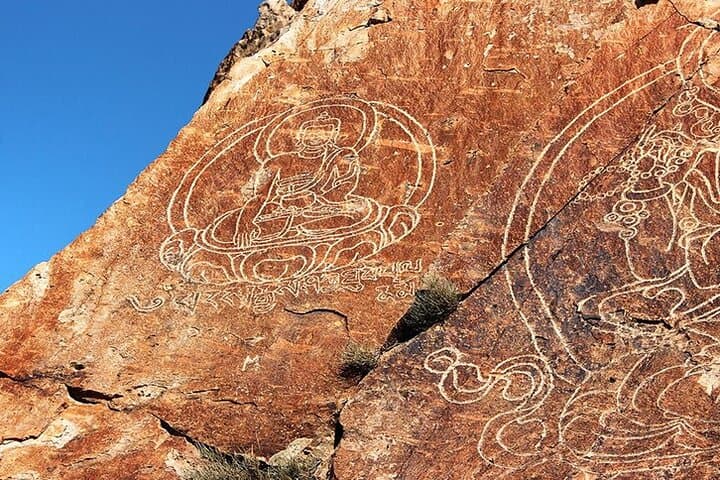
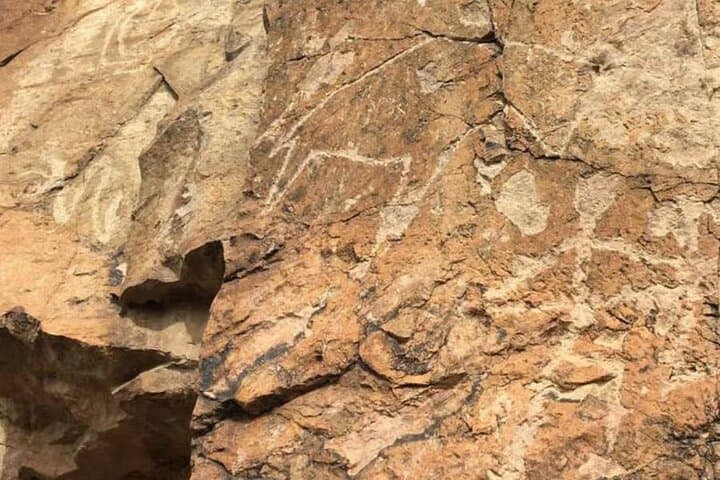
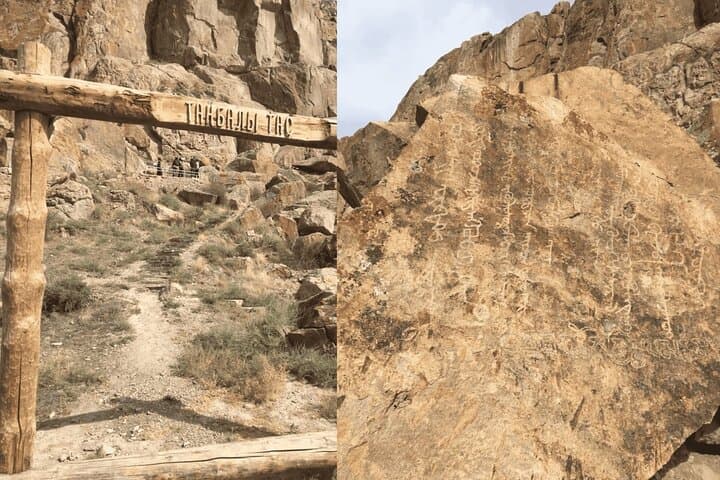
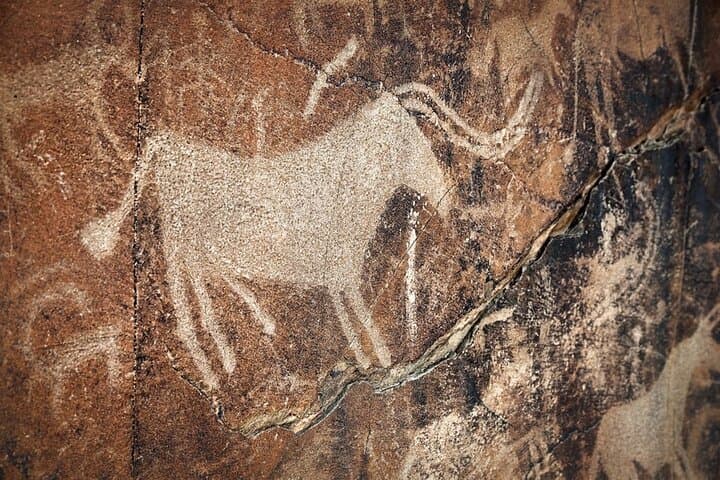
You step out of the van onto sun-warmed stone and the Ili River braids itself along the valley, its current daring you to slow down and look. At Tamgaly Tas, cliff faces carry carved Buddhas and Tibetan inscriptions—weathered lines that still hold the quiet of 17th‑century pilgrims. Later, the land opens to the flat steppe where Tanbaly’s petroglyph panels crowd the rocks: animals, chariots, sun-headed figures and ritual scenes that read like a Bronze Age field notebook.
You step out of the van onto sun-warmed stone and the Ili River braids itself along the valley, its current daring you to slow down and look. At Tamgaly Tas, cliff faces carry carved Buddhas and Tibetan inscriptions—weathered lines that still hold the quiet of 17th‑century pilgrims. Later, the land opens to the flat steppe where Tanbaly’s petroglyph panels crowd the rocks: animals, chariots, sun-headed figures and ritual scenes that read like a Bronze Age field notebook.
Geology here is blunt and honest—sedimentary cliffs and river-polished boulders shaped by seasonal floods and millennia of wind. Culturally, the two sites trace different threads: Tanbaly links to nomadic rituals and Bronze Age cosmology, while Tamgaly Tas marks a crossroads of Central Asian and Tibetan Buddhist exchange centuries later. Local guides often point out lesser-seen panels and explain the iconography; they also balance storytelling with practical route choices.
Practical travel notes: expect light walking on uneven rock over gravelly approach paths, about 6–10 hours door-to-door from Almaty depending on stops. Bring sun protection and at least 2 liters of water; there’s little shade between panels. Photography is allowed, but don’t touch or climb on petroglyphs. Morning light best reveals carved reliefs; late afternoon brings warmer tones but stronger shadows. The sites are low‑impact—leave no trace and follow guide instructions to keep fragile carvings intact. This one‑day excursion blends archaeology, quiet river scenes and a brisk lesson in how human stories persist in stone.