THE ADVENTURE COLLECTIVE® · Independent discovery and booking for outdoor travel

A private day tour from Hanoi that pairs Quang Phu Cau’s incense workshops with a sampan boat ride through Tam Coc’s karst valleys and a visit to Hoa Lu’s 10th‑11th century temples. Expect photography stops, cultural context, and calm river scenery.
A private day tour from Hanoi that pairs Quang Phu Cau’s incense workshops with a sampan boat ride through Tam Coc’s karst valleys and a visit to Hoa Lu’s 10th‑11th century temples. Expect photography stops, cultural context, and calm river scenery.
Morning light on the Đáy River throws hard, low shadows across rice paddies as the private van eases out of Hanoi and the air changes from city smoke to humid green. You arrive first at Quang Phu Cau, where rows of drying incense sticks make the ground read like a field of rust and scarlet; workers move with practiced rhythm, and the guide explains how scent-making is woven into local ritual.
Verified experiences and guided adventures in the surrounding area.
Operated by Authentic Travel Ho Chi Minh · Ninh Binh, Ninh Binh Province
Morning light on the Đáy River throws hard, low shadows across rice paddies as the private van eases out of Hanoi and the air changes from city smoke to humid green. You arrive first at Quang Phu Cau, where rows of drying incense sticks make the ground read like a field of rust and scarlet; workers move with practiced rhythm, and the guide explains how scent-making is woven into local ritual.
The day continues into the karst basin around Tam Coc—limestone bluffs rise like quiet, grey giants and the river dares you forward. A local rower will guide a flat sampan through three caves and past terraces of rice; the trip lasts roughly 60–90 minutes, on calm water with short, slow paddling sections. Geologically the area is young limestone karst carved by water, which created the narrow caves and steep-sided peaks visible from the boat.
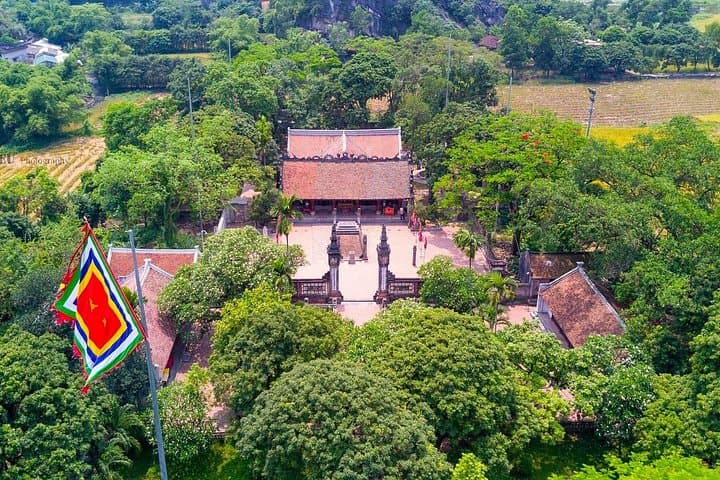
At Hoa Lu you step onto the grounds of Vietnam’s 10th–11th century capital, where small temples and stone stelae mark a compact seat of early Vietnamese statecraft and religious practice. Cultural notes: incense production ties to ancestral worship; temple etiquette is simple—quiet, remove hats, no flash photography inside shrines.
Practical guidance: wear closed-toe shoes and sun protection, carry a light rain layer in wet months, and plan for an 11-hour day if departing from Hanoi by private transfer. Bring cash for tips and small purchases; the sampan rowers and village artisans often depend on modest tourist income. With steady pacing this private tour is accessible to most travelers and offers direct encounters with landscape, history, and craft.
easy.
10–11 hours.
Suitable for travelers in average fitness — mostly short walks, light boarding of boats, and minimal elevation change
Typical sampan rides last about 60–90 minutes and cover a few kilometers while passing through three main caves and riverside rice fields.
No special fitness is required; the day includes short walks, boat boarding, and mostly flat terrain — suitable for most travelers.
Yes, a Vietnamese lunch is included; the operator can accommodate common dietary requests like vegetarian or gluten‑free if noted when booking.
Yes — tipping is customary and appreciated. Bring small notes of Vietnamese đồng for rowers, guides, and drivers.
Hoa Lu served as Vietnam’s capital during the 10th–11th centuries under the Dinh and early Le dynasties; surviving temples honor those early rulers.
Tourism here is light‑touch but growing—respect local sites by not leaving litter, avoiding feeding wildlife, and following guides’ advice to preserve fragile cave and temple areas.
Authentic Travel Ho Chi Minh operates guided outdoor trips and adventures with an emphasis on safety, stewardship, and memorable experiences.


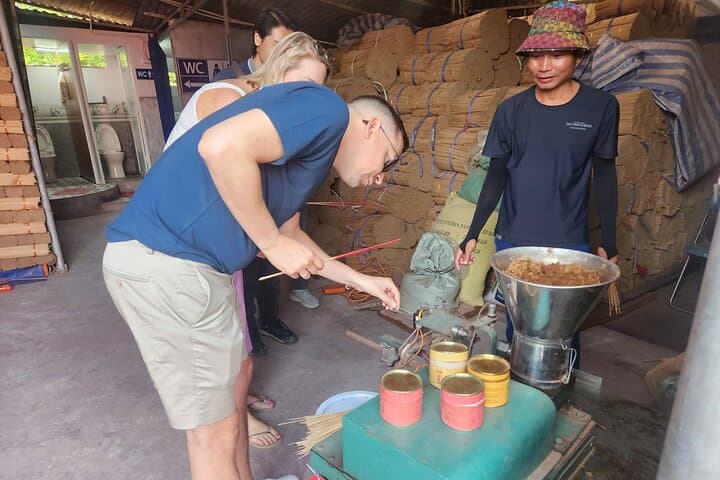
Morning light on the Đáy River throws hard, low shadows across rice paddies as the private van eases out of Hanoi and the air changes from city smoke to humid green. You arrive first at Quang Phu Cau, where rows of drying incense sticks make the ground read like a field of rust and scarlet; workers move with practiced rhythm, and the guide explains how scent-making is woven into local ritual.
Morning light on the Đáy River throws hard, low shadows across rice paddies as the private van eases out of Hanoi and the air changes from city smoke to humid green. You arrive first at Quang Phu Cau, where rows of drying incense sticks make the ground read like a field of rust and scarlet; workers move with practiced rhythm, and the guide explains how scent-making is woven into local ritual.
The day continues into the karst basin around Tam Coc—limestone bluffs rise like quiet, grey giants and the river dares you forward. A local rower will guide a flat sampan through three caves and past terraces of rice; the trip lasts roughly 60–90 minutes, on calm water with short, slow paddling sections. Geologically the area is young limestone karst carved by water, which created the narrow caves and steep-sided peaks visible from the boat.
At Hoa Lu you step onto the grounds of Vietnam’s 10th–11th century capital, where small temples and stone stelae mark a compact seat of early Vietnamese statecraft and religious practice. Cultural notes: incense production ties to ancestral worship; temple etiquette is simple—quiet, remove hats, no flash photography inside shrines.
Practical guidance: wear closed-toe shoes and sun protection, carry a light rain layer in wet months, and plan for an 11-hour day if departing from Hanoi by private transfer. Bring cash for tips and small purchases; the sampan rowers and village artisans often depend on modest tourist income. With steady pacing this private tour is accessible to most travelers and offers direct encounters with landscape, history, and craft.