THE ADVENTURE COLLECTIVE® · Independent discovery and booking for outdoor travel

Spend a full day exploring the Ecuadorian Amazon from Baños: hike to Hola Vida waterfall, paddle a dugout canoe on the Puyo River, visit a Quechua community, and learn artisanal cacao processing. This guided day trip blends wildlife spotting, cultural exchange, and hands-on food heritage.
Spend a full day exploring the Ecuadorian Amazon from Baños: hike to Hola Vida waterfall, paddle a dugout canoe on the Puyo River, visit a Quechua community, and learn artisanal cacao processing. This guided day trip blends wildlife spotting, cultural exchange, and hands-on food heritage.
Mist presses against the canopy as the minivan drops you off at a muddy trailhead; cedar trunks lean over the path and the Pastaza River pushes a slow, brown ribbon past the trees. The day begins in lowland Amazon forest—humid air, loud insect choruses, and the scent of wet earth—then opens into a cascade of experiences: a rinsing under Hola Vida waterfall, a dugout canoe sliding along the Puyo River, and the crackle of a family’s cacao beans being roasted.
Verified experiences and guided adventures in the surrounding area.
Operated by Imagine Ecuador · Puyo, Pastaza
Mist presses against the canopy as the minivan drops you off at a muddy trailhead; cedar trunks lean over the path and the Pastaza River pushes a slow, brown ribbon past the trees. The day begins in lowland Amazon forest—humid air, loud insect choruses, and the scent of wet earth—then opens into a cascade of experiences: a rinsing under Hola Vida waterfall, a dugout canoe sliding along the Puyo River, and the crackle of a family’s cacao beans being roasted.
This stretch of eastern Ecuador sits on the edge of the Andean flank where recent volcanic uplift gives way to broad alluvial plains—rivers have sculpted oxbows and wetlands, and local Kichwa (Quechua-speaking) communities have lived here for generations. Cultural threads are tangible: achiote face paint used in ceremonies, fiber weaving, and traditional dances offered by hosts. Small-scale cacao agroforestry at El Paraiso ties social history to the land; chocolate here is part culinary craft, part living economy.
Practically, expect slippery trails, short uphill sections to viewpoints, and several river transfers; the full day runs about nine hours. Guides supply rain ponchos and rubber boots, but bring quick-dry layers, strong insect repellent, and a reusable water bottle. Move slowly at the river’s edge and keep cameras ready—otters, kingfishers, and tree frogs are often visible. Support local vendors for handicrafts, avoid plastics, and follow your guide’s directions near wildlife. Timing your visit in the drier window reduces mosquitoes and raises the chance of clear vistas at Mirador Indichuris.
moderate.
8–9 hours.
Moderate fitness for several short hikes, river transfers, and a few uneven trail sections; able to walk 3–5 miles over varied terrain.
The tour lasts about 8–9 hours (525 minutes); most departures are early morning with return to Baños in the late afternoon.
Guides typically provide rubber boots and a rain poncho, but many travelers bring their own waterproof shoes and a lightweight jacket for comfort.
This tour is not recommended for pregnant travelers and requires a moderate fitness level; families with sturdy, active children may participate but should check with the operator about age limits.
Yes—there are opportunities to purchase crafts and cacao products from indigenous artisans; carry small cash and ask about sustainable, locally-made items.
The Pastaza basin is populated by Kichwa-speaking communities whose river-based livelihoods and smallholder agroforestry (including cacao) shaped local landscapes and traditions.
Tourism supports local conservation when guides follow leave-no-trace practices, buy local, and avoid disturbing wildlife; refuse single-use plastics and follow guidance near sensitive riverbanks.
Imagine Ecuador operates guided outdoor trips and adventures with an emphasis on safety, stewardship, and memorable experiences.
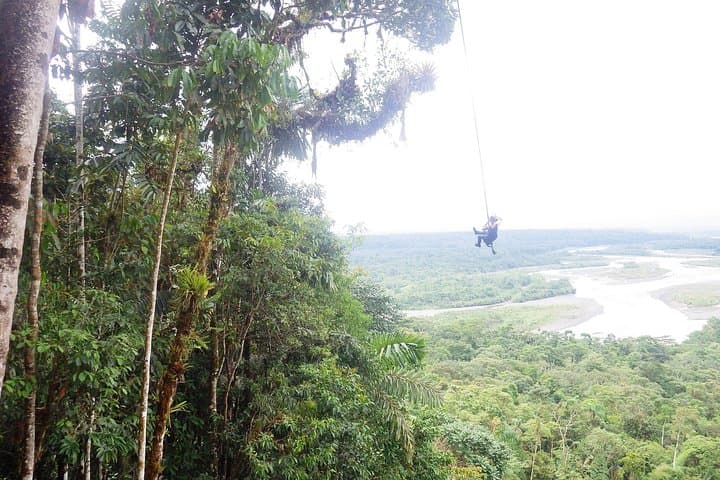
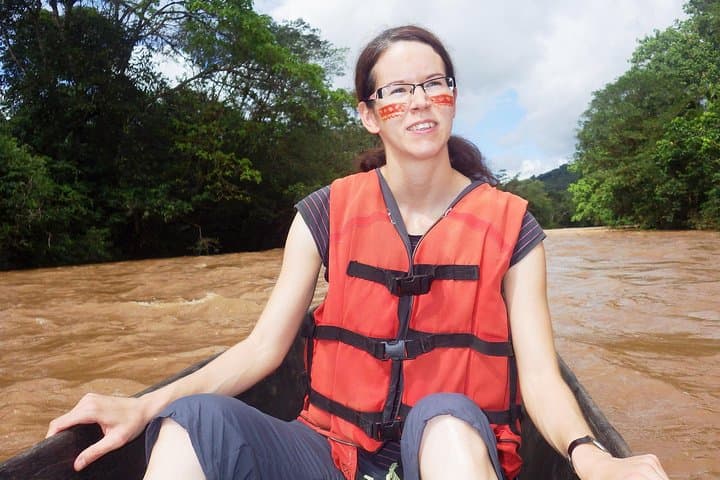
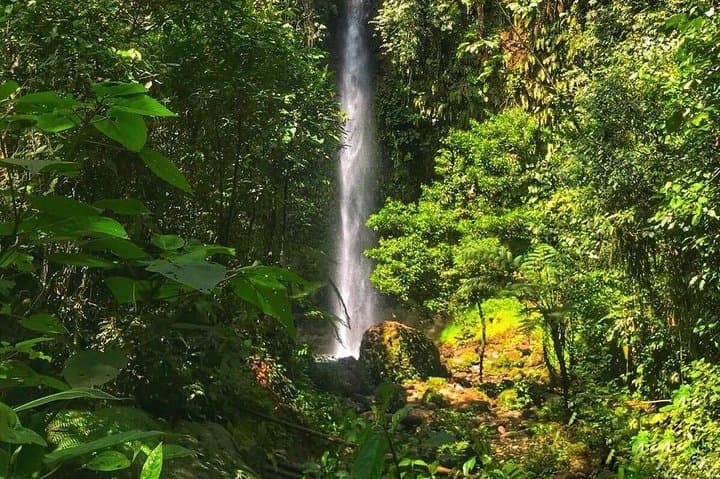
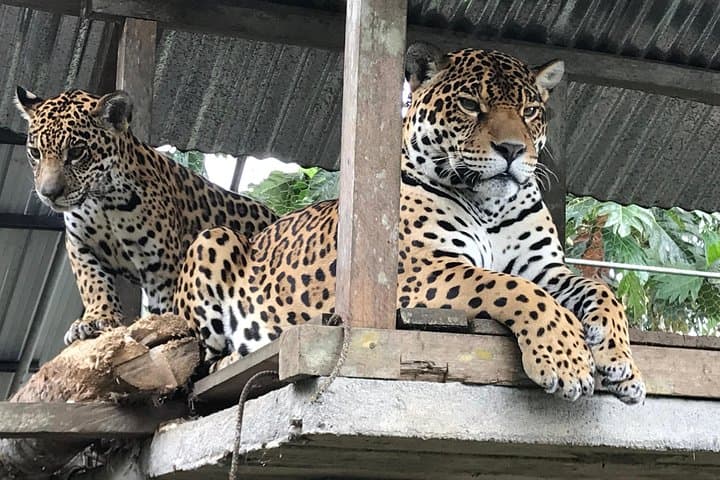
Mist presses against the canopy as the minivan drops you off at a muddy trailhead; cedar trunks lean over the path and the Pastaza River pushes a slow, brown ribbon past the trees. The day begins in lowland Amazon forest—humid air, loud insect choruses, and the scent of wet earth—then opens into a cascade of experiences: a rinsing under Hola Vida waterfall, a dugout canoe sliding along the Puyo River, and the crackle of a family’s cacao beans being roasted.
Mist presses against the canopy as the minivan drops you off at a muddy trailhead; cedar trunks lean over the path and the Pastaza River pushes a slow, brown ribbon past the trees. The day begins in lowland Amazon forest—humid air, loud insect choruses, and the scent of wet earth—then opens into a cascade of experiences: a rinsing under Hola Vida waterfall, a dugout canoe sliding along the Puyo River, and the crackle of a family’s cacao beans being roasted.
This stretch of eastern Ecuador sits on the edge of the Andean flank where recent volcanic uplift gives way to broad alluvial plains—rivers have sculpted oxbows and wetlands, and local Kichwa (Quechua-speaking) communities have lived here for generations. Cultural threads are tangible: achiote face paint used in ceremonies, fiber weaving, and traditional dances offered by hosts. Small-scale cacao agroforestry at El Paraiso ties social history to the land; chocolate here is part culinary craft, part living economy.
Practically, expect slippery trails, short uphill sections to viewpoints, and several river transfers; the full day runs about nine hours. Guides supply rain ponchos and rubber boots, but bring quick-dry layers, strong insect repellent, and a reusable water bottle. Move slowly at the river’s edge and keep cameras ready—otters, kingfishers, and tree frogs are often visible. Support local vendors for handicrafts, avoid plastics, and follow your guide’s directions near wildlife. Timing your visit in the drier window reduces mosquitoes and raises the chance of clear vistas at Mirador Indichuris.