THE ADVENTURE COLLECTIVE® · Independent discovery and booking for outdoor travel

A full-day excursion from İzmir to Pamukkale and Hierapolis, this tour pairs white travertine terraces and Roman ruins with thermal pools. Expect a long but accessible day with on-site entrance fees and barefoot walks across the calcite formations.
A full-day excursion from İzmir to Pamukkale and Hierapolis, this tour pairs white travertine terraces and Roman ruins with thermal pools. Expect a long but accessible day with on-site entrance fees and barefoot walks across the calcite formations.
You arrive before midday with the bus threading low hills and olive groves, and the first white slopes of Pamukkale appear like a pale river frozen against the green. The travertine terraces—calcium-rich runoff built over millennia—glint under the sun; steam rises from thermal vents and the air smells faintly mineral.
Verified experiences and guided adventures in the surrounding area.
Operated by Gezenthi Travel Agency · Pamukkale, Denizli
You arrive before midday with the bus threading low hills and olive groves, and the first white slopes of Pamukkale appear like a pale river frozen against the green. The travertine terraces—calcium-rich runoff built over millennia—glint under the sun; steam rises from thermal vents and the air smells faintly mineral.
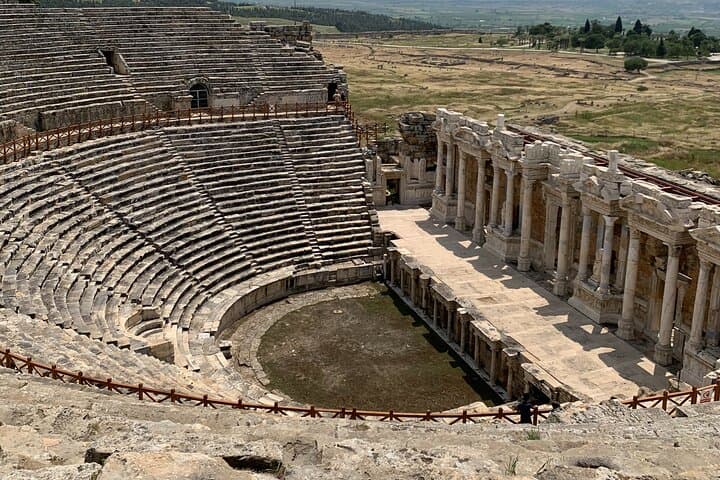
Hierapolis sits above the terraces, a Hellenistic foundation turned Roman spa city where marble colonnades, a restored theater and funerary monuments map centuries of visitors chasing healing waters. Geologically the site is active: hot springs deposit calcite-laden waters that build terraces in layers, while nearby red springs at Karahayıt show mineral variety.
Local culture blends small-town Anatolian life with a steady stream of international visitors; artisans sell onyx and textile goods near the entrance. Conservation rules are strict—walking barefoot across the travertines and staying on marked paths protects the fragile crust.
Practical guidance: the tour is a full 10–12 hour day from İzmir with several hours on-site—wear quick-dry footwear for the approach and bring a sun hat and plenty of water. Tickets to the archaeological park are purchased on-site; some thermal pools may be closed for restoration, and a separate fee often applies for the antique (Cleopatra) pool. Allow time for photos and an unhurried visit to the theater and museum. Aim for weekday visits in shoulder seasons to avoid peak crowds and midday heat. This is an accessible, sensory day trip that pairs history, geology and hands-on thermal experience.
easy.
10–12 hours.
Comfortable for most travelers; requires standing and walking on uneven, sometimes slippery surfaces for several hours
No—the archaeological park entrance is paid on-site (approximately €30, rates vary); the tour covers transportation and guide services.
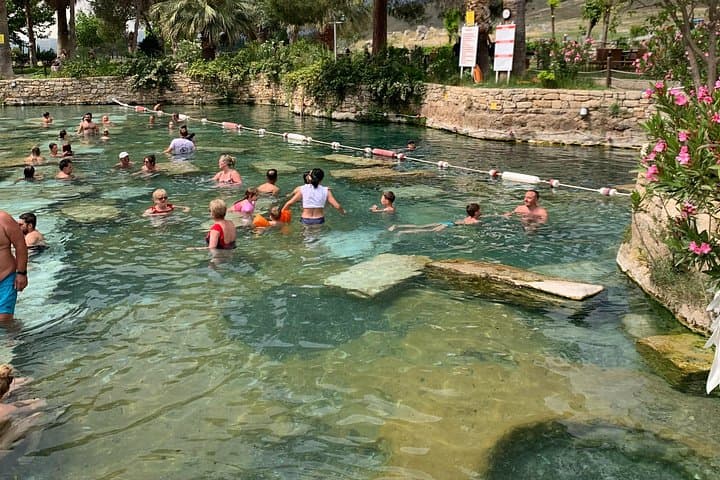
Designated pools allow bathing but availability changes—some pools are closed for conservation or restoration and the antique pool often carries a separate fee.
Yes—visitors are required to remove shoes on the terraces to protect the calcite; bring socks if you need foot protection between walks.
Pickup is typically from İzmir with early morning departure; expect a 10–12 hour round trip including several hours at Pamukkale and Hierapolis.
Hierapolis was founded in the Hellenistic period and became an active Roman spa town; its theater and necropolis reflect centuries of pilgrimage to healing waters.
Visitor movement is restricted to preserve the travertine; avoid soaps or oils in thermal waters and follow boardwalks and staff directions to minimize impact.
Gezenthi Travel Agency operates guided outdoor trips and adventures with an emphasis on safety, stewardship, and memorable experiences.
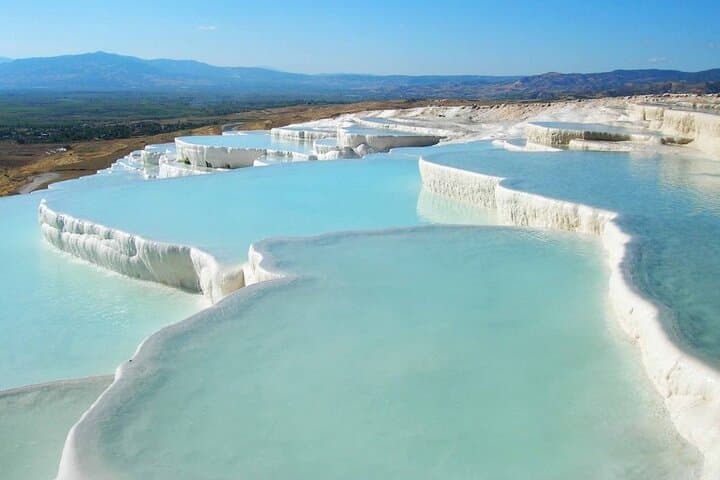
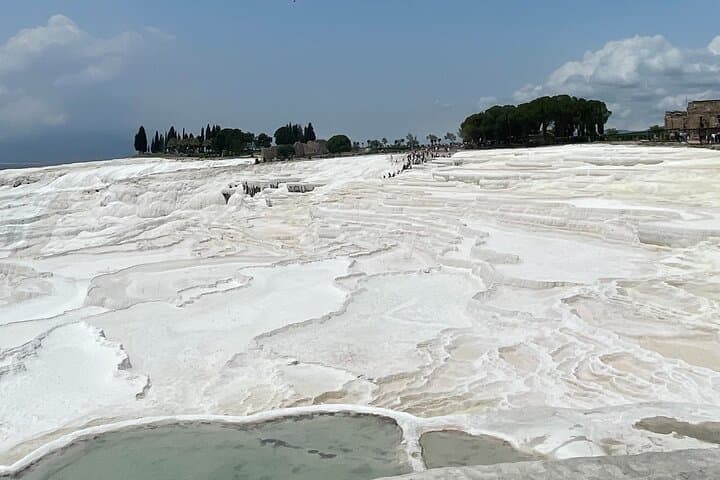
You arrive before midday with the bus threading low hills and olive groves, and the first white slopes of Pamukkale appear like a pale river frozen against the green. The travertine terraces—calcium-rich runoff built over millennia—glint under the sun; steam rises from thermal vents and the air smells faintly mineral.
You arrive before midday with the bus threading low hills and olive groves, and the first white slopes of Pamukkale appear like a pale river frozen against the green. The travertine terraces—calcium-rich runoff built over millennia—glint under the sun; steam rises from thermal vents and the air smells faintly mineral.
Hierapolis sits above the terraces, a Hellenistic foundation turned Roman spa city where marble colonnades, a restored theater and funerary monuments map centuries of visitors chasing healing waters. Geologically the site is active: hot springs deposit calcite-laden waters that build terraces in layers, while nearby red springs at Karahayıt show mineral variety.
Local culture blends small-town Anatolian life with a steady stream of international visitors; artisans sell onyx and textile goods near the entrance. Conservation rules are strict—walking barefoot across the travertines and staying on marked paths protects the fragile crust.
Practical guidance: the tour is a full 10–12 hour day from İzmir with several hours on-site—wear quick-dry footwear for the approach and bring a sun hat and plenty of water. Tickets to the archaeological park are purchased on-site; some thermal pools may be closed for restoration, and a separate fee often applies for the antique (Cleopatra) pool. Allow time for photos and an unhurried visit to the theater and museum. Aim for weekday visits in shoulder seasons to avoid peak crowds and midday heat. This is an accessible, sensory day trip that pairs history, geology and hands-on thermal experience.